Influences

Influences of the School of Our Divine Infinite Being

Our works name their sources: the oldest sciences of the soul, and the sciences of our own age.

228 thinkers, teachers, scientists and scholars, in 7 families of tradition

Why these thinkers

A long line, named in full

Our works name their sources. Every thinker on this page is quoted or used in the books of the School, and each entry says who they were, what we take from them and how much weight they carry in the teaching.

What we take from the great tradition

From Iamblichus, the teacher of our School, we take the gods as divine intelligences, the luminous vehicle of the soul, the tokens the gods have sown in the world and the fate and freedom of the soul. From Plato, Plotinus and Proclus, the Chaldean Oracles and the Hermetica comes the order of the One and the many. From the Upaniṣads, the Gītā and the schools of India come the Self, the Goddess and Kṛṣṇa.

We read one truth across the traditions without claiming that every tradition teaches the same doctrine.

“The teacher of the School of Our Divine Infinite Being is Iamblichus.”Central Doctrine, Chapter 4
What we take from the sciences

From Carl Jung and Wolfgang Pauli we take the idea that mind and matter are two aspects of one reality. From Henry Stapp comes attention held steady holding a pattern in the brain, and from the physics of the observer and the Multiverse the two pictures of one event. From the solar and planetary sciences, and from the registries and records that test astrology, come the measurements our astrology answers to.

The sciences give the old teaching a language a student trained in the modern world can check.

“In our School the god comes first, known in the rite, and the sciences stand as its witnesses.”Eddie Paredes: A Life in the Work, Science as the Revelation of This Age
“Because our assertions are our own, we give back to every voice we quote exactly what is theirs and no more.”Central Doctrine, How to Read This Work

The list

This list gathers the thinkers, teachers, scientists and scholars our works draw on, with a short note on who each one was and how they stand in our teaching. The counts come from the 15 latest works of the School (Central Doctrine I–III, Ritual Praxis and Instruction I–III, WaveForm Astrology, The Divine Arcana Tarot, The School Layman Explanation, Dream Theurgy, the Biography, The Science of Astrology, the Sacred History, One Architecture and Little Suns). Central influences come first and supporting influences after them, each in order of mentions, and the list can also be read by family of tradition. "Central" marks a pillar our teaching is built on, and "Supporting" marks a witness or source for a point. The counts are approximate and show weight in our works.

Central influences 32

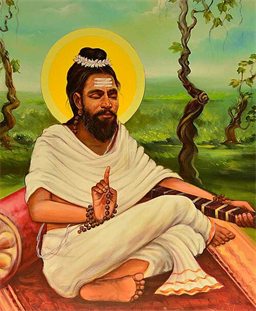
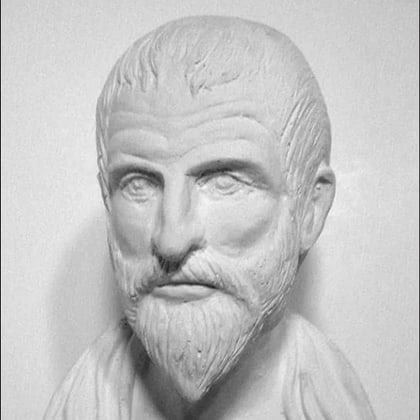
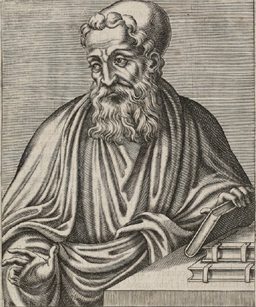
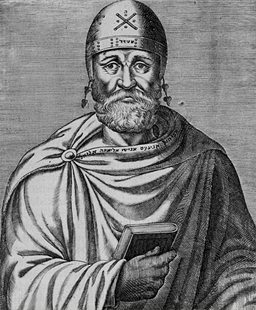
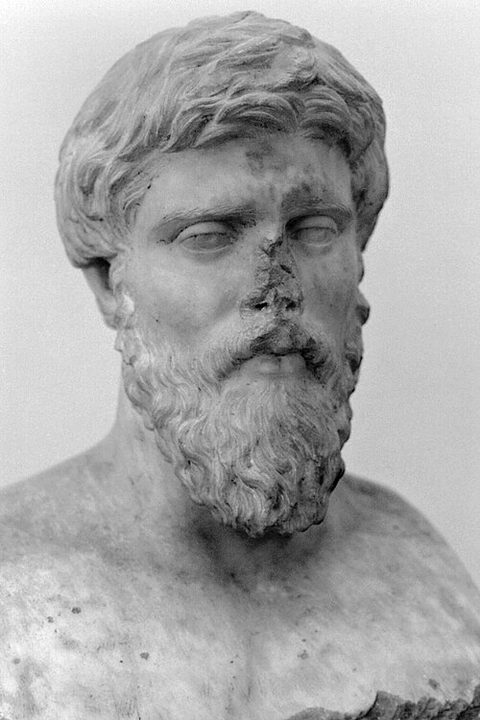
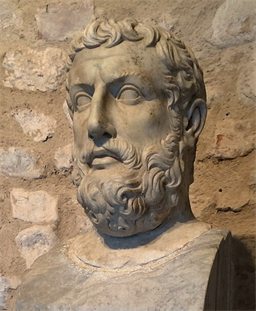
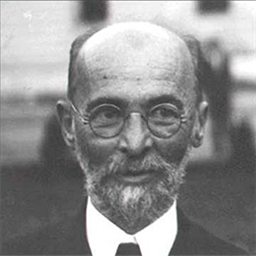
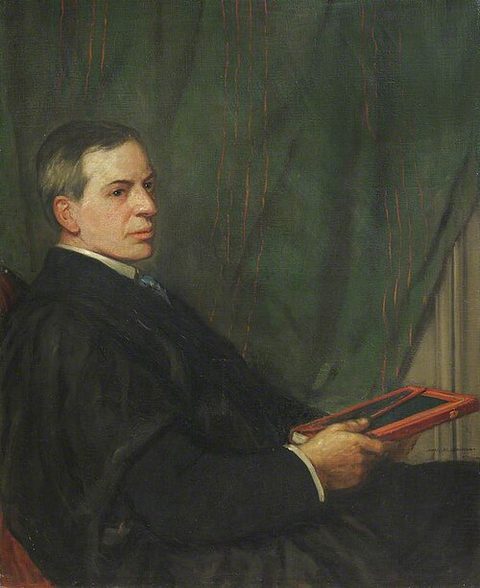
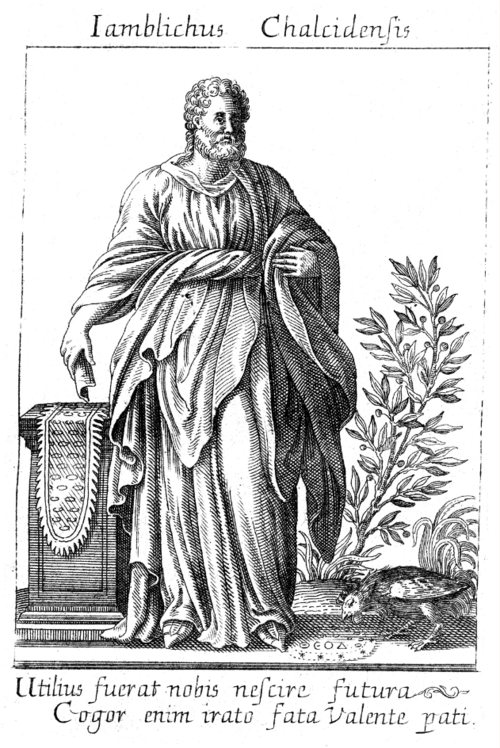
Portrait of Iamblichus of Chalcis
Public domain

Iamblichus of Chalcis

The Platonic and Theurgic Tradition

Central2,317 mentions

Syrian Platonist philosopher (c. 245 to c. 325 CE) who gave theurgy its philosophical defense. His On the Mysteries (De Mysteriis), written in the person of the Egyptian priest Abammon in reply to Porphyry's Letter to Anebo, is the fullest ancient account of the rites that join the soul to the gods.

Our works call him "our teacher", and every work of the School rests on him: the gods as divine intelligences, the luminous vehicle, the sunthēmata, and the fate and freedom of the soul. We quote On the Mysteries chiefly in Thomas Taylor's translation (1821), and also cite On the Pythagorean Life, the Protrepticus and the fragments of On the Soul (De Anima). The Central Doctrine and Ritual Praxis and Instruction lean on him most, with WaveForm Astrology close behind.

The Biography records that the author bought his first copy of De Mysteriis in his late twenties and has since read all of Iamblichus that survives.

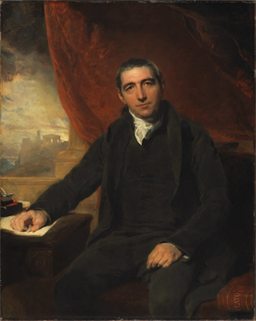
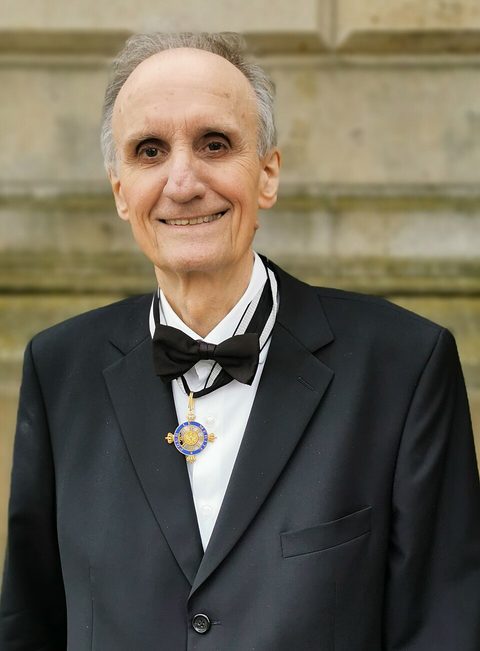
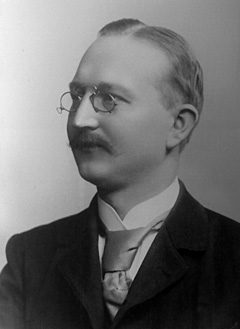
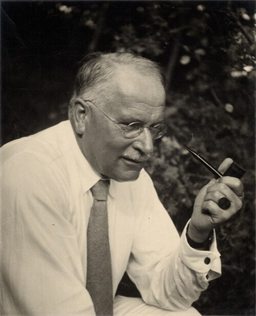
Portrait of Carl Gustav Jung
Public domain

Carl Gustav Jung

Depth Psychologists

Central2,129 mentions

Carl Gustav Jung (1875–1961) was the Swiss psychiatrist who founded analytical psychology, known for the collective unconscious, the archetypes, psychological types, individuation and synchronicity.

Jung is a pillar of our School, cited in every one of our works and most heavily in the Central Doctrine and WaveForm Astrology. We draw on the Collected Works (among them Psychological Types, Aion, Psychology and Alchemy and the essay on synchronicity), Memories, Dreams, Reflections, The Red Book, his letters, The Freud/Jung Letters and The Interpretation of Nature and the Psyche with Pauli. His archetypes give our vocabulary of the gods, and his dual-aspect work with Pauli founds our psychoid ground. The Central Doctrine (§1.8.1) sets his picture of consciousness as an island in the sea of the unconscious (Collected Works 16, par. 366) beside the personal sphere of the ochēma, and sets his active imagination beside the School's imagination, which passes into the real in the rite.

The Biography records that from 2015 the author studied Jung steadily until he had finished the entire Collected Works.

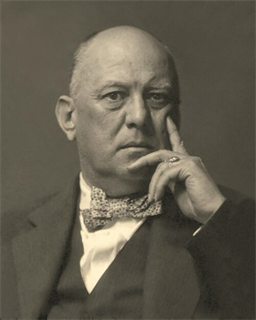
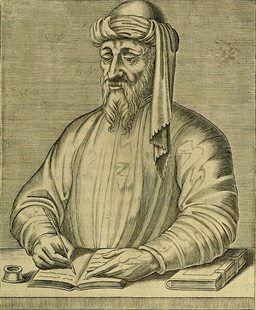
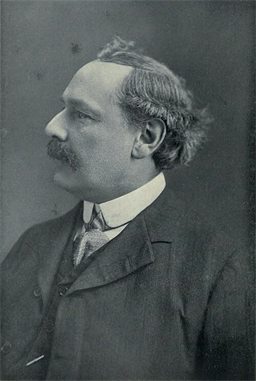
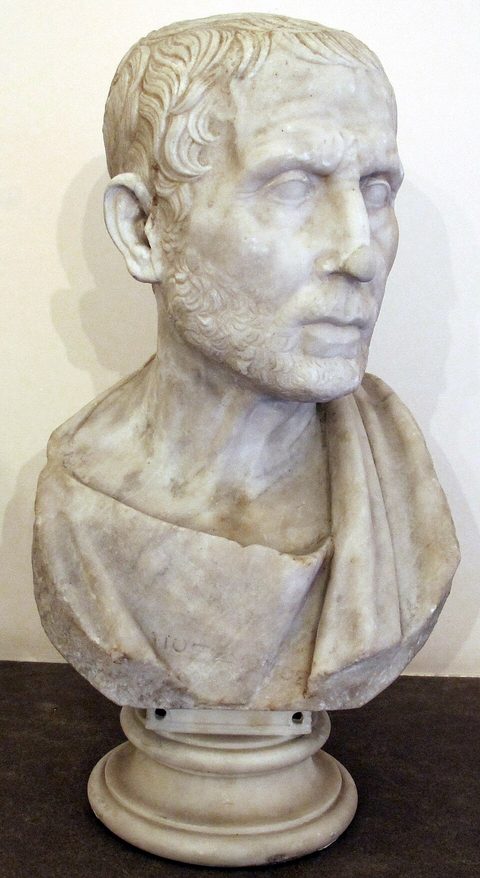
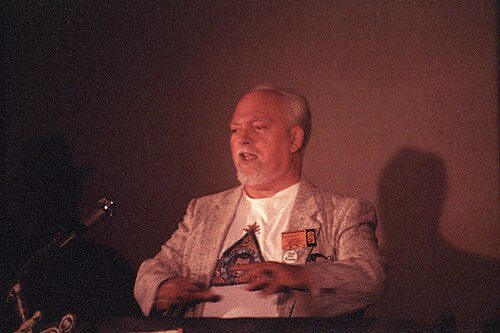
Portrait of Aleister Crowley
Public domain

Aleister Crowley (Edward Alexander Crowley)

Thelema

Central1,287 mentions

Aleister Crowley (1875–1947) was an English occultist, the founder of Thelema through The Book of the Law, and the designer, with Lady Frieda Harris, of the Thoth Tarot described in The Book of Thoth (1944). His other works include 777, Magick in Theory and Practice, The Equinox and Magick Without Tears.

With Crowley our School holds that humanity has entered the Aeon of Horus, and we take "every man and every woman is a star" (The Book of the Law I.3) to mean that each person is a solar center. The Divine Arcana Tarot follows his attributions and the Thoth titles, quoting him in short sentences, and the Central Doctrine and One Architecture engage him at length. The Head Master considers himself a Thelemite, as One Architecture argues (§13.2).

The Biography states that the author read The Confessions at sixteen and bought the Thoth Tarot at eighteen, and that "Crowley is the doorway and Iamblichus the master of the house behind it."

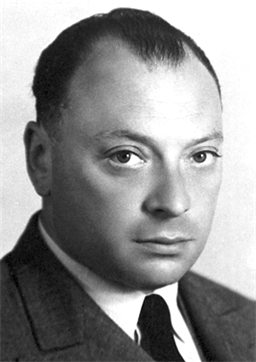
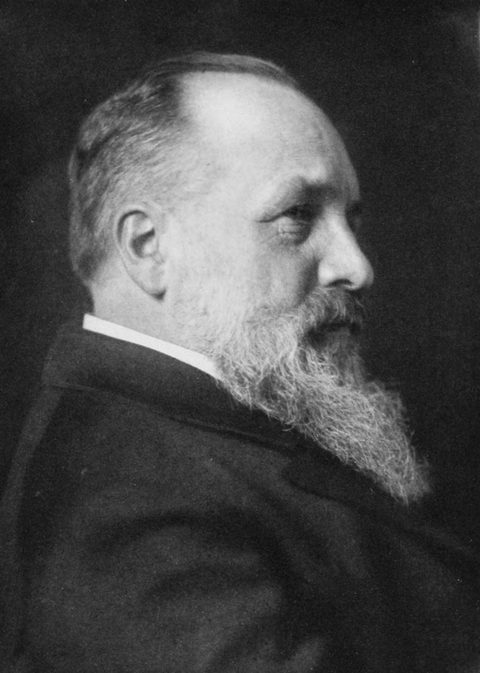
Portrait of Wolfgang Ernst Pauli
Public domain

Wolfgang Ernst Pauli

Physicists

Central1,158 mentions

Austrian-born physicist (1900–1958), Nobel laureate of 1945 for the exclusion principle, and for many years the friend and correspondent of Carl Jung.

Pauli stands with Jung at the root of our School's science. From him we take complementarity carried from physics to psyche and matter, dual-aspect monism, the Unus Mundus and statistical causality. Our works cite The Interpretation of Nature and the Psyche with his essay "The Influence of Archetypal Ideas on the Scientific Theories of Kepler", Atom and Archetype: The Pauli/Jung Letters 1932–1958 and Writings on Physics and Philosophy. The Central Doctrine leans on him most, then WaveForm Astrology and the Little Suns guide.

The Biography names him among the teachers who most shaped the author's thinking, and records how personally the Kepler essay moved him.

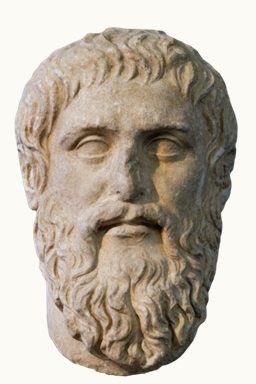
Portrait of Plato
Public domain

Plato

Classical Philosophers of Greece and Rome

Central911 mentions

Athenian philosopher (c. 428 to 348 BCE), student of Socrates and founder of the Academy, whose dialogues are the root of the whole Platonic tradition.

The Timaeus is the dialogue we cite most: the Demiurge, the World Soul woven from center to circumference, the Cosmos as a living creature and an image of the intelligible, and the souls set each upon a star. We also draw on the Republic (the Good beyond Being), the Philebus (limit and unlimited), the Phaedrus, Symposium, Meno, Phaedo, Cratylus and Parmenides. Every work leans on him, the Central Doctrine, Ritual Praxis and Instruction, WaveForm Astrology, The Divine Arcana Tarot and Little Suns most of all.

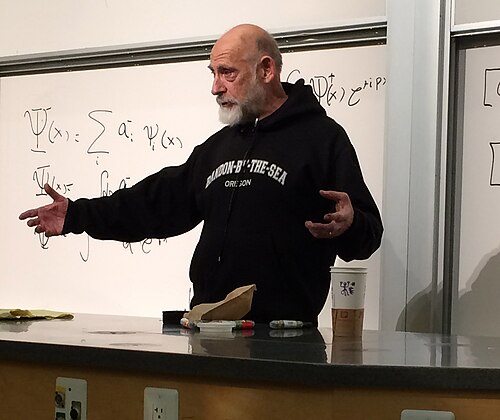
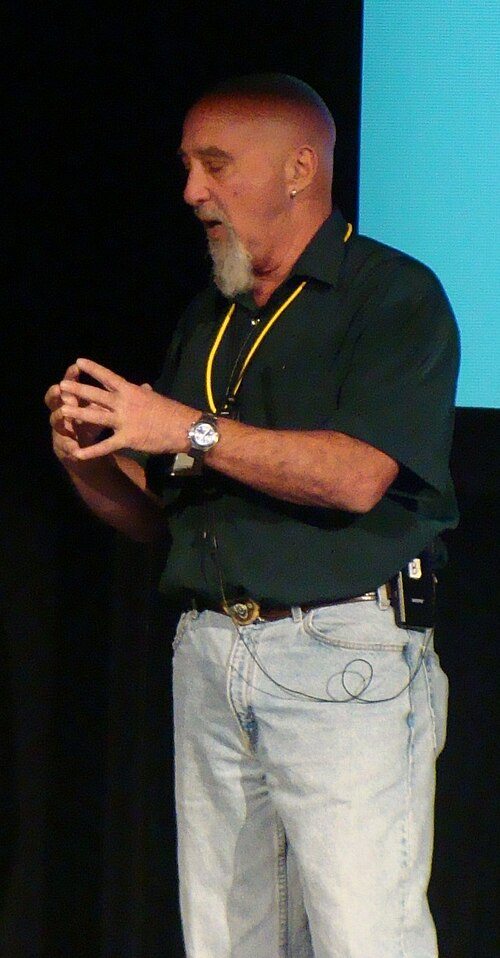
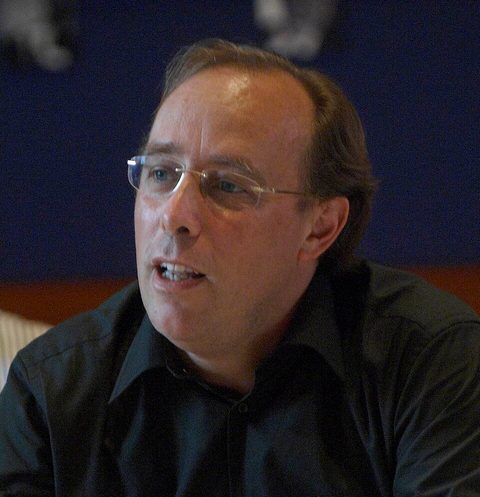
Portrait of Leonard Susskind
CC BY-SA 3.0

Leonard Susskind

Physicists

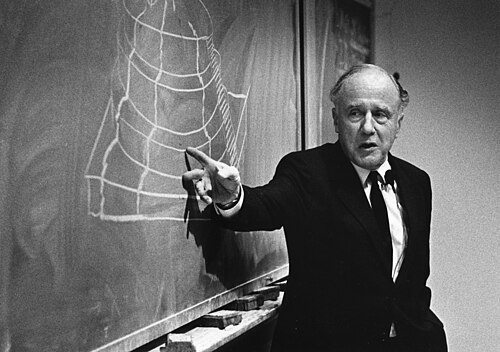
Central536 mentions

American theoretical physicist at Stanford (born 1940), a founder of string theory and, with Gerard 't Hooft, of the holographic principle.

Susskind supplies the cosmological half of our doctrine: the holographic boundary, black hole complementarity, the landscape and the Multiverse, the "hat", and the Copenhagen and Everett pictures as complementary descriptions. We cite The Cosmic Landscape, The Black Hole War, "The World as a Hologram" (1995), the Bousso–Susskind paper "The Multiverse Interpretation of Quantum Mechanics" (2012) and his later papers with Maldacena and on GR = QM. The Central Doctrine and WaveForm Astrology lean on him most.

The author came to him through Timothy Desmond's Psyche and Singularity in October 2021 and spent the summer of 2022 on the Bousso–Susskind papers, as the Biography records.

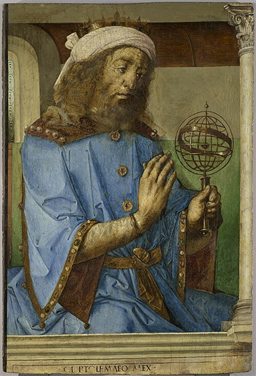
Portrait of Claudius Ptolemy
Public domain

Claudius Ptolemy

Traditional Astrologers

Central432 mentions

Alexandrian astronomer and astrologer of the second century CE, author of the Almagest and the Tetrabiblos, the work that systematized horoscopic astrology and anchored the zodiac to the equinoxes and solstices.

Our astrology's tropical frame traces to him. WaveForm Astrology quotes Tetrabiblos I.3 on fate and on foreknowledge that calms the soul, and the Central Doctrine adds that we hold the tropical zodiac as a consequence of the solar center, not as a convention inherited from Ptolemy. The Science of Astrology leans on him most, scoring his significations (Tetrabiblos III.13, IV.4, IV.5) against modern data, among them the square between spouses' Suns.

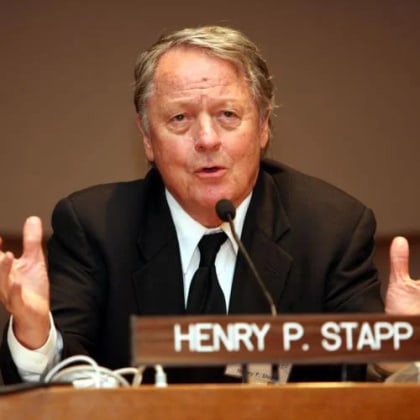
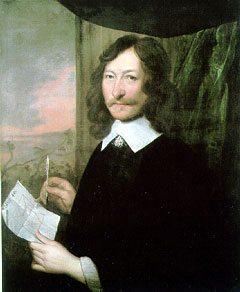
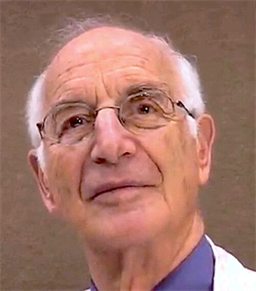
Portrait of Henry Pierce Stapp

Henry Pierce Stapp

Physicists

Central432 mentions

American physicist of the Lawrence Berkeley National Laboratory, who worked with Pauli in Zürich in 1958 and developed the Orthodox (von Neumann) interpretation of quantum mechanics with the observer's choice built into the physics.

Our School counts Stapp among its teachers. From him we take the probing action and nature's answer, read as the shape of the rite, the quantum Zeno effect as sustained attention, templates for action and his bridge to William James. Our works cite Mind, Matter and Quantum Mechanics (1993), Mindful Universe (2007), Quantum Theory and Free Will (2017) and "Quantum Theory and the Role of Mind in Nature" (2001). The Central Doctrine, WaveForm Astrology and Ritual Praxis and Instruction lean on him most.

Portrait of Gregory Shaw

Gregory Shaw

Scholars and Translators

Central399 mentions

Gregory Shaw is an American scholar of religion and of late Platonism, known for his study of Iamblichus and the theurgic tradition.

Shaw is our chief scholarly guide to Iamblichus, and the Central Doctrine names him among the six who most shaped the tenets and training of our School. Our works cite Theurgy and the Soul: The Neoplatonism of Iamblichus, Hellenic Tantra: The Theurgic Platonism of Iamblichus (2024), and his essays "The Role of Aesthesis in Theurgy" and "Demon est Deus Inversus". He appears across the Central Doctrine, Ritual Praxis and Instruction, WaveForm Astrology and Dream Theurgy.

In the Biography the author writes that he owes more to Shaw than to any other scholar for his understanding of Iamblichus, and that Shaw's comparison of theurgy with the Tantric traditions of India was a bridge he had been waiting for.

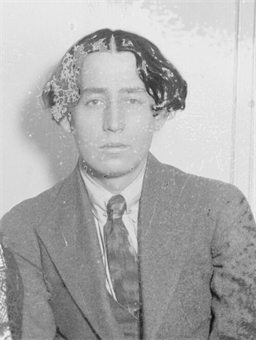
Portrait of Israel Regardie

Israel Regardie

Modern Occultists: the Golden Dawn, Hermeticism and Theosophy

Central336 mentions

Israel Regardie (1907–1985) served as Aleister Crowley's secretary and later published the teachings of the Hermetic Order of the Golden Dawn in The Golden Dawn (1937–1940). He also wrote The Tree of Life: A Study in Magic and The Middle Pillar (1938).

Regardie is one of the doors to our School. His citations of the De Mysteriis led the author to Iamblichus, and we take from him the two registers of the astral, a lunar astral and a solar, celestial one, and the Middle Pillar exercise. The Central Doctrine, Ritual Praxis and Instruction, the Layman and One Architecture (which compares our School with the Golden Dawn largely through his printing of its papers) lean on him most.

The Biography and the Layman state that the author studied and read all of his works.

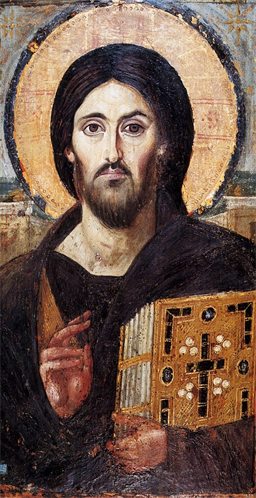
Portrait of Jesus of Nazareth
Public domain

Jesus of Nazareth (Jesus Christ)

Founders of World Traditions

Central319 mentions

Jesus of Nazareth was the Jewish teacher of first-century Galilee whose life and sayings are the foundation of Christianity.

The author names Jesus among his teachers with Kṛṣṇa, Iamblichus and Lao Tzu (Central Doctrine, Ch. 1, §1.11). The Central Doctrine honors the Christ of the Gospel of Thomas, one of the three works of wisdom our School gives the aspirant, and reads the canonical Gospels, early Christianity and its Platonic setting at length. Dream Theurgy, The Divine Arcana Tarot and Ritual Praxis and Instruction draw on the Gospels and set Jesus among the teachers who carry the Father's word.

Portrait of Raphael Bousso
CC0

Raphael Bousso

Physicists

Central319 mentions

Theoretical physicist (born 1971), professor of physics at the University of California, Berkeley. He proposed the covariant entropy bound in 1999 and wrote, with Leonard Susskind, "The Multiverse Interpretation of Quantum Mechanics" (2011, Physical Review D 85, 2012).

Central Doctrine I lists Bousso and Susskind among the thinkers named in our seventeen Articles and in its table of sources, gives their Multiverse picture full standing as the view from the circumference beside the Orthodox picture, and takes from them the causal diamond as our cosmology of nesting (Article 8). From their thought experiment of a photon crossing Pluto's orbit we take the five and a half hours of the seal of the crossing. WaveForm Astrology, The Science of Astrology and Ritual Praxis and Instruction use the hat and the nested diamonds throughout.

Portrait of Timothy Desmond

Timothy (Tod) Desmond

Scholars and Translators

Central278 mentions

Timothy (Tod) Desmond is a Jungian scholar and Platonist with a doctorate in philosophy and religion from the California Institute of Integral Studies, who carries the work of Jung and Pauli into holographic string theory.

Desmond is a pillar of our cosmology, and the Central Doctrine names him first among the six who most shaped our School. From Psyche and Singularity: Jungian Psychology and Holographic String Theory (2018) and his teaching to the School we take the formula Psyche = Singularity, the reading of the Cosmic Horizon as an inside-out event horizon, and Jñāna yoga as the bending of the mind into held shapes. He is used most in the Central Doctrine, Ritual Praxis and Instruction, the Layman and the Biography.

The author read Psyche and Singularity in October 2021, first contacted Desmond in February 2022, and received him on a visit in July 2022; the Biography calls him "my friend and teacher".

Portrait of Richard Tarnas
CC BY-SA 4.0

Richard Tarnas

Modern Astrologers

Central209 mentions

American cultural historian and leading figure of archetypal astrology, author of The Passion of the Western Mind (1991), Prometheus the Awakener (1995) and Cosmos and Psyche (2006).

WaveForm Astrology recommends Cosmos and Psyche to every student of our School and gives him his own section (2.9) as the bridge from Jung to working astrology. With him we hold that planets indicate archetypal dynamics without causing them; where his work is chiefly explanatory and historical, we ask the operative question of how to work with a correspondence. The Science of Astrology uses his fifteen-degree orb for outer-planet alignments.

The Biography names him among the authors the author studied from 2020 on.

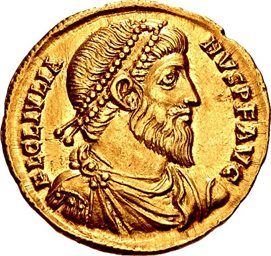
Portrait of Emperor Julian
CC BY-SA 2.5

Emperor Julian (Flavius Claudius Julianus)

The Platonic and Theurgic Tradition

Central207 mentions

Julian ruled Rome from 361 to 363 CE, the last emperor to hold the old worship, a Neoplatonist in the line of Iamblichus who tried to restore the temples and the rites of the gods.

Our works treat his Hymn to King Helios as the most complete surviving statement of ancient solar theology, the Sun as the visible image of the intelligible Sun, and it stands behind our solar microcosm and the Sun at the center of the person. We also cite his Hymn to the Mother of the Gods. The Central Doctrine gives his restoration of the gods its own chapter (Chapter 53), and the Sacred History and The Divine Arcana Tarot (where he is a persona-mask of Aries) lean on him.

Portrait of Samuel Liddell MacGregor Mathers
Public domain

Samuel Liddell MacGregor Mathers

Modern Occultists: the Golden Dawn, Hermeticism and Theosophy

Central168 mentions

Samuel Liddell MacGregor Mathers (1854–1918) founded the Hermetic Order of the Golden Dawn in London in 1888 with William Wynn Westcott and William Robert Woodman. He translated The Kabbalah Unveiled, The Key of Solomon the King and The Book of the Sacred Magic of Abramelin.

We credit him, with the Golden Dawn's Book T, for laying the thirty-six small cards of the Tarot on the decans and setting the whole pack on a sphere, the arrangement behind our decan wheel in the Central Doctrine (Chapters 50 and 51) and The Divine Arcana Tarot. The Central Doctrine cites The Kabbalah Unveiled for the three veils of negative existence, and One Architecture treats his order at length.

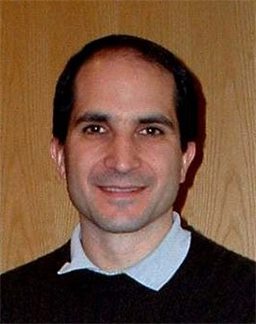
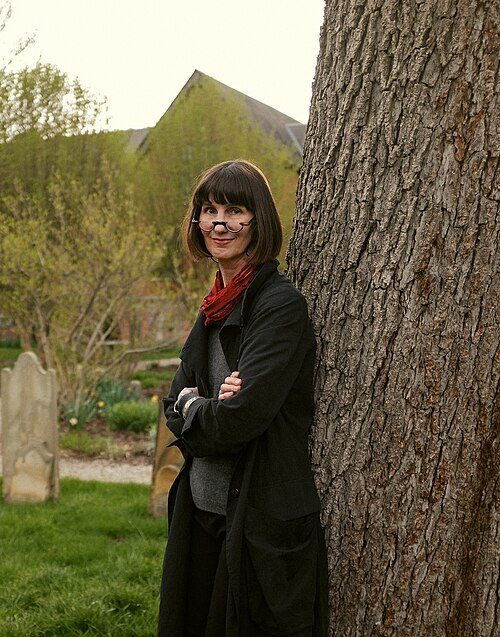
John C. W. McKinley

Consciousness, Light and Life Sciences

Central160 mentions

John C. W. McKinley is a physicist and the author of "The Principle of Delayed Resolution: A Teleological Framework for Unifying Physical Mechanics."

Our School adopts his principle that light, with zero proper time on its null path, gives the whole relation at once and is resolved at interaction. It grounds our teaching of light as instruction, the Logos of light, in Chapter 30 of the Central Doctrine, and it runs through Ritual Praxis and Instruction, WaveForm Astrology, The Divine Arcana Tarot, The Science of Astrology, the Layman (Part III), Dream Theurgy, One Architecture, the Sacred History, the Biography and Little Suns.

The author records that he had taught this view of light for years before he found it in McKinley's work.

Portrait of Keiron Le Grice

Keiron Le Grice

Modern Astrologers

Central139 mentions

Scholar of archetypal cosmology at Pacifica, author of The Archetypal Cosmos (2010), founding editor of the journal Archai, and co-editor with Safron Rossi of Jung on Astrology (2018).

WaveForm Astrology draws the archetypal field of each planet from The Archetypal Cosmos. The Divine Arcana Tarot uses that field, rewritten in our voice, for the archetypal register of each trump, with our lower and higher octave in place of his shadow and constructive pair. Ritual Praxis and Instruction also cites him often.

The Biography names him among the authors the author studied from 2020 on.

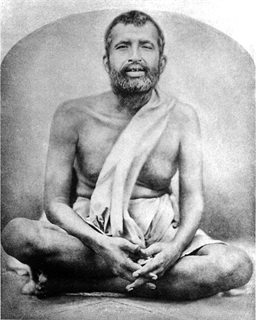
Portrait of Sri Ramakrishna Paramahamsa
Public domain

Sri Ramakrishna Paramahamsa

Modern Spiritual Teachers

Central127 mentions

Ramakrishna (1836–1886) was a Bengali saint and priest of Kālī at Dakshineswar who passed through Śākta Tantra, Vaiṣṇava devotion and formless contemplation and taught that every sincere path reaches the same reality.

The Central Doctrine (Ch. 37) rests the Śākta foundation of our School's Eastern practice on the Goddess as heard through his life, and quotes The Gospel of Sri Ramakrishna by "M" in Swami Nikhilananda's translation. His teaching of many paths, the lake with many ghats and his Nitya and Līlā appear in the Central Doctrine, the Layman and Little Suns, and he stands on our list of the teachers of the East.

Portrait of Donald David Hoffman
CC BY-SA 4.0

Donald David Hoffman

Consciousness, Light and Life Sciences

Central117 mentions

Donald David Hoffman is an American cognitive scientist known for conscious realism and the interface theory of perception.

We cite "Conscious Realism and the Mind-Body Problem" (2008), The Case Against Reality (2019) and "Objects of Consciousness" with Chetan Prakash (2014). His conscious agent underlies our term "vast agency" for gods, planets and signs, an application that is our School's own step, set within the dual-aspect monism of Jung and Pauli. The Central Doctrine leans on him most, with Ritual Praxis and Instruction and The Divine Arcana Tarot.

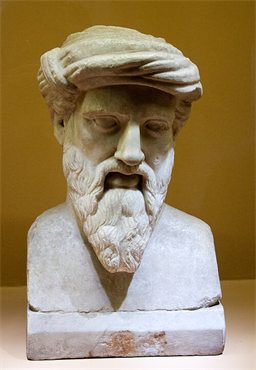
Portrait of Pythagoras of Samos
Public domain

Pythagoras of Samos

Classical Philosophers of Greece and Rome

Central98 mentions

Greek philosopher born on Samos around 570 BCE who founded his community at Croton in southern Italy. He is known chiefly through his followers, who taught number as the structure of things.

Our works cite him for the sky as an order of number and harmony, the musical ratios behind the aspects, and the evening review of the Golden Verses. We know him mostly through Iamblichus's On the Pythagorean Life and Aristotle's report in On the Heavens, and The Science of Astrology, Little Suns, the Central Doctrine and One Architecture lean on him most.

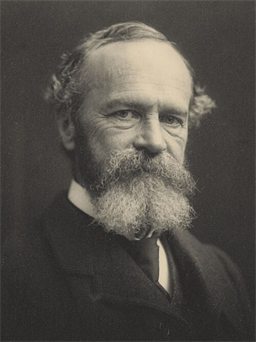
Portrait of William James
Public domain

William James

Depth Psychologists

Central98 mentions

William James (1842–1910) was the American psychologist and philosopher regarded as the founder of American psychology, author of The Principles of Psychology and The Varieties of Religious Experience.

James is the psychologist of Henry Stapp, and through Stapp he gives our teaching of the volitional will, the will as attention held. We quote his phrase that the effort of attention is "the essential phenomenon of will" from The Principles of Psychology, and also cite Psychology: Briefer Course, A Pluralistic Universe and Some Problems of Philosophy. WaveForm Astrology (Ch. 7) and the Central Doctrine lean on him most.

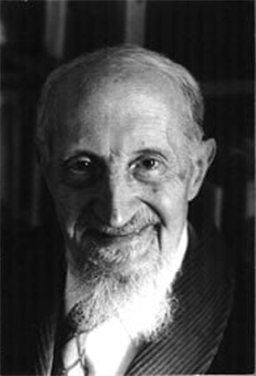
Portrait of Roberto Assagioli
CC0

Roberto Assagioli

Depth Psychologists

Central97 mentions

Roberto Assagioli was an Italian psychiatrist, among the first to bring psychoanalysis to Italy, in contact with both Freud and Jung, and the founder of psychosynthesis.

Our map of the psyche, the Transpersonal Egg, is adapted from the egg diagram in his Psychosynthesis (1965), and we read its permeable outline as the image of the ochēma. From The Act of Will we teach his fifth psychological law on attention, interest, affirmation and repetition. He is used most in the Central Doctrine, the Layman and the Biography.

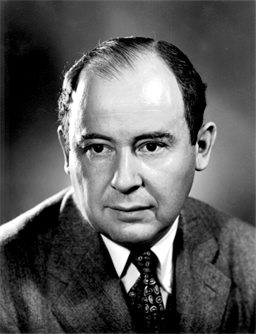
Portrait of John von Neumann
Free, attribution

John von Neumann

Physicists

Central86 mentions

Hungarian-American mathematician (1903–1957) who gave quantum mechanics its rigorous form.

His Mathematical Foundations of Quantum Mechanics (1932), cited in our works, is the root of the Orthodox reading that Stapp develops, in which the observer's choice of question enters the physics. Until the summer of 2022 the author's model rested on the Orthodox reading of von Neumann and Stapp. He appears most in the Central Doctrine and WaveForm Astrology.

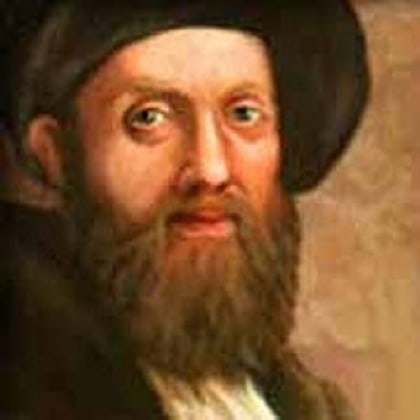
Portrait of Isaac Luria

Isaac Luria (the Ari)

Kabbalists

Central81 mentions

Isaac Luria (1534–1572) was the Kabbalist master of Safed whose teaching on the Tzimtzum, the divine contraction, founded Lurianic Kabbalah. He wrote almost nothing himself; his disciple Ḥayyim Vital recorded his teaching.

We take the Tzimtzum, the withdrawal of the Infinite at the central point and the single line of light (the kav) that enters the void, as our second image of the center. The Central Doctrine (with Chapter 59 on the contraction), Ritual Praxis and Instruction (Chapter 26) and the Layman cite him, always through Vital's Etz Ḥayyim. The Central Doctrine also names him beside the Upaniṣads and the Tao Te Ching among the witnesses to the Ground.

The Biography records the author's two years, from age twenty-two in Salem, Oregon, given to the exclusive practice of Lurianic Kabbalah.

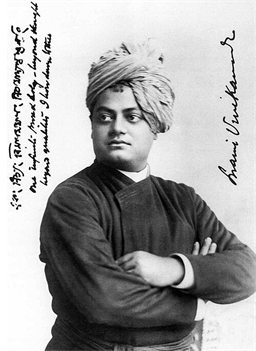
Portrait of Swami Vivekananda
Public domain

Swami Vivekananda

Modern Spiritual Teachers

Central62 mentions

Vivekananda (1863–1902) was the leading disciple of Ramakrishna, who brought Vedānta and Yoga to the West, above all through his addresses at the World's Parliament of Religions in Chicago in 1893.

The Central Doctrine (Ch. 3, §3.12) quotes his Chicago address, with the hymn of many rivers reaching one sea, as an image of our universal recognition. Ritual Praxis and Instruction cites his Raja Yoga (1896) as the work that gave Patañjali's system its modern name, and The Divine Arcana Tarot and the Layman quote his poem "Kali the Mother" (1898) from The Complete Works.

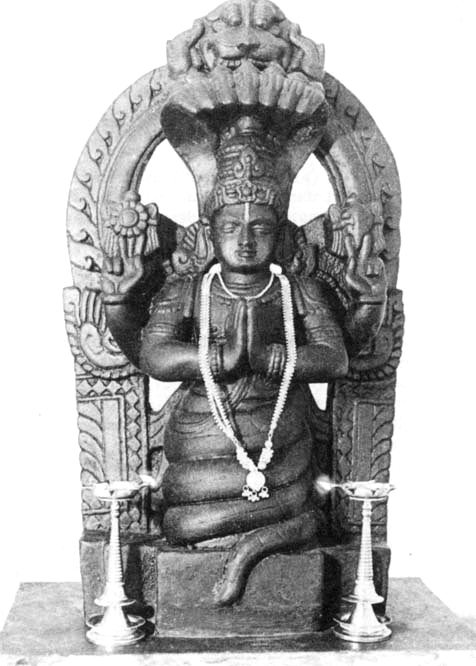
Portrait of Patañjali
CC BY-SA 3.0

Patañjali

Eastern Philosophers and Sages

Central48 mentions

Patañjali is the traditional compiler of the Yoga Sūtras, the classical text of Rāja yoga, which defines yoga as the stilling of the movements of the mind and sets out the eight limbs.

Our Raja Kundalini, the preparation of the vessel taught in Ritual Praxis and Instruction, is built on his eight limbs, from yama and niyama to samādhi. The Central Doctrine draws on his restraints as a "great vow" and his warning that the siddhis are obstacles to absorption; Dream Theurgy cites Yoga Sūtra 1.38 on the dream, and The Divine Arcana Tarot quotes II.6 on false ego.

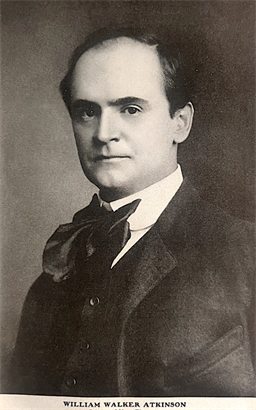
Portrait of William Walker Atkinson
Public domain

William Walker Atkinson (Yogi Ramacharaka)

Modern Occultists: the Golden Dawn, Hermeticism and Theosophy

Central47 mentions

William Walker Atkinson (1862–1932) was an American New Thought writer. The Kybalion (1908), published under the name "Three Initiates," is attributed to him, and as Yogi Ramacharaka he wrote A Series of Lessons in Raja Yoga (1906).

From The Kybalion's teaching of gender our School draws its doctrine of mental gender (Central Doctrine, Ch. 6 and 44), and WaveForm Astrology cites its Principle of Vibration. Ritual Praxis and Instruction (Chapter 5) draws on the Lessons in Raja Yoga for the theurgist as a center of consciousness. The Central Doctrine (§1.8.1) names The Kybalion as the root of Summum's literature, where the author learned the word involution.

The Biography states that The Kybalion's Principle of Polarity gave the author his first disciplined meditation and that he read every Atkinson text he could find.

Portrait of Abhinavagupta
CC0

Abhinavagupta

Eastern Philosophers and Sages

Central46 mentions

Abhinavagupta (tenth to eleventh century) was the great master of Kashmir Śaivism, whose Tantrāloka, "Light on the Tantras", is the summa of that tradition.

The Central Doctrine (Ch. 9) sets the Tantrāloka beside Iamblichus's De Mysteriis as a second witness to one architecture of ascent, both reading ritual as ontological participation. Ritual Praxis and Instruction draws on him for the awakened subtle body and the rule "having become Śiva, one should worship Śiva", citing chapters 12, 13 and 29 with Dupuche's Abhinavagupta: The Kula Ritual. The Biography records that the author read most of the Tantrāloka.

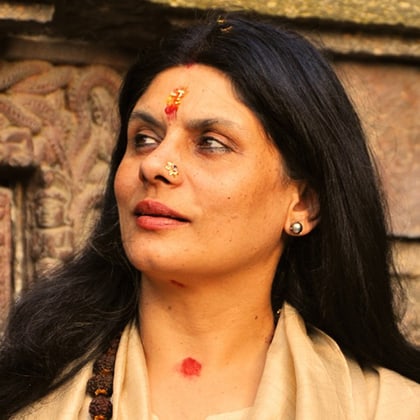
Portrait of Yogini Shambhavi Chopra

Yogini Shambhavi Chopra

Modern Spiritual Teachers

Central43 mentions

Shambhavi Chopra is a teacher of Tantra and the Goddess traditions, author of Yogic Secrets of the Dark Goddess (2007).

The Central Doctrine and Ritual Praxis and Instruction quote that book for Kālī as Mahārātri, the great universal night, and the Central Doctrine sets her definition of Kālī beside Hecate. Ritual Praxis and Instruction (§26.2.5), the Central Doctrine (§45.8, where her passage is quoted in full) and the Layman (Parts II and VII) credit to her, in her own words, the law of spiritual growth, "the deeper the center, the wider its circumference". The Biography names her in the author's own lineage (Ch. 15), and she stands on our list of the teachers of the East.

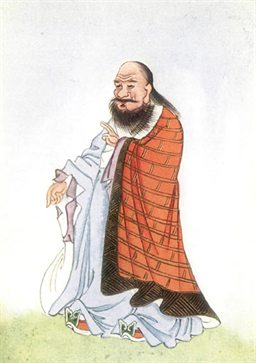
Portrait of Laozi
Public domain

Laozi (Lao Tzu)

Eastern Philosophers and Sages

Central40 mentions

Laozi is the sage to whom the Tao Te Ching is traditionally attributed, a text compiled on current scholarship between about the fourth and third century BCE.

The author names him with Kṛṣṇa, Jesus and Iamblichus as one of his teachers (Central Doctrine, Ch. 1, §1.11), and the Tao Te Ching is one of the three works of wisdom our School gives the aspirant. The Central Doctrine quotes it in the translations of D. C. Lau, Stephen Mitchell and Gia-Fu Feng; the Layman uses its lines on procession and return, and the Tao stands among the names of the Absolute in our works and in Little Suns.

Portrait of Scott Berman

Scott Berman

Modern Western Philosophers

Central18 mentions

Scott Berman is a contemporary philosopher of science and the author of Platonism and the Objects of Science (2020).

He holds that Platonism gives the most adequate account of what scientific experiments are about. In his account the particulars of the physical world are the spatiotemporal manifestations of non-spatiotemporal universals. The Central Doctrine takes from him the claim that the archetypes are the Forms (§9.1) and joins his Platonic realism to Hoffman's network of conscious agents (§42.4). Ritual Praxis and Instruction (§11.4), WaveForm Astrology (§3.5.2) and Little Suns (Lesson 4.3) carry the point briefly.

Supporting influences 196

Portrait of Johannes Kepler
Public domain

Johannes Kepler

Astronomers

Supporting318 mentions

Johannes Kepler (1571–1630) was the German astronomer who found the laws of planetary motion and who practiced astrology throughout his life.

Kepler is our chief witness that the founder of modern astronomy held astrology to rest on experience. We cite Astronomia Nova, Tertius Interveniens and De Stella Nova, whose eighth chapter we quote on the aspects of the planets, and Pauli's essay on the archetypal ideas in Kepler's theories. His harmony underlies our reading of aspects as phase relationships. The Science of Astrology leans on him most, with the Central Doctrine, the Sacred History and WaveForm Astrology.

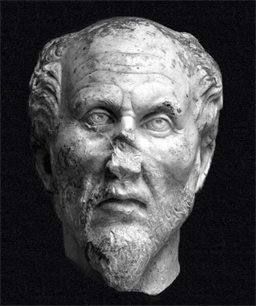
Portrait of Proclus Lycius

Proclus Lycius (Proclus of Athens)

The Platonic and Theurgic Tradition

Supporting267 mentions

Head of the Platonic school at Athens in the fifth century CE (412 to 485) and the great systematizer of theurgic Platonism. He wrote the Elements of Theology, the Platonic Theology, hymns, and commentaries on Plato's dialogues and on the first book of Euclid.

Our works draw on his doctrine of the chains or series (seirai) descending from each god, the ancestor of every table of planetary correspondence, and on his hymn to Helios as "king of mental fire". We cite the Elements of Theology, the Platonic Theology and the Commentary on the Timaeus, chiefly in the Central Doctrine, WaveForm Astrology and the Sacred History. The Biography names him among the authors read beside Iamblichus.

Portrait of Thomas Taylor
Public domain

Thomas Taylor (the Platonist)

Scholars and Translators

Supporting266 mentions

Thomas Taylor (1758–1835) was an English translator who first rendered much of Plato and the Neoplatonists into English.

Taylor's translations are a main textual source across our works. We quote his Iamblichus on the Mysteries (1821), The Mystical Hymns of Orpheus (1787), his Proclus on Euclid (1792), Iamblichus' Life of Pythagoras (1818), Select Works of Porphyry (1823) and his Sallust with the hymns of Proclus. The Divine Arcana Tarot and Ritual Praxis and Instruction lean on him most, with Sacred History and the Central Doctrine.

Portrait of Porphyry of Tyre
Public domain

Porphyry of Tyre

The Platonic and Theurgic Tradition

Supporting247 mentions

Platonist philosopher (c. 234 to c. 305 CE), student and editor of Plotinus, who arranged his teacher's writings as the Enneads. He was probably an early teacher of Iamblichus.

We meet him chiefly as the questioner whose Letter to Anebo Iamblichus answers in On the Mysteries, so his doubts frame many of our teachings on dreams, the planets and the presence of the gods. Our works also cite his Sententiae, On Abstinence, his Life of Pythagoras and the burning of Against the Christians, mostly in the Central Doctrine, the Sacred History and The Divine Arcana Tarot.

Portrait of Plotinus
Public domain

Plotinus

The Platonic and Theurgic Tradition

Supporting218 mentions

Philosopher (c. 205 to 270 CE) who taught in Rome and gave Platonism the form now called Neoplatonism. His treatises were collected by Porphyry as the Enneads.

We cite the Enneads (in Armstrong's translation) on the One beyond Being, the virtues as purification, the treatise Against the Gnostics, and the teaching that part of the soul never descends. Our School follows Iamblichus in setting that last teaching aside, and the Central Doctrine and the Biography use Plotinus as the contrast that makes the Iamblichean position clear. The Biography says the author's early practice of transcendence came from him.

Portrait of Arthur Edward Waite
Public domain

Arthur Edward Waite

Modern Occultists: the Golden Dawn, Hermeticism and Theosophy

Supporting194 mentions

Arthur Edward Waite (1857–1942) was a Golden Dawn member and scholar of occultism who, with the artist Pamela Colman Smith, published the Rider-Waite Tarot in 1909 and wrote The Pictorial Key to the Tarot.

The Divine Arcana Tarot draws on him most, citing the Pictorial Key and the Waite-Smith pack beside the Thoth deck. Many of our citations use his translations: Éliphas Lévi's Transcendental Magic (1896) in the Central Doctrine and Ritual Praxis and Instruction, and the Hermetic and Alchemical Writings of Paracelsus (1894) in Ritual Praxis and Instruction.

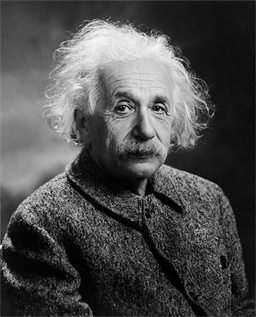
Portrait of Albert Einstein
Public domain

Albert Einstein

Physicists

Supporting170 mentions

German-born physicist (1879–1955), author of special and general relativity and of the light-quantum, Nobel laureate of 1921.

We use Einstein chiefly for E = mc², which joined to Planck's E = hf gives every mass its Compton frequency, a point WaveForm Astrology builds on. Our works also draw on his equivalence principle, the curvature of spacetime, his search for a unified field, his 1955 letter on past, present and future, and his dialogue with Tagore. He appears most in the Central Doctrine and WaveForm Astrology.

Portrait of Stephen William Hawking
Public domain

Stephen William Hawking

Physicists

Supporting139 mentions

English theoretical physicist of Cambridge (1942–2018), known for black hole radiation and for A Brief History of Time.

Hawking enters our works through the physics of the horizon: Hawking radiation, the Bekenstein–Hawking entropy and the information paradox that Susskind called the black hole war. We cite his papers of 1971, 1974 and 1975, his work with Gibbons (1977) and A Brief History of Time (1988). The Science of Astrology and the Central Doctrine use him most.

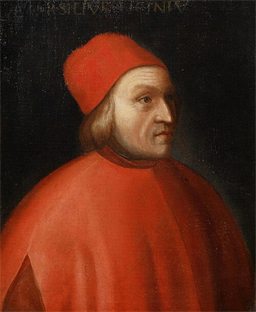
Portrait of Marsilio Ficino
Public domain

Marsilio Ficino

Renaissance Platonists and Hermeticists

Supporting124 mentions

Ficino (1433–1499) was the leading Florentine Platonist of his age. He translated Plato, Plotinus and the Hermetic writings into Latin and made a Latin version of Iamblichus's On the Mysteries, printed in 1497.

Our works name him as a carrier of the perennial theology and of the recovery of Iamblichus, the line our Central Doctrine and One Architecture trace from Plethon to the modern translators. Ritual Praxis and Instruction and WaveForm Astrology cite his Three Books on Life on the gift of Saturn, and The Science of Astrology and the Sacred History tell his engagement with astrology, including his letter to Pope Sixtus IV.

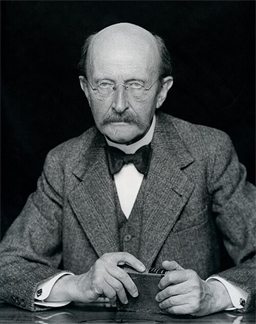
Portrait of Max Karl Ernst Ludwig Planck
Public domain

Max Karl Ernst Ludwig Planck

Physicists

Supporting120 mentions

German physicist (1858–1947) who opened the quantum era in 1900, Nobel laureate of 1918.

We use Planck mostly through his relation E = hf, by which energy is frequency, and through the Planck constant and Planck length, which set the units of horizon entropy. WaveForm Astrology and the Science of Astrology lean on him most, and the Science of Astrology quotes his Scientific Autobiography (1950) on how new scientific truths come to be accepted.

Portrait of Éliphas Lévi
Public domain

Éliphas Lévi (Alphonse Louis Constant)

Modern Occultists: the Golden Dawn, Hermeticism and Theosophy

Supporting118 mentions

Éliphas Lévi (1810–1875), the pen name of Alphonse-Louis Constant, was a French occultist whose Dogme et Rituel de la Haute Magie (1854–1856) joined the twenty-two Tarot trumps to the twenty-two Hebrew letters.

We name him among the Western protagonists of the practices our School draws on. The Central Doctrine honors his Astral Light, the universal agent, in the passage Regardie quotes, and Ritual Praxis and Instruction quotes Transcendental Magic on the Tarot as "the most perfect instrument of divination." The Divine Arcana Tarot credits him for the letter attributions of the trumps.

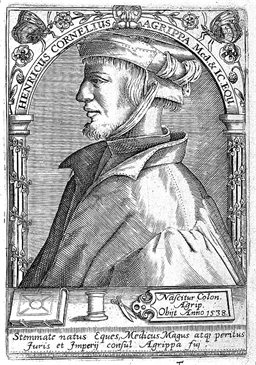
Portrait of Heinrich Cornelius Agrippa von Nettesheim
CC BY 4.0

Heinrich Cornelius Agrippa von Nettesheim

Renaissance Platonists and Hermeticists

Supporting116 mentions

Agrippa (1486–1535) was a German scholar and physician whose Three Books of Occult Philosophy (De occulta philosophia, published in full in 1533) gathered the Renaissance teaching of correspondences, celestial images and planetary powers into one system.

We take from him the alignment of the passions of the mind with the celestial powers (De occulta philosophia I.66–67), received through Francis Barrett's The Magus (1801), and the planetary Intelligences such as Hagiel of Venus (II.22). Ritual Praxis and Instruction, WaveForm Astrology and the Central Doctrine lean on him most, and the Central Doctrine also quotes his Of the Vanity and Uncertainty of Arts and Sciences.

The Biography names his Three Books of Occult Philosophy as the work standing behind the old grimoires, and records that the author's teaching on the Tarot wheel began from the vocabulary of the Renaissance.

Ellic Howe

Historians of Religion, Art and Esotericism

Supporting111 mentions

British historian and writer (1910 to 1991), who worked in political warfare in the Second World War and wrote on printing, astrology and the occult. His books include Urania's Children (1967) and The Magicians of the Golden Dawn (1972).

One Architecture takes The Magicians of the Golden Dawn as its chief documentary history of the Order, for the founding of 1888, the grades laid on the Sephiroth, the members, the schisms and his verdict on the Sprengel letters, "Everything points to their being fabrications". The Science of Astrology draws on Urania's Children for the astrologers of Germany and Britain in the Second World War. The Sacred History follows him for the Vault at Thavies Inn and Clipstone Street, its painted Rose and the Ceremony of the Equinox.

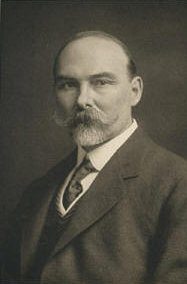
Portrait of William Wynn Westcott
Public domain

William Wynn Westcott

Modern Occultists: the Golden Dawn, Hermeticism and Theosophy

Supporting109 mentions

English coroner, Freemason and occultist (1848 to 1925), a co-founder with Mathers and Woodman of the Hermetic Order of the Golden Dawn, whose first temple opened in 1888. He translated the Sefer Yetzirah (1887) and edited The Chaldaean Oracles of Zoroaster (1895) in the Collectanea Hermetica.

His edition of the Oracles is a main source across our works, quoted under his own fragment numbers, among them fragment 185, "Theurgists fall not so as to be ranked among the herd that are in subjection to Fate", and the fragments from Psellus in The Divine Arcana Tarot and Ritual Praxis and Instruction. One Architecture, where he is cited most, gives the founding of the Order from the cipher manuscript, his Historical Lecture, his frame that makes the Chaldean system one with the Kabbalah, and the finding of Ellic Howe and the present Order that he made up the story of Anna Sprengel and her letters. The Sacred History quotes his Sefer Yetzirah on the twelve letters of the zodiac.

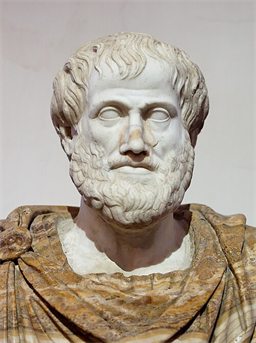
Portrait of Aristotle
Public domain

Aristotle

Classical Philosophers of Greece and Rome

Supporting103 mentions

Greek philosopher (384 to 322 BCE), student of Plato and teacher of Alexander, whose works shaped Western logic, natural science and metaphysics.

Our works cite him as a witness: the Metaphysics for Plato's debt to the Pythagoreans, On the Heavens for the oldest report of the music of the spheres, On Dreams in Dream Theurgy, On the Soul, and the History of Animals for psychē as soul and butterfly. His formal and final causes help us name a connection of meaning, mostly in The Science of Astrology and the Central Doctrine.

Portrait of Synesius of Cyrene
CC BY-SA 4.0

Synesius of Cyrene

The Platonic and Theurgic Tradition

Supporting100 mentions

Greek philosopher (c. 373 to c. 414 CE), pupil of Hypatia in Alexandria and later a Christian bishop. He wrote a treatise On Dreams (De Insomniis) and hymns.

Our works cite On Dreams, in Augustine Fitzgerald's translation, for naming the imaginative spirit the soul's "first vehicle", the source of the dream lineage of the Ochēma. Dream Theurgy leans on him most, and the Central Doctrine and Ritual Praxis and Instruction cite him on the imaginal body.

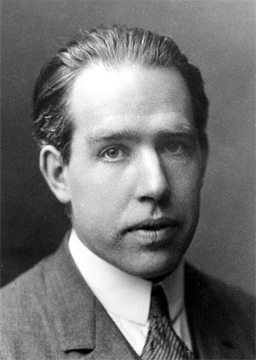
Portrait of Niels Henrik David Bohr
Public domain

Niels Henrik David Bohr

Physicists

Supporting92 mentions

Danish physicist (1885–1962), author of the quantized atom and of the principle of complementarity, Nobel laureate of 1922.

Bohr's complementarity, stated in 1927, is the principle Pauli carried into his dialogue with Jung and Susskind carried to the black hole. Our School uses it to hold the Orthodox and Multiverse pictures together as center and circumference. He appears most in the Central Doctrine, and the Biography names the complementarity of Pauli and Bohr among the teachings of opposites the author met.

Vettius Valens

Traditional Astrologers

Supporting87 mentions

Second-century astrologer of Antioch whose Anthologies is the longest Hellenistic astrological treatise to survive, built around roughly a hundred charts of real people.

The Science of Astrology treats the Anthologies as the first casebook of our art, following Neugebauer and Van Hoesen's Greek Horoscopes. The Central Doctrine and Ritual Praxis and Instruction quote Anthologies IX (Riley translation) on the seeker who becomes a devotee of what suits the foundation of the nativity. The Sacred History places him in Alexandria's astrology.

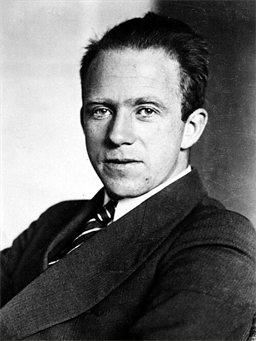
Portrait of Werner Karl Heisenberg
CC BY-SA 3.0 de

Werner Karl Heisenberg

Physicists

Supporting86 mentions

German physicist (1901–1976), a founder of quantum mechanics and author of the uncertainty principle, Nobel laureate of 1932.

We draw on his uncertainty paper of March 1927, his reading of the wavefunction as potentia awaiting actualization, and his Physics and Philosophy (1958), which we quote on the elementary particles of Plato's Timaeus as mathematical forms. He appears most in the Central Doctrine.

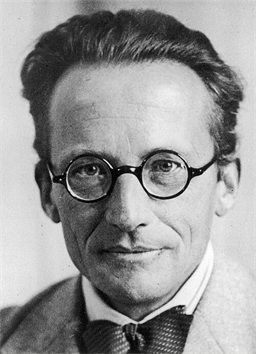
Portrait of Erwin Rudolf Josef Alexander Schrödinger
Public domain

Erwin Rudolf Josef Alexander Schrödinger

Physicists

Supporting82 mentions

Austrian physicist (1887–1961), author of the wave equation of quantum mechanics, Nobel laureate of 1933.

We draw on Schrödinger for the oneness of consciousness and his love of the Vedānta, quoting What Is Life? (1944), Mind and Matter (1958) and My View of the World, and we cite his 1935 paper in which entanglement is named. Our works set his one mind beside the one world of Jung and Pauli. He appears mostly in the Central Doctrine.

Portrait of Lon Milo DuQuette

Lon Milo DuQuette

Thelema

Supporting82 mentions

Lon Milo DuQuette (born 1948) is an American writer and teacher of Thelemic magick and the Tarot, the author of Understanding Aleister Crowley's Thoth Tarot (2003) and Tarot of Ceremonial Magick.

The Divine Arcana Tarot cites both books where a sentence of his adds to a card. The Central Doctrine and Ritual Praxis and Instruction quote his reading of Atu IX, the Hermit, as Virgo ruled by Mercury and as the hooded officiant at the royal wedding of the Lovers.

Portrait of Philo of Alexandria
Public domain

Philo of Alexandria (Philo Judaeus)

Classical Philosophers of Greece and Rome

Supporting82 mentions

Jewish Platonist philosopher of Alexandria in the first century CE, who read the Hebrew scriptures through Plato's Timaeus.

Our works cite On the Creation of the World for his Logos, the archetypal seal and "the idea of ideas", and On the Giants, On the Contemplative Life (on the Therapeutae) and other treatises, in C. D. Yonge's translation. The Central Doctrine gives him a place in Chapter 52 on the Platonism of the first centuries, and he supports our account of the Temple as an image of the sky.

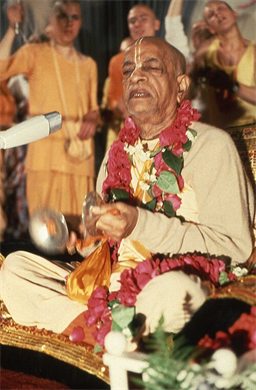
Portrait of A. C. Bhaktivedanta Swami Prabhupāda
CC BY 3.0

A. C. Bhaktivedanta Swami Prabhupāda

Modern Spiritual Teachers

Supporting80 mentions

Prabhupāda (1896–1977) was a Gauḍīya Vaiṣṇava teacher who founded the International Society for Krishna Consciousness in New York in 1966 and translated the Bhagavad-gītā As It Is and the Śrīmad-Bhāgavatam.

His translation of the Gītā supplies verses quoted across the Central Doctrine, Ritual Praxis and Instruction and WaveForm Astrology (2.17, 2.47, 4.42, 6.19), and his purports on the Śrīmad-Bhāgavatam give our works the Lord's dreaming condition and the cosmology of Mahā-Viṣṇu. The Layman quotes his Caitanya Caritāmṛta, and he stands on our list of the teachers of the East.

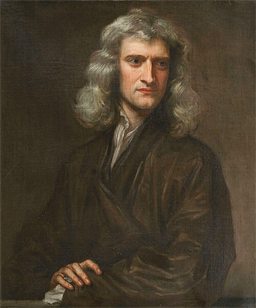
Portrait of Sir Isaac Newton
Public domain

Sir Isaac Newton

Astronomers

Supporting80 mentions

Sir Isaac Newton (1643–1727) was the English mathematician and physicist who set out the laws of motion and universal gravitation and who also worked for decades in alchemy.

We cite the Principia (Book III, Proposition 24) for his proof that the Moon governs the tides, his Opticks for the seven colors of the spectrum that give the colors of our seven centers, and his translation of the Emerald Tablet. He appears most in The Science of Astrology and the Central Doctrine.

Portrait of William Lilly
Public domain

William Lilly

Traditional Astrologers

Supporting80 mentions

English astrologer (born 1602), the most widely read of his century, author of Christian Astrology (1647) and Monarchy or No Monarchy in England.

The Central Doctrine and Ritual Praxis and Instruction quote his address "To the Student in Astrology" on knowledge that does not displace Providence. Ritual Praxis and Instruction and The Divine Arcana Tarot cite his table of essential dignities for the decan "faces." The Science of Astrology tells of his examination before Parliament in 1666 from his History of His Life and Times, and the Sacred History treats him in its own section.

Portrait of James Hillman
CC BY 3.0

James Hillman

Depth Psychologists

Supporting75 mentions

James Hillman trained at the C. G. Jung Institute in Zürich, served there as director of studies and founded archetypal psychology, in which the psyche is polytheistic and the gods are the archetypes of experience.

Our works cite Re-Visioning Psychology, Pan and the Nightmare and The Force of Character and the Lasting Life. From the last we take the force of character, which stands beside the Persona around the observing "I" in our Egg. He appears most in the Biography, the Central Doctrine and the Sacred History, and in our account of psychological astrology.

Hermann Hunger

Historians of the Ancient Near East

Supporting74 mentions

Hermann Hunger is an Austrian Assyriologist (born 1942), Emeritus Professor of Assyriology at the University of Vienna. He edited Astrological Reports to Assyrian Kings (State Archives of Assyria 8, 1992), completed the Astronomical Diaries edition begun by Abraham Sachs, and edited MUL.APIN with David Pingree (1989).

The Science of Astrology leans on him most. It quotes his account of how the omens arose and his count of "14 Assyrian and 30 Babylonian scholars" among the senders, his note that several experts in different cities guarded against a hidden omen, and his statement that the events announced "were not considered inevitable fate". It also cites the Diaries and MUL.APIN in his editions. The Sacred History and the Central Doctrine cite him on the reports, the series and the seven planetary gods.

Portrait of Juan Martín Maldacena
CC BY 3.0

Juan Martín Maldacena

Physicists

Supporting73 mentions

Argentine theoretical physicist at the Institute for Advanced Study (born 1968), author of the AdS/CFT correspondence.

We cite his paper of 1998, his work with Susskind of 2013 joining entanglement and geometry, and related papers on holographic entanglement and the information paradox, as the strongest working form of the holographic principle. The Science of Astrology uses him most, with notes on the standing of the conjecture.

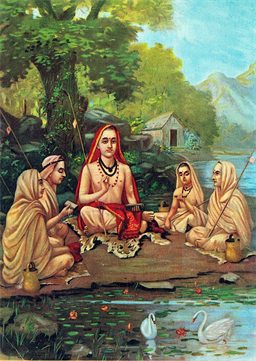
Portrait of Ādi Śaṅkarācārya
Public domain

Ādi Śaṅkarācārya (Adi Shankara)

Eastern Philosophers and Sages

Supporting70 mentions

Śaṅkara was the great teacher of Advaita Vedānta, the school which holds that Brahman alone is ultimately real and that Ātman and Brahman are not two.

The Central Doctrine sets out his non-dualism and holds Advaita right on the oneness of the ground, and quotes the Saundaryalaharī, attributed to him, on Śiva able to create only when united with Śakti; the Layman repeats that verse. Dream Theurgy uses his commentary on the Brahmasūtra (trans. Thibaut) for māyā and the dream. Part of the count is the name Śaṅkara as a title of Śiva in The Divine Arcana Tarot.

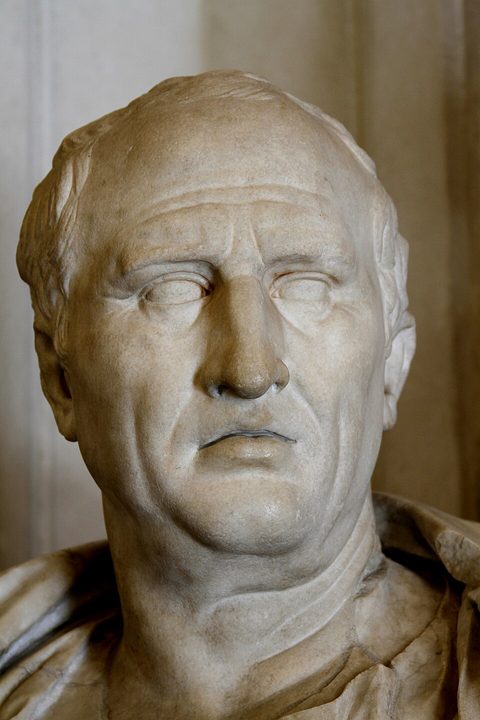
Portrait of Marcus Tullius Cicero
CC BY-SA 4.0

Marcus Tullius Cicero

Classical Philosophers of Greece and Rome

Supporting67 mentions

Roman statesman, orator and philosopher (106 to 43 BCE), who studied under Posidonius at Rhodes. His works include On the Nature of the Gods, On Divination, On Fate, On the Laws and the Republic, which closes with the Dream of Scipio.

The Dream of Scipio (Republic VI.17) gives our works the Sun as "the leader, chief and regulator of the other lights, the mind and moderator of the universe", the epigraph of Chapter 18 of WaveForm Astrology and a ground of Ritual Praxis and Instruction, and The Science of Astrology cites it for the music of the spheres. The Central Doctrine and WaveForm Astrology take from On Fate (28 to 30) the answer of Chrysippus to the lazy argument, that outcome and act are "co-fated", and from On the Laws (II.36) the better hope the mysteries gave. The Sacred History, where he is cited most, draws on On Divination for Cyrus's dream, the Magi, Eudoxus and the Stoics on the astrologers, and on On the Nature of the Gods for the divinity of the stars.

Portrait of Paul Foster Case
CC BY-SA 3.0

Paul Foster Case

Modern Occultists: the Golden Dawn, Hermeticism and Theosophy

Supporting67 mentions

Paul Foster Case (1884–1954) was an American occultist and teacher of the Tarot who founded the Builders of the Adytum (B.O.T.A.) in 1922. His books include Highlights of Tarot, The Tarot: A Key to the Wisdom of the Ages and Tarot Revelations.

Ritual Praxis and Instruction quotes the opening of Highlights of Tarot, "The TAROT is a textbook of occult teachings," and the opening lesson of Tarot Revelations on impressing the symbols on the mind. The Divine Arcana Tarot quotes him where a sentence of his adds to a card.

The Biography and the Layman record that the author was for three years, from 2000, a correspondence student of B.O.T.A., working through Case's monthly lessons and lecture tapes.

Portrait of Francesca Rochberg
CC BY 3.0

Francesca Rochberg

Historians of the Ancient Near East

Supporting66 mentions

Francesca Rochberg is an American Assyriologist and historian of science (born 1952), Catherine and William L. Magistretti Distinguished Professor of Near Eastern Studies at the University of California, Berkeley. Her books include Babylonian Horoscopes (1998), The Heavenly Writing (2004) and In the Path of the Moon (2010).

Our works take from her the Babylonian name for the sky as a "heavenly writing" (šiṭir šamê), carried in the Central Doctrine, Ritual Praxis and Instruction, WaveForm Astrology and the Sacred History. The Science of Astrology cites her edition of the twenty-eight horoscope tablets from 410 to 69 BCE, the omens generated by scheme, and the nativity of Anu-bēlšunu with Paul-Alain Beaulieu (1996). The Sacred History, which thanks her first among its scholars, cites her for the gods as authors of the omens, the scribe's duty to know "what to do about" a sign, and the omen scribes and the astronomers as one group.

Portrait of Francis Barrett
Public domain

Francis Barrett

Renaissance Platonists and Hermeticists

Supporting66 mentions

Francis Barrett was an English writer whose The Magus, or Celestial Intelligencer (London, 1801) gathered Renaissance occult philosophy into one English compendium, drawn largely from Agrippa.

From The Magus we take Agrippa's chapter on the passions of the mind (De occulta philosophia I.66–67), which Barrett reproduces in Book I: the passions aligned with the celestial powers, the practitioner as a proper receptacle, constancy of mind, and the distinction between gifts held by natural agreement and gifts gained by voluntary election. WaveForm Astrology reads that distinction as its natal ethics (Ch. 2) and gives Barrett his own section on election (§28.6). The Central Doctrine names the archetypes met in the planetary wheel "the celestials of Barrett" in his honor (§28.12) and receives the passage in its chapter on taking the shape of the gods (§46.6), and Ritual Praxis and Instruction studies it under his title (§59.6).

The Biography records that the historian D. Michael Quinn connects the seal of Jupiter on a talisman associated with Joseph Smith to the seals printed in The Magus.

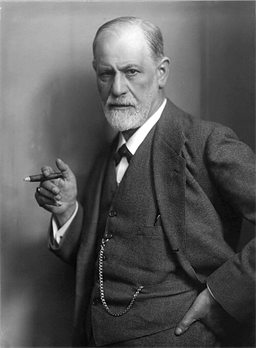
Portrait of Sigmund Freud
Public domain

Sigmund Freud

Depth Psychologists

Supporting66 mentions

Sigmund Freud (1856–1939) was the Austrian neurologist who founded psychoanalysis.

Freud appears in our works mainly as Jung's correspondent. We quote The Freud/Jung Letters for Jung's letters of 8 May and 12 June 1911 on his study of astrology, chiefly in WaveForm Astrology and the Central Doctrine, and we note that our use of libido follows Jung's wider sense of psychic energy and not Freud's narrower one.

Macrobius (Ambrosius Theodosius Macrobius)

The Platonic and Theurgic Tradition

Supporting65 mentions

Roman writer and Platonist of late antiquity (fl. c. 400 CE). He wrote the Commentary on the Dream of Scipio and the Saturnalia.

Dream Theurgy draws on the Commentary (I.3) for the five kinds of dream, of which the first three carry divination, and sets them against the regions of the Egg. The Central Doctrine and Ritual Praxis and Instruction take from the Commentary (I.12) the Chaldean order of the planetary spheres and the gifts the soul receives in its descent through them, and from I.20 his exposition of Cicero's Sun as mens mundi. The Sacred History draws on the Saturnalia (I.17 to 23) for the argument that the gods gather in the Sun, the Orphic line "One Zeus, one Hades, one Sun, one Dionysus" and the answer of Sarapis to Nicocreon.

Portrait of Plutarch of Chaeronea
CC BY-SA 4.0

Plutarch of Chaeronea

Classical Philosophers of Greece and Rome

Supporting65 mentions

Greek Platonist philosopher and biographer (before 50 to after 120 CE), born at Chaeronea in Boeotia, who served as a priest of Apollo at Delphi from about 95 CE. He wrote the Parallel Lives and the essays of the Moralia.

The Divine Arcana Tarot draws most on On Isis and Osiris, for the veiled inscription of Saïs (9), Anubis as the horizon common to the visible and invisible worlds (44) and the joining of Kronos with Chronos (32), which Ritual Praxis and Instruction and WaveForm Astrology also cite. The Central Doctrine takes from him the seasons of Apollo and Dionysus at Delphi (On the E at Delphi) and the cry "Great Pan is dead" (On the Failure of the Oracles 17). The Sacred History cites him for Sothis as the soul of Isis, Kore in the Moon, the rites of Mithras kept by the Cilician pirates and, from On Tranquillity of Mind, the cosmos as a temple in the language of the mysteries.

Portrait of Crystal Addey

Crystal Addey

Scholars and Translators

Supporting63 mentions

Crystal Addey is a scholar of late antique Platonism, known for her work on oracles, divination and theurgy.

We cite her Divination and Theurgy in Neoplatonism: Oracles of the Gods (2014) for Iamblichus' teaching that divine illumination is omnipresent while the receptivity of the practitioner must be cultivated, for the rite as a meta-symbol, and for the criteria that separate theurgy from goetia and sorcery. She appears chiefly in the Central Doctrine and WaveForm Astrology.

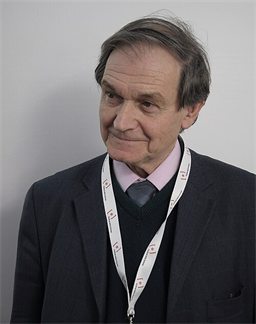
Portrait of Sir Roger Penrose
CC BY-SA 2.0

Sir Roger Penrose

Physicists

Supporting62 mentions

English mathematical physicist (born 1931), known for the singularity theorem of 1965 and for objective reduction, Nobel laureate of 2020.

Our works cite The Emperor's New Mind (1989), Shadows of the Mind (1994) and The Road to Reality, and draw on Orch-OR with Hameroff and on gravitational objective reduction. We give his view as he gave it and keep our own teaching on the conscious Sun as the School's. He appears mostly in the Central Doctrine.

David Pingree

Historians of Astrology and the Sciences

Supporting58 mentions

David Pingree (1933 to 2005) was an American historian of the exact sciences, University Professor and Professor of the History of Mathematics and Classics at Brown University. He edited Dorotheus of Sidon (1976), the Yavanajātaka (1978), Vettius Valens (1986) and the Latin Picatrix (1986), and wrote From Astral Omens to Astrology: From Babylon to Bīkāner (1997).

The Science of Astrology cites his editions with Erica Reiner and Hermann Hunger of the Venus Tablet of Ammiṣaduqa (1975) and MUL.APIN (1989), and his tracing of the art from Babylon to India. The Sacred History follows his "Astronomy and Astrology in India and Iran" (Isis, 1963) on the nakṣatras, the Babylonian methods in Indian astronomy, Ujjain as "the Greenwich of Indian astronomers", the Sasanian mixture of Greek and Indian material and the Magas as Sun priests, and quotes the Picatrix from his Latin text. WaveForm Astrology, Ritual Praxis and Instruction and Central Doctrine cite the pages of his Valens and his Yavanajātaka.

Portrait of Hugh Everett III

Hugh Everett III

Physicists

Supporting58 mentions

American physicist (1930–1982) who, as Wheeler's student, proposed the relative-state formulation of quantum mechanics in 1957, later called many-worlds.

Everett stands at the head of the many-worlds line that Bousso and Susskind identify with the Multiverse, the picture our School pairs with the Orthodox one. We cite "Theory of the Universal Wave Function" in DeWitt and Graham's The Many-Worlds Interpretation of Quantum Mechanics. He appears most in the Central Doctrine and WaveForm Astrology.

Ruth Majercik

Scholars and Translators

Supporting56 mentions

Ruth Majercik is a scholar of late antique religion, known for her edition and translation of the Chaldean Oracles.

Her The Chaldean Oracles: Text, Translation and Commentary (1989) is our standard text of the Oracles, and our works cite the fragments in her numbering, among them the fragments on Hecate as the source from which the World Soul flows (50–54). She is used throughout the Central Doctrine and Ritual Praxis and Instruction, and in Sacred History and the Layman.

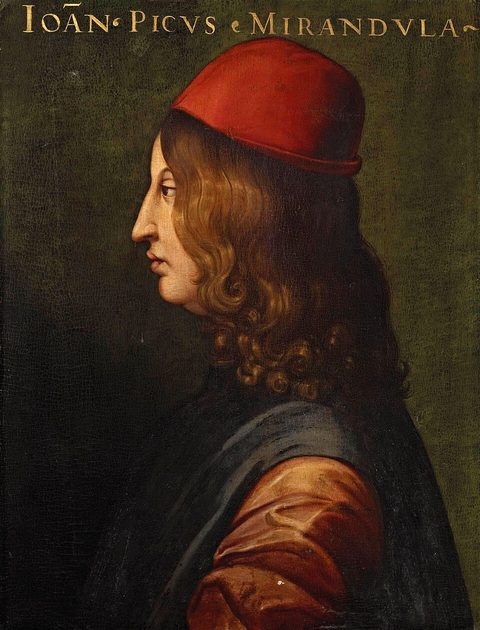
Portrait of Giovanni Pico della Mirandola
Public domain

Giovanni Pico della Mirandola

Renaissance Platonists and Hermeticists

Supporting55 mentions

Italian philosopher (1463 to 1494), born at Mirandola, who published his nine hundred theses and the Oration on the Dignity of Man in 1486. His Disputations against Divinatory Astrology was printed after his death.

The Science of Astrology, where he is cited most, reads the Disputations as the great attack from outside on the abuses of astrology and gives Kepler's answer to it, "I do not deny to Pico that there is great vanity in the 'experience' boasted by the astrologers". The Sacred History (Chapter 17) reads his two books together, the theses with their Orphic conclusions and a lawful magic that is "the highest realization of natural philosophy", which we inherit and name theurgy, and the Disputations. The Central Doctrine names him in the lineage of our perennialist stance and among the founders of Christian Kabbalah, and holds that he guarded the correspondence of the soul and the heavens against fatalism.

Portrait of Liz Greene
CC BY-SA 3.0

Liz Greene

Modern Astrologers

Supporting51 mentions

Psychological astrologer who co-founded the Centre for Psychological Astrology in London with Howard Sasportas, author of Saturn (1976), Relating (1977) and The Astrology of Fate (1984).

WaveForm Astrology cites her on the chart as reflecting the quality of a moment, on timing as sympathy between Kairos and the unconscious (The Astrological World of Jung's Liber Novus, 2018), and on Jung's rule that the unconscious happens outside as fate. We agree with her that the sky does not cause the life.

The Biography credits her with showing the author the psychological depth a chart can hold.

Portrait of Franz Cumont
Public domain

Franz Cumont

Historians of Astrology and the Sciences

Supporting50 mentions

Franz Cumont (1868 to 1947) was a Belgian historian of Roman religion and the astral cults, professor at Ghent and curator at the Royal Museums in Brussels. His works include Textes et monuments figurés relatifs aux mystères de Mithra (1894 to 1901), Astrology and Religion among the Greeks and Romans (1912) and After Life in Roman Paganism (1922).

The Sacred History quotes him through its whole length, chiefly the lectures of 1912: the Chaldean doctrine of the Sun passed to Rome, science sacerdotal in Chaldea, Israel's debt to Babylon before the Exile, the Epinomis as the first gospel of the star religion, Plato's Chaldean guest, fatalism as the capital principle of the age, the Natalis Invicti chosen by the Church, and the days of the week. It also reports his reading of Mithras and Aion and the later scholars who answered it. Central Doctrine I and the Layman cite him as Jung's source for the lion-headed god as Aion, and Central Doctrine II and III cite the lectures of 1912.

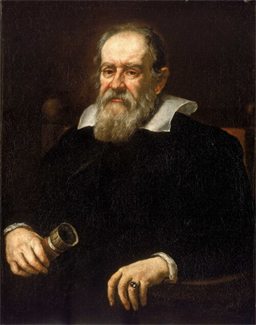
Portrait of Galileo Galilei
Public domain

Galileo Galilei

Astronomers

Supporting49 mentions

Galileo Galilei (1564–1642) was the Italian astronomer and physicist who first turned the telescope on the heavens and defended the Copernican system.

We cite his Dialogue Concerning the Two Chief World Systems (1632) for his mockery of the Moon's power over the tides as an occult property, a claim Newton later proved. He serves as a historical witness, mostly in The Science of Astrology and the Central Doctrine.

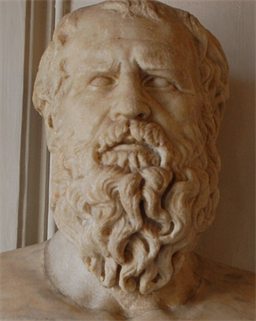
Portrait of Heraclitus of Ephesus
CC BY-SA 4.0

Heraclitus of Ephesus

Classical Philosophers of Greece and Rome

Supporting48 mentions

Greek philosopher of about 500 BCE whose sayings survive in fragments, known for the ever-living fire and the unity of opposites.

Our works quote fragment B119, "character is a man's daimon", for the Double's signature in this life, and fragment B51 on the bow and the lyre for the harmony of opposed powers. He appears mainly in the Central Doctrine, and Iamblichus's own quotation of him in On the Mysteries is cited there.

Portrait of John M. Dillon

John M. Dillon

Scholars and Translators

Supporting48 mentions

John M. Dillon is an Irish classicist and a leading scholar of Platonism, known for The Middle Platonists (1977) and his work on Iamblichus.

We use his translations and editions as sources: On the Mysteries with Clarke and Hershbell (2003), Iamblichus, De Anima with John F. Finamore (2002), Iamblichus of Chalcis: The Letters with Wolfgang Polleichtner (2009), and the fragments of Iamblichus' Platonic commentaries. The Middle Platonists is cited for Numenius. He appears mostly in the Central Doctrine, Ritual Praxis and Instruction and Dream Theurgy.

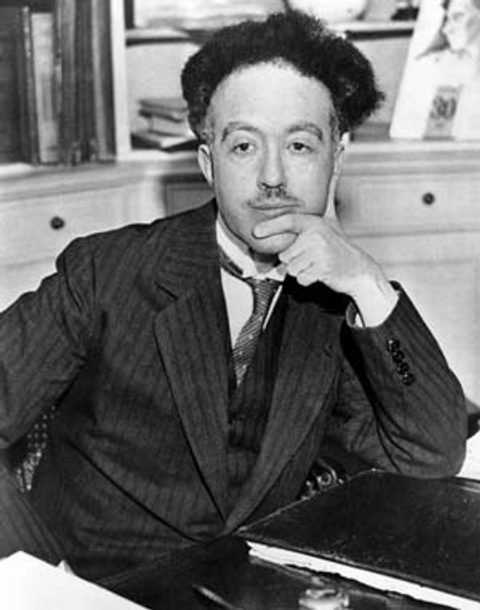
Portrait of Louis de Broglie
Public domain

Louis de Broglie

Physicists

Supporting48 mentions

French physicist (1892 to 1987), who received the Nobel Prize in Physics in 1929 for the wave nature of electrons. His doctoral thesis, Recherches sur la théorie des quanta (1924), gave every particle an internal periodic process.

WaveForm Astrology draws on him most, for the Compton frequency of a rest mass, which we identify with the solar center of the microcosm, and for the de Broglie phase factor, which we name the physical analogue of Mercury, the operator that keeps an intention's content. The Central Doctrine, Ritual Praxis and Instruction, One Architecture and the Sacred History carry the same two identifications, and the Central Doctrine also records his matter waves in its history of quantum physics.

Portrait of Paul Adrien Maurice Dirac
Public domain

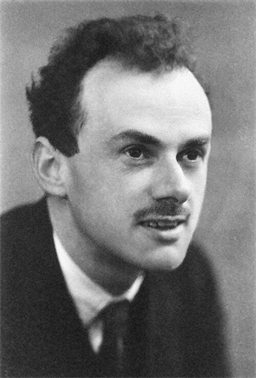
Paul Adrien Maurice Dirac

Physicists

Supporting47 mentions

English physicist (1902–1984), author of the relativistic electron equation that predicted antimatter, Nobel laureate of 1933.

We cite The Principles of Quantum Mechanics (1930) as a source of the theory's orthodox form, and Dirac's phrase from the 1927 Solvay discussions, a "choice on the part of nature", which Stapp takes into his account of the probe and answer. He appears in the Central Doctrine, Ritual Praxis and Instruction and WaveForm Astrology.

Portrait of Dane Rudhyar
Public domain

Dane Rudhyar

Modern Astrologers

Supporting46 mentions

Astrologer and composer, born Daniel Chennevière in Paris (1895–1985), founder of a person-centered, humanistic astrology in The Astrology of Personality (1936).

WaveForm Astrology quotes An Astrological Mandala (1973) on astrology's elements as archetypes and on the planets as ten functions, and cites The Lunation Cycle. We take his question of how to meet what comes and answer it operator by operator. The Sacred History gives him his own section, and The Divine Arcana Tarot places him in its line of archetypal vocabulary.

Portrait of George Robert Stow Mead
Public domain

George Robert Stow Mead (G. R. S. Mead)

Scholars and Translators

Supporting46 mentions

G. R. S. Mead (1863–1933) was an English scholar and translator of Hermetic and Gnostic writings.

His Thrice-Greatest Hermes (1906) is our English text of the Hermetic writings, cited for the Thirty-six Decans of the Asclepius, the Secret Sermon on the Mountain on rebirth, and his commentary reading the twelve types of life as the zodiac. He is used in Sacred History, Ritual Praxis and Instruction and The Divine Arcana Tarot.

Otto Neugebauer

Historians of Astrology and the Sciences

Supporting46 mentions

Otto Neugebauer (1899 to 1990) was an Austrian-born American historian of ancient mathematics and astronomy, who founded the Department of the History of Mathematics at Brown University. His works include The Exact Sciences in Antiquity (1952), Greek Horoscopes with H. B. Van Hoesen (1959) and A History of Ancient Mathematical Astronomy (1975).

The Science of Astrology draws on A History of Ancient Mathematical Astronomy for the Babylonian value of the month, accurate to under half a second, and on Greek Horoscopes for the charts of Vettius Valens, every one astronomically correct, which he and Van Hoesen called "proof that Vettius Valens was using empirical material exclusively". The Sacred History cites him on the authors of the Babylonian mathematical tablets, on the Ramesside star clocks he published with Richard Parker in 1964, and on the 47 Greek horoscopes on papyrus gathered in 1959.

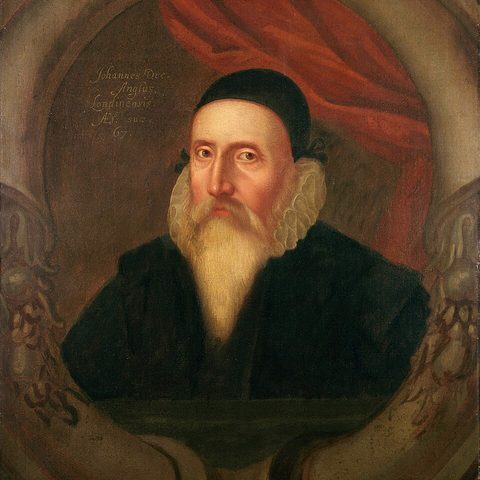
Portrait of John Dee
Public domain

John Dee

Renaissance Platonists and Hermeticists

Supporting45 mentions

English mathematician and astronomer (1527 to 1608 or 1609) and adviser to Elizabeth I, who kept a great library at Mortlake. He wrote the Monas hieroglyphica (1564) and the preface to Henry Billingsley's English Euclid (1570).

The Science of Astrology (Chapter 28) gives his arrest in 1555 for calculating the nativities of Mary, Philip and Elizabeth and the tradition that he chose the day of Elizabeth's coronation, 15 January 1559. The Sacred History (Chapter 17) quotes the Euclid preface on astrology as "an Arte Mathematicall", reads the Monas as the sky written as one sign, and reads the angels of his holy table and the Sigillum Dei Aemeth, from the sessions with Edward Kelley that Meric Casaubon printed in 1659, as the planets under their Hebrew names. Chapter 18 gives the finding of Frances Yates that the Rosicrucian tract A Brief Consideration of More Secret Philosophy is based on the Monas.

Portrait of John Archibald Wheeler
Free, attribution

John Archibald Wheeler

Physicists

Supporting44 mentions

American physicist (1911–2008) of Princeton, Everett's advisor and a leading figure of general relativity.

We cite "Information, Physics, Quantum: The Search for Links" (1989), place him in the line of physicists who give the observer a role, and use his proverb that matter tells spacetime how to curve and spacetime tells matter how to move. He appears mostly in the Central Doctrine.

Abū Maʿshar (Albumasar)

Traditional Astrologers

Supporting43 mentions

Persian astrologer of the Abbasid court (787 to 886), born at Balkh and active in Baghdad. His works include the Great Introduction to the Science of Astrology, put into Latin in 1133 and 1140, and On the Great Conjunctions.

The Science of Astrology cites him for grounding the art in natural philosophy through the tides and for reading the history of religions and dynasties by the conjunctions of Jupiter and Saturn, in the editions of Keiji Yamamoto and Charles Burnett. The Sacred History tells his turn from scholar of ḥadīth to astrologer through al-Kindī, and follows his decan of the nursing virgin into Roger Bacon. The Central Doctrine, Ritual Praxis and Instruction and The Divine Arcana Tarot cite him for the transmission of the decans and their rulers.

Portrait of Gerard 't Hooft
CC BY-SA 3.0

Gerard 't Hooft

Physicists

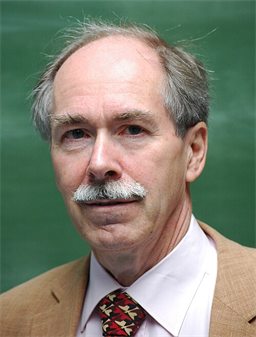
Supporting43 mentions

Dutch theoretical physicist of Utrecht (born 1946), Nobel laureate of 1999.

Our works credit him with first proposing the holographic principle in 1993, developed by Susskind in 1995, that the information in a region can be written on its boundary. We cite his preprint of 1993. He appears across the Central Doctrine, the Science of Astrology and Ritual Praxis and Instruction.

Portrait of Jacob David Bekenstein
Public domain

Jacob David Bekenstein

Physicists

Supporting42 mentions

Physicist (1947–2015) who as a Princeton graduate student proposed that black holes carry entropy, and later taught at the Hebrew University.

We cite his paper of 1973 for the Bekenstein–Hawking entropy, one quarter of the horizon area in Planck units, and use the Bekenstein bound in worked examples. The Science of Astrology uses him most.

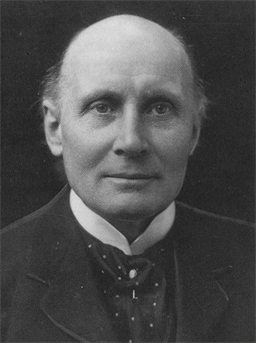
Portrait of Alfred North Whitehead
Public domain

Alfred North Whitehead

Modern Western Philosophers

Supporting41 mentions

Whitehead (1861–1947) was an English mathematician and philosopher, co-author with Bertrand Russell of Principia Mathematica, and the founder of process philosophy.

We cite Process and Reality (1929) for "the many become one, and are increased by one", which we read as concretizing from the one towards the one and join to our statistical causation. The Central Doctrine, Ritual Praxis and Instruction and WaveForm Astrology use it for the cumulative, open-ended growth of the practitioner, and the Central Doctrine sets his living, organic Cosmos beside the Cosmos of the Timaeus.

Julius Firmicus Maternus

Traditional Astrologers

Supporting41 mentions

Fourth-century Latin astrologer who began his Mathesis, a large handbook of the art, in 334.

We cite the Mathesis in Jean Rhys Bram's translation as an ancient source for the planetary rulers of the decans, to which One Architecture and Ritual Praxis and Instruction trace the decan cards of our Tarot. Ritual Praxis and Instruction also quotes his line that man, like a tiny universe, is sustained by the movement of the planets, Sun and Moon. The Sacred History uses him most.

Portrait of Giulio Tononi
Public domain

Giulio Tononi

Consciousness, Light and Life Sciences

Supporting40 mentions

Giulio Tononi is a neuroscientist at the University of Wisconsin–Madison who originated Integrated Information Theory (IIT).

We cite his papers on IIT, among them "Consciousness: here, there and everywhere?" with Christof Koch (2015), as one of the theories of consciousness in whose terms we read the Sun's integrated order. He is used most in The Science of Astrology and the Central Doctrine.

Portrait of Paracelsus
CC BY 4.0

Paracelsus (Theophrastus von Hohenheim)

Renaissance Platonists and Hermeticists

Supporting39 mentions

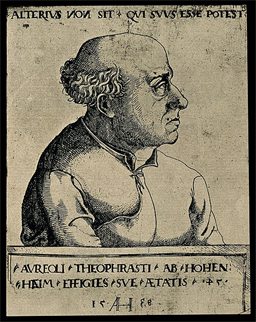
Paracelsus (1493–1541) was a Swiss physician and alchemist who reshaped Renaissance medicine and gave the elemental beings their familiar names.

We quote him in A. E. Waite's edition, The Hermetic and Alchemical Writings of Paracelsus the Great (1894): "The Interpretation of the Stars" for the Tria Prima of Sulfur, Mercury and Salt, and the attributed Coelum Philosophorum on alchemy as intention and on the star as the informing spirit of stones. Ritual Praxis and Instruction, the Central Doctrine and The Divine Arcana Tarot use him, and the Central Doctrine reads his elemental spirits beside Iamblichus.

Portrait of Lynn Thorndike
CC BY 4.0

Lynn Thorndike

Historians of Astrology and the Sciences

Supporting38 mentions

Lynn Thorndike (1882 to 1965) was an American historian of medieval science who taught at Columbia University. His A History of Magic and Experimental Science appeared in eight volumes from 1923 to 1958.

The Sacred History draws on him through its chapters on the House of Wisdom and the Cathedral Sky, for the rays of the treatise On Rays, the Picatrix as magic held for a science, Adelard of Bath on the stars as "superior and divine animals", Grosseteste's rule of astronomical assistance and Tempier's condemnation of 1277. He is our witness that the medieval Church seldom persecuted astrologers, with Cecco d'Ascoli as the one learned case, and for the Liber sacratus, the Ars notoria and Pietro d'Abano's rite. The Science of Astrology cites his University Records and Life in the Middle Ages (1944) for the Bologna statutes of the chair of astrology.

Portrait of Abū Rayḥān al-Bīrūnī
Public domain

Abū Rayḥān al-Bīrūnī (Alberuni)

Astronomers

Supporting37 mentions

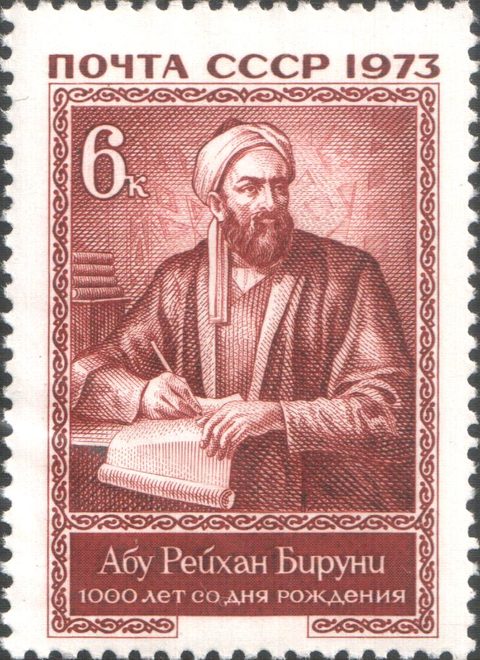
Persian scientist and scholar of Khwarezm (973 to 1048), who served at Ghazna. He wrote the Chronology of Ancient Nations about 1000, the Book of Instruction in the Elements of the Art of Astrology in 1029 and a great study of India, all three known in English through Eduard Sachau and R. Ramsay Wright.

The Sacred History draws on his India for the Greek house names kept in Indian astrology, the siddhāntas Pulisa and Romaka, Varāhamihira's works and the fact that no Sanskrit astrological treatise had yet reached Arabic. His Chronology gives the hour Naubakht chose for the founding of Baghdad and our fullest account of the Sabians of Ḥarrān. The Science of Astrology sets him beside Abū Maʿshar as a strict critic of the practice who wrote its standard teaching text.

Portrait of Algis Uždavinys
Free, attribution

Algis Uždavinys

Scholars and Translators

Supporting36 mentions

Algis Uždavinys (1962–2010) was a Lithuanian scholar of the Neoplatonic and Egyptian traditions.

We cite Philosophy as a Rite of Rebirth and The Heart of Plotinus for his teaching that divine union depends on the whole complex of divine causes and rites, for the relation of image and paradigm, and for his sense of the philosophia perennis. He appears in the Central Doctrine, WaveForm Astrology and Ritual Praxis and Instruction. In the Biography the author counts him with Shaw and Addey as scholars who set the rite at the center of Platonic philosophy.

Portrait of Sir John George Woodroffe
Public domain

Sir John George Woodroffe (Arthur Avalon)

Scholars and Translators

Supporting36 mentions

Sir John Woodroffe (1865–1936) was a British judge in India who, under the pen name Arthur Avalon, translated and explained the Tantric texts for Western readers.

We cite The Serpent Power (1919) for the Ṣaṭ-cakra-nirūpaṇa and the Para-bindu, and his Tantra of the Great Liberation (Mahānirvāṇa Tantra) (1913) for the Śākta reading of Brahman and Śakti and the three guṇas. He is used mainly in the Central Doctrine, with Ritual Praxis and Instruction and the Layman.

Portrait of Siddhārtha Gautama, the Buddha
CC BY-SA 3.0

Siddhārtha Gautama, the Buddha

Founders of World Traditions

Supporting35 mentions

Siddhārtha Gautama was the founder of Buddhism, the teacher of the path of awakening.

The Central Doctrine treats his path as non-theistic, declining to name the depth of reality while leaving it undenied, and notes that his teaching on no-self denies a permanent ego rather than awareness, with Mahāyāna buddha-nature close to our own view. The Divine Arcana Tarot quotes the Dhammapada (trans. Max Müller) and sets the Buddha with Jesus and Kṛṣṇa as teachers on the Hierophant; Little Suns uses the Central Doctrine's account.

Portrait of Helena Petrovna Blavatsky
Public domain

Helena Petrovna Blavatsky

Modern Occultists: the Golden Dawn, Hermeticism and Theosophy

Supporting34 mentions

Helena Petrovna Blavatsky (1831–1891) co-founded the Theosophical Society and wrote The Secret Doctrine (1888).

We name her among the Western protagonists of the practices our School draws on. Ritual Praxis and Instruction credits her Theosophy with carrying the vocabulary of the subtle body and its centers into Western esotericism, and we quote her teaching that the astral light is dual as Regardie quotes it, from The Secret Doctrine. One Architecture discusses her beside Mathers.

Portrait of Marcus Aurelius
CC BY-SA 4.0

Marcus Aurelius

Classical Philosophers of Greece and Rome

Supporting34 mentions

Roman emperor (ruled 161 to 180 CE) and Stoic philosopher who kept a private book of notes in Greek, the Meditations.

We cite the Meditations in George Long's translation for the Stoic teaching of the daemon within. The Divine Arcana Tarot uses him most, as one of the persona-masks of Aries beside the emperor Julian, and the Central Doctrine dates the first theurgists and the Chaldean Oracles to his reign.

Eleanor Robson

Historians of the Ancient Near East

Supporting33 mentions

Eleanor Robson is a British Assyriologist and historian of Mesopotamian science and scholarship (born 1969), Professor of Ancient Middle Eastern History at University College London. She led the Knowledge and Power in the Neo-Assyrian Empire project on Oracc and wrote "Who Wrote the Babylonian Astronomical Diaries?" (2019).

The Sacred History draws on her through its first two chapters, with thanks to her in its foreword. From Knowledge and Power it takes her division of Enūma Anu Enlil into four sections under Sîn, Šamaš, Adad and Ištar, the first witness of celestial divination at Mari c. 1765 BCE, the substitute king rite, extispicy "under the gaze of Šamaš", and the night sky as "an oblique view of the gods' Tablet of Destinies". From the Diaries paper it takes the lament priests, the inquiry into a missed eclipse, the team of watchers working shifts and the inheritance of roles "only on practical demonstration of competence".

Portrait of Yumeng Ma and Philip A. Kragel

Yumeng Ma and Philip A. Kragel

Consciousness, Light and Life Sciences

Supporting33 mentions

Yumeng Ma and Philip A. Kragel are neuroscientists at Emory University who study how the brain represents emotion.

We cite their paper "Emotion knowledge is structured in a grid-like coordinate system in the human ventromedial prefrontal cortex" (PLOS Biology 24, 2026). As people moved from one emotion to another, pleasant to unpleasant and calm to activated, the ventromedial prefrontal cortex showed the sixfold grid code the brain uses to map physical space, and its activity tracked the distance between emotional concepts. It grounds our teaching that feeling has a geography and that each god is met at a place in it, in the Central Doctrine (§46.2.3), WaveForm Astrology (§20.2.6, with the aspects on the grid as our School's correspondence), Ritual Praxis and Instruction (§23.7, the journal of §2.4.2, §41.2.3, §55.3.1 and the glossary), The Science of Astrology (§32.7), The Divine Arcana Tarot (§39.5.3), the Layman (§V.2), One Architecture (§6.11 and §14.5) and Little Suns (Lesson 9.4).

Portrait of Nicolaus Copernicus
Public domain

Nicolaus Copernicus

Astronomers

Supporting32 mentions

Polish astronomer (1473 to 1543), born at Toruń and from 1510 a canon of the cathedral at Frombork. His De revolutionibus orbium coelestium, printed in 1543 with a dedication to Pope Paul III, set the Sun at the center of the planets.

The Sacred History quotes Book I, chapter 10, in Charles Glenn Wallis's translation, where the Sun is a lamp in a most beautiful temple, seated on a royal throne, which Hermes calls a visible god, and traces these words to Ficino and the mystery books. Our heliocentric order of invocation in Ritual Praxis and Instruction follows the order he printed. The Central Doctrine, The Science of Astrology and Little Suns carry our teaching that Copernicus was right about where the Sun is and the astrologer is right about where the life is.

Portrait of Fritz-Albert Popp

Fritz-Albert Popp

Consciousness, Light and Life Sciences

Supporting31 mentions

Fritz-Albert Popp (1938–2018) was a German biophysicist who founded the International Institute of Biophysics at Neuss and held that the faint light of living cells is coherent and helps regulate their chemistry.

We cite Integrative Biophysics: Biophotonics (2003), edited with Lev Beloussov, as a source for our teaching on the body's light, in the Central Doctrine (§31.7), Ritual Praxis and Instruction (§29.3.2), the Layman (Part III) and the Sacred History (§21.6).

The Biography records that the author found Popp's work in 2015 and read the whole volume. That reading began his lasting interest in biophysics.

Portrait of Georg Wilhelm Friedrich Hegel
Public domain

Georg Wilhelm Friedrich Hegel

Modern Western Philosophers

Supporting31 mentions

Hegel (1770–1831) was the German idealist philosopher of Spirit (Geist), author of the Phenomenology of Spirit (1807).

The Central Doctrine gives him a section, "Hegel's Absolute Spirit" (Ch. 3, §3.5), and later sets him beside Iamblichus, taking from him history as the field in which the divine is disclosed. Ritual Praxis and Instruction quotes the Lectures on the Philosophy of History, "the essence of Spirit is Freedom", in its teaching on the paradox of fate and freedom.

Tim Hegedus

Historians of Astrology and the Sciences

Supporting31 mentions

Tim Hegedus is a scholar of the New Testament at Waterloo Lutheran Seminary of Wilfrid Laurier University in Ontario. He wrote Early Christianity and Ancient Astrology (2007).

The Sacred History calls his book the fullest study of this history and uses it through the chapters on Ezekiel, the Mysteries and the Church. We take from him the four living creatures as four constellations, the woman of Revelation 12 as Virgo, the Magi as professional astrologers and Isis "who rules over the stars and fate". He gives us the starred baptistery of Dura-Europos, the sarcophagi with a star over each apostle, Augustine's baptized hearers who kept to the stars, and his translations of Zeno of Verona's sermon on the horoscope of baptism.

Angela Voss

Historians of Religion, Art and Esotericism

Supporting30 mentions

English scholar of Western esotericism, musician and astrologer, with a doctorate from City University, London, on Ficino's astrological music therapy. She taught at the University of Kent and at Canterbury Christ Church University, where she directed the MA in Myth, Cosmology and the Sacred.

The Science of Astrology cites her article in Culture and Cosmos (2000) for Ficino's letters, full of the planets in his own and his friends' charts, and for her reading that his quarrel was with the presumption of the astrologers while he practiced the art. The Sacred History quotes her study of Ficino's magic, astrology and music for his Orphic singing to the lyre, the rules of De vita III.21 for song timed by the sky and the pressure of the Church on his rites.

Portrait of Marcus Manilius
CC BY 4.0

Marcus Manilius

Traditional Astrologers

Supporting30 mentions

Roman poet who wrote the Astronomica, a Latin poem on astrology in five books, probably under Augustus and Tiberius.

The Science of Astrology quotes Astronomica I in our own translation on how experience and repeated practice built the art, and counts his significations among the tradition's meanings set down before any modern test. The Sacred History reads Books 1, 2 and 4 on the human being as a copy of the cosmos. The Central Doctrine names him in its history of Roman astrology.

Portrait of Rachel Elior
Free, attribution

Rachel Elior

Historians of Judaism and Jewish Mysticism

Supporting30 mentions

Rachel Elior is an Israeli historian of Jewish mysticism, John and Golda Cohen Professor of Jewish Philosophy and Jewish Mystical Thought at the Hebrew University of Jerusalem. Her books include The Three Temples: On the Emergence of Jewish Mysticism (2004) and The Mystical Origins of Hasidism (2006).

Central Doctrine II gives her a section of its own (§27.8), calls her "my favorite Jewish scholar", and follows The Three Temples in tracing the Merkavah tradition from a secessionist priestly sect at Qumran, with its solar calendar, its angelic priests and its orders of four, seven, twelve and twenty-four. Central Doctrine III and Dream Theurgy carry this reading, and the Sacred History stands with her on the line from the Qumran priests to the Merkavah mystics and quotes her on the seven sanctuaries that bound "sacred time and sacred space in a ritual continuum".

Portrait of Simo Parpola
CC BY 4.0

Simo Parpola

Historians of the Ancient Near East

Supporting30 mentions

Simo Parpola is a Finnish Assyriologist (born 1943), Professor emeritus of Assyriology at the University of Helsinki and director of its Neo-Assyrian Text Corpus Project from 1986. He edited Letters from Assyrian and Babylonian Scholars (State Archives of Assyria 10, 1993) and Assyrian Prophecies (1997).

The Science of Astrology cites his edition of 389 letters and the palace staff list of 45 scholars, astrologers and physicians among them, as evidence of a profession, and his statement that the predictions required "systematic and intensive study and recording". The Sacred History takes from him the phrase for the king's watch, the return of Esarhaddon from Egypt to face the substitute rite, the king as "the image of Šamaš", and the lore of the scholars as "comparable to Jewish Kabbalah", with the ascent of Adapa as "an allegory for mystical ascent of the soul".

Portrait of David Joseph Bohm
Free, attribution

David Joseph Bohm

Physicists

Supporting29 mentions

American-born physicist (1917–1992), known for his work on the foundations of quantum theory.

We quote Bohm from his dialogue "The Enfolding–Unfolding Universe" in Renée Weber's Dialogues with Scientists and Sages (1986), that all matter is a condensation of light. He supports our teaching that light and matter are two poles of one phenomenon and that matter is light under constraint, in the Central Doctrine, Ritual Praxis and Instruction and WaveForm Astrology.

Portrait of Stephen C. Meyer
CC0

Stephen C. Meyer

Modern Western Philosophers

Supporting29 mentions

Meyer is an American philosopher of science known for arguments from fine-tuning and biological information against materialist accounts of life.

The Central Doctrine (Ch. 58) holds a dialogue with his Return of the God Hypothesis (2021) and cites Signature in the Cell (2009) and Darwin's Doubt (2013). We count him among the contemporary voices of reintegration with Kastrup and Hoffman, read him with admiration as fellow perennial philosophers, and part from him where he defends a Christian conclusion and rejects the Multiverse.

Portrait of Claude Nowell (Corky Ra)

Summum (Claude Nowell, Summum Bonum Amen Ra)

Modern Spiritual Teachers

Supporting29 mentions

Summum is a spiritual order in Salt Lake City, Utah, founded in 1975 by Claude Nowell, who took the name Summum Bonum Amen Ra. Its book Summum: Sealed Except to the Open Mind reworks the seven principles of The Kybalion under a Grand Principle of Creation, and the author holds that Summum's literature is The Kybalion of William Walker Atkinson with additions.

The Biography and the Layman record that the author spent the years from eighteen to twenty-two at the Summum Pyramid, was initiated into the order, and met there the universe taught as one living mind. They give its Grand Principle, "Nothing and Possibility come in and out of bond infinite times in a finite moment," as Summum's own teaching. The word involution comes to us from Summum, where it names the descent of the source into dense matter, with evolution as the return. The Central Doctrine (§1.8.1) takes the word and gives it our own sense, the inward turn of the imagination, with the descent of the One as procession and the return as reversion. Our School credits Summum for what it claims and does not adopt its teaching that the universe is a mental creation, since our ontology is the dual-aspect monism of Jung and Pauli within Platonism.

Portrait of Baidyanath Misra and E. C. George Sudarshan

Baidyanath Misra and E. C. George Sudarshan

Physicists

Supporting28 mentions

Physicists who named and derived the quantum Zeno effect in "The Zeno's Paradox in Quantum Theory" (Journal of Mathematical Physics, 1977). Sudarshan (1931–2018) was an Indian-American theorist.

Their paper, cited with the 1990 experiment of Itano and colleagues, grounds the Zeno effect that Stapp reads as sustained attention and that our works develop as resonant holding. They appear in the Central Doctrine, Ritual Praxis and Instruction and WaveForm Astrology.

Portrait of Damascius

Damascius

The Platonic and Theurgic Tradition

Supporting27 mentions

Last head of the Platonic school at Athens (c. 458 to after 538 CE), in the years when the emperor Justinian's measures ended its teaching. He wrote On First Principles and commentaries on Plato.

Our works cite On First Principles (I.86) as the report that Iamblichus placed a wholly ineffable principle above the One, and his commentary on the Phaedo for the highest grade of the virtues as Iamblichus's gift to the school. He also reaches us through Thomas Taylor's notes to the Orphic Hymns, mainly in the Central Doctrine and the Sacred History.

Portrait of Eugene Paul Wigner
Public domain

Eugene Paul Wigner

Physicists

Supporting26 mentions

Hungarian-American physicist (1902–1995), Nobel laureate of 1963.

We quote his essay "Remarks on the Mind–Body Question" (1961), that the laws of quantum mechanics could not be formulated consistently without reference to consciousness, and cite his phrase on the unreasonable effectiveness of mathematics. He stands in the line, with London and Bauer, for whom consciousness completes measurement. He appears mostly in the Central Doctrine and the Science of Astrology.

Portrait of Robert Fludd
Public domain

Robert Fludd

Renaissance Platonists and Hermeticists

Supporting26 mentions

Fludd (1574–1637) was an English physician and Rosicrucian apologist who held a qualitative, symbolic and alchemical view of nature.

He enters our works through Wolfgang Pauli's essay on Kepler, where Fludd stands as Kepler's opponent and Pauli finds both men in himself. The Central Doctrine uses that quarrel to frame the joining of measure and meaning that our School pursues, and the Biography repeats it.

Portrait of Harald Atmanspacher

Harald Atmanspacher

Consciousness, Light and Life Sciences

Supporting25 mentions

Harald Atmanspacher is a German physicist and scholar of the Pauli–Jung collaboration and of dual-aspect monism.

We cite Recasting Reality: Wolfgang Pauli's Philosophical Ideas and Contemporary Science (edited with Hans Primas), their paper on Pauli's ideas of mind and matter (2006), "Dual-Aspect Monism à la Pauli and Jung" (2012) and the paper on weak quantum theory. He supports our reading of the unus mundus in the Central Doctrine, WaveForm Astrology and Ritual Praxis and Instruction.

Portrait of Michael Psellus
Public domain

Michael Psellus

The Platonic and Theurgic Tradition

Supporting25 mentions

Byzantine scholar, statesman and historian (c. 1018 to c. 1078), professor at Constantinople with the title Chief of the Philosophers and author of the Chronographia.

Our works receive many fragments of the Chaldean Oracles through him, quoted in W. Wynn Westcott's edition of 1895, among them fragment 54 on the iynges, 191 on the pure daemons and the evil germs of matter, and 187 on the fountain of virtue in Hecate, chiefly in The Divine Arcana Tarot, the Central Doctrine and Ritual Praxis and Instruction. The Sacred History (Chapter 10) calls his commentary on the Oracles our fullest and takes from him the command against measuring the motions of the Sun, the strophalos of Hecate as a golden ball with a sapphire, and the holy and formless Fire. In the Central Doctrine he reads, with Proclus, the place of Hecate as the binding power between the intelligible and the material.

Portrait of Wojciech Hubert Zurek
Free, attribution

Wojciech Hubert Zurek

Physicists

Supporting24 mentions

Polish-born theoretical physicist (born 1951), a laboratory fellow at Los Alamos National Laboratory and a leading authority on quantum decoherence.

Our works cite him with H. Dieter Zeh for the theory of decoherence, developed from the 1980s, by which the environment suppresses interference between outcomes so that they behave as separate branches. The Central Doctrine sets this theory inside the Multiverse picture, where it admits one already existing thread as the lived path, and the Sacred History and The Science of Astrology cite his review in Reviews of Modern Physics 75 (2003). WaveForm Astrology uses his work for the decay of the coherences in the density matrix.

Bo Song, Yu Yang and Zhenglong Gu

Consciousness, Light and Life Sciences

Supporting23 mentions

Bo Song, of the School of Optical-Electrical and Computer Engineering at the University of Shanghai for Science and Technology, Yu Yang and Zhenglong Gu are, with their colleagues, the authors of "A quantum state of mitochondria in the living cell" (bioRxiv, September 2026).

They found a joined state of light and matter in the living mitochondrial membrane, present only while the cell is alive and whole, and found that light at that membrane's own frequencies raised the cell's production of energy. We read it as light received by living matter, beside the light the cell emits, and it supports our teaching of light as instruction, of the body of light as receiver, of resonance and of awareness from the body of light. We cite it in the Central Doctrine (§31.7.3, §31.7.7, §30.8.5 and the glossary), Ritual Praxis and Instruction (§29.3.2, §29.4.5), WaveForm Astrology (§8.9.3) and the Sacred History (§21.6).

Ḥayyim Vital (Chaim Vital)

Kabbalists

Supporting23 mentions

Ḥayyim Vital (1542/3–1620) was the principal disciple of Isaac Luria and the recorder of his teaching. His Etz Ḥayyim, "The Tree of Life," compiled from Luria's teaching, was first printed at Korets in 1782.

We quote Etz Ḥayyim 1:1:2 on the contraction that leaves "a void, a hollow empty space" around the central point, in the Central Doctrine, Ritual Praxis and Instruction and the Layman. The Central Doctrine also cites his Sha'ar ha-Hakdamot on the tehom, the abyss, and The Divine Arcana Tarot cites the Etz Chaim for placing Elohim in Binah.

Marinus of Neapolis

The Platonic and Theurgic Tradition

Supporting23 mentions

Neoplatonist philosopher and mathematician (born c. 440 CE) from Flavia Neapolis in Palestine, who succeeded Proclus as head of the Platonic school at Athens. He wrote the Life of Proclus.

Our works quote the Life of Proclus in Kenneth Sylvan Guthrie's translation of 1925. The Sacred History draws from it the worship Proclus gave the new Moon, his monthly rites of the Mother of the Gods, his prayers to the Sun at dawn, noon and dusk, the rain he brought "by activating, at the right time, a particular rite", his vision of Hecate, the theurgic line he received through Asclepigenia and the birth chart Marinus set near the end of the book. The Central Doctrine takes from him the ladder of the virtues that begins in the body and rises to the theurgic grade, and with One Architecture his report that Proclus would have kept only the Oracles and the Timaeus (38).

Portrait of John O'Keefe, May-Britt Moser and Edvard I. Moser
CC BY 2.0

John O'Keefe, May-Britt Moser and Edvard I. Moser

Consciousness, Light and Life Sciences

Supporting22 mentions

John O'Keefe, of University College London, found the place cells of the hippocampus (1971), and May-Britt Moser and Edvard I. Moser, of the Norwegian University of Science and Technology in Trondheim, found the grid cells of the entorhinal cortex (2005). The three shared the Nobel Prize in Physiology or Medicine in 2014 for the cells that make up the brain's positioning system.

Ma and Kragel found their sixfold grid code in the brain's map of feeling, and we name them where our works set out that map, in the Central Doctrine (§46.2.3 and the glossary), WaveForm Astrology (§20.2.6), Ritual Praxis and Instruction (the glossary) and One Architecture (§6.11).

Eunapius of Sardis

The Platonic and Theurgic Tradition

Supporting21 mentions

Greek sophist and historian (c. 347 to c. 420 CE), born at Sardis in Lydia and a pupil of Chrysanthius. His Lives of the Philosophers and Sophists is the chief ancient account of Iamblichus and his successors.

Our works quote the Lives in W. C. Wright's Loeb translation (1921), chiefly in Chapter 11 of the Sacred History. From him we take the simple life and private rites of Iamblichus, the sacrifice timed by the Sun near the Lion and the rising of the Dog, the boys called up from the springs of Eros and Anteros at Gadara, the Chaldean initiation of Sosipatra, Julian's search for the hierophant of Eleusis and the last hierophant's prophecy of the fall of the temples. The Central Doctrine cites him for the wonders told of the circle of Iamblichus, set beside the siddhis of Patañjali, and for Porphyry as the teacher of Iamblichus.

Portrait of Osho
CC0

Osho (Bhagwan Shree Rajneesh, born Chandra Mohan Jain)

Modern Spiritual Teachers

Supporting21 mentions

Osho (1931–1990) was an Indian teacher of meditation, known earlier as Acharya Rajneesh and Bhagwan Shree Rajneesh, whose books are mostly transcribed discourses on the world's spiritual texts.

He stands on our list of the teachers of the East (Central Doctrine, Ch. 4, §4.2.1), and Ritual Praxis and Instruction teaches his saying that man has no center separate from the whole at the place of the center in the rite. The Central Doctrine imagines him giving Plato a simple answer to the riddle of the One.

The Biography records that the author first learned of him at Summum, read almost all of his work, and that those writings greatly shaped his journey in meditation; two texts Osho spoke on, the Tao Te Ching and the Gospel of Thomas, are now among our three works of wisdom.

Steven Hijmans

Historians of Religion, Art and Esotericism

Supporting21 mentions

Steven Hijmans is Professor of Roman Archaeology at the University of Alberta and the historian of the Roman sun god. He wrote Sol: The Sun in the Art and Religions of Rome (2009) and Sol: Image and Meaning of the Sun in Roman Art and Religion (2024).

The Sacred History draws on him through its chapters on the Sun King and the Mysteries and on the Church. He gives us Aurelian's Sol as the traditional Roman god, the Sun at midnight in Apuleius as the joining of day and night, the sun and moon flanking the crucifixion, the charioteer of Mausoleum M under St Peter's as Sol "in every respect" and the plain nimbus of Christ. We follow him in dating the feast of 25 December to the 330s, and we take his reading of the solstice homilies and of the Colossus of Sol seen through the arch of Constantine.

Portrait of Aldous Leonard Huxley
No restrictions

Aldous Leonard Huxley

Modern Western Philosophers

Supporting20 mentions

Huxley (1894–1963) was an English novelist and essayist whose anthology The Perennial Philosophy (1945) made the term widely known.

The Central Doctrine quotes the first chapter of The Perennial Philosophy and places him in the lineage of our perennialist stance, from Steuco and Leibniz to the modern setting, while our School names that stance first after Iamblichus. One Architecture, Ritual Praxis and Instruction and Little Suns repeat the lineage, and the Central Doctrine notes his phrase "mind-at-large" as borrowed by Kastrup.

Portrait of Lucius Annaeus Seneca
CC BY-SA 3.0

Lucius Annaeus Seneca (Seneca the Younger)

Classical Philosophers of Greece and Rome

Supporting20 mentions

Roman Stoic philosopher and statesman (c. 4 BCE to 65 CE), known for his Letters (Epistulae Morales) to Lucilius.

The Central Doctrine cites Letters 41 on the holy spirit that dwells within us as guardian, Letters 18 on days of the scantiest food, and On Anger III.36 for his nightly review of his own conduct, set beside the Pythagorean practice.

Portrait of Roeland Van Wijk and Eduard P. A. Van Wijk

Roeland Van Wijk and Eduard P. A. Van Wijk

Consciousness, Light and Life Sciences

Supporting20 mentions

Roeland Van Wijk and Eduard P. A. Van Wijk are researchers of the light of living cells at Meluna Research in Wageningen, in the Netherlands.

We cite their review and position paper "A cellular (bio) photon field in mitochondrial-chromatin cross-talk: a hypothesis" (Frontiers in Photobiology 4, 2026), with its account that the mitochondria are the chief source of the cell's light and that the light is absorbed and held in the living chromatin of the nucleus. It grounds our teaching that the light of the body is kept as well as emitted, in the Central Doctrine (§31.7 and Ch. 30, §30.7), Ritual Praxis and Instruction (§29.3.2), the Layman (Part III) and the Sacred History (§21.6), and the Biography names their work in the author's reading.

Erica Reiner

Historians of the Ancient Near East

Supporting19 mentions

Erica Reiner was a Hungarian-born American Assyriologist (1924 to 2005) of the Oriental Institute of the University of Chicago, who succeeded Oppenheim as editor of the Chicago Assyrian Dictionary. Her works include Astral Magic in Babylonia (1995) and, with David Pingree, Babylonian Planetary Omens (1975 to 2005).

The Science of Astrology cites her edition with Pingree of the Venus Tablet of Ammiṣaduqa as the earliest surviving series of planetary observations, and their count of the omens of Enūma Anu Enlil. The Sacred History draws on Astral Magic in Babylonia for the prayer to the stars before haruspicy, the line "Just as the Sun sees all of the earth by day, so do the stars by night", the stars irradiating a cult statue, and her statement that we may make "no distinction between scientific astronomy and magic operations".

Sarah Symons

Historians of the Ancient Near East

Supporting19 mentions

Sarah Symons is a historian of ancient Egyptian astronomy at McMaster University in Hamilton, Ontario, in physics and astronomy, who wrote her doctoral thesis on the Egyptian star clocks at Leicester in 1999.

She is our main source in the Sacred History for the decans, with thanks to her in its foreword. Our work takes from her, and from her work with Robert Cockcroft, the star charts on the coffin lids of Asyut, "the earliest systematic division of the night into 12 time-areas", the choice of stars that vanish for seventy days as Sirius does, and her translation of the Book of Nut. It cites her finding that "timekeeping during the night using stars was clearly a ritual procedure", and that the priest "would see spirits and gods" in the points of light.

A. Leo Oppenheim

Historians of the Ancient Near East

Supporting18 mentions

A. Leo Oppenheim was an Austrian-born American Assyriologist (1904 to 1974), editor in charge of the Chicago Assyrian Dictionary at the University of Chicago from 1955. His books include Ancient Mesopotamia: Portrait of a Dead Civilization (1964).

He appears in the Sacred History, chiefly in its first two chapters. Our work quotes Ancient Mesopotamia on astrology as "the royal art" for which Mesopotamia is famed, on divination as "a technique of communication with the supernatural forces", on astrology at the Sargonid court surpassing extispicy, on the late Babylonian date of the horoscope, and on the reputation of "Chaldean" science across Europe. It also cites his edition of a diviner's manual with the line "sky and earth are related", and his translation of the Cyrus Cylinder.

Portrait of Bernardo Kastrup
CC BY 3.0

Bernardo Kastrup

Modern Western Philosophers

Supporting18 mentions

Kastrup is a Dutch philosopher of mind and the leading proponent of analytic idealism, the view that the physical world is the appearance of a universal consciousness he calls "mind-at-large".

The Central Doctrine cites More Than Allegory (2016) and The Idea of the World (2019) and names him among the contemporary voices of reintegration (Ch. 58). We take from him his critique of materialism and his witness that the archetypes stand where the undifferentiated becomes form, and we keep dual-aspect monism in place of his idealism.

Portrait of Epictetus
Public domain

Epictetus

Classical Philosophers of Greece and Rome

Supporting18 mentions

Stoic teacher of the late first and early second centuries CE, a former slave whose teaching survives in the Discourses and the Enchiridion.

We quote Discourses IV.7.20 in Oldfather's translation, "my will is one with His will", as the epigraph of a WaveForm Astrology chapter and in the Central Doctrine's teaching on the will of the gods, and the Enchiridion for prohairesis, the power of choice that is truly ours. Ritual Praxis and Instruction also cites him.

Portrait of Giordano Bruno
CC BY 4.0

Giordano Bruno

Renaissance Platonists and Hermeticists

Supporting18 mentions

Italian philosopher (1548 to 1600), born at Nola, a Dominican who left his order, taught in Paris and London and was burned at Rome on 17 February 1600. His works include On the Shadows of the Ideas (1582), The Ash Wednesday Supper (1584) and The Heroic Enthusiasts (1585).

The Sacred History (Chapter 17) reads him as keeping the gods after the spheres were gone, in an infinite universe where every star is a sun and the heavenly bodies are animate and intelligent. It cites the decans among the images of On the Shadows of the Ideas, the council of the gods in The Expulsion of the Triumphant Beast and, from The Heroic Enthusiasts, Actaeon's change into a god, which we read as a rite of the mind. The Central Doctrine and One Architecture name him among those who took up the image of God as the infinite sphere whose center is everywhere.

Portrait of Nicholas Campion
CC BY-SA 3.0

Nicholas Campion

Historians of Astrology and the Sciences

Supporting18 mentions

Nicholas Campion (born 1953) is a British historian of astrology and cultural astronomy at the University of Wales Trinity Saint David, where he has directed the Sophia Centre for the Study of Cosmology in Culture. His works include A History of Western Astrology in two volumes and a doctoral thesis on the extent and nature of contemporary belief in astrology.

The Sacred History draws on him in its chapters on the secret orders, the depth psychologists and the numbers. It quotes his reading of Alan Leo's passage on the Solar Logos in The Art of Synthesis (1904), his judgment of Dane Rudhyar's articles of 1933 as the first application of depth psychology to astrology in English, and, from his thesis, the "belief gap", the 27 percent of delegates at a conference of the British Astrological Association who said they believe in astrology, the three levels of astrology after Patrick Curry and the sun sign columns that met an existing interest.

Portrait of Will Parfitt

Will Parfitt

Depth Psychologists

Supporting18 mentions

Will Parfitt is a British writer and practitioner who joins psychosynthesis to the Western mystery tradition, above all to Kabbalah.

The form of the egg our School teaches is the one drawn in his Psychosynthesis: The Elements and Beyond (2003), read beside the Tree of Life. We leave aside his Gnosticism. He is named in the Layman and the Central Doctrine and most often in the Biography.

The Biography tells that the author came to Parfitt through Assagioli in the country home years.

Portrait of Abū Yūsuf Yaʿqūb al-Kindī
Public domain

Abū Yūsuf Yaʿqūb al-Kindī

Traditional Astrologers

Supporting17 mentions

Arab philosopher of the Abbasid court at Baghdad (c. 801 to c. 873). The treatise On Rays (De radiis) goes under his name.

The Sacred History draws on him, through Peter Adamson, for the teaching that the heavens have souls and prostrate themselves before God by their motion, and for an astrology grounded in physical causes, with the stars acting by rays and the Sun the strongest. It also names him as the scholar who turned Abū Maʿshar toward mathematics and as one source behind Ficino's De vita coelitus comparanda. The Central Doctrine cites On the Rays as the teaching behind Avicenna and Agrippa.

Bill M. Mak

Historians of Astrology and the Sciences

Supporting17 mentions

Historian of science who works on jyotiṣa, the Indian astral science, and its transmission. He has taught at Kyoto University and is a research associate of the Needham Research Institute, Cambridge.

The Sacred History follows his study of a manuscript of the Yavanajātaka found in Kathmandu in 2011, by which he places the poem between 550 and 600 CE, and quotes his description of it as "a unique Indian adaptation of a variety of Hellenistic astral science". It also takes from him that horoscopy was unknown in Vedic India and his reading of the Vṛddhayavanajātaka as pre-navagraha horoscopy. The Science of Astrology cites his article in History of Science in South Asia (2013) on Pingree's dating.

Portrait of Brian Cox
CC BY-SA 4.0

Brian Cox

Physicists

Supporting17 mentions

English particle physicist (born 1968), professor at the University of Manchester and presenter of the BBC's Wonders series.

We quote two passages from the narration of his BBC Two series Wonders of the Universe (2011). From the episode "Stardust" we take his words on our origins in space. We are children of the stars, he says, and every atom of our bodies carries the history of the universe from the Big Bang to the present day. The Central Doctrine reads them beside the nested causal diamonds (§19.4), with short carries in WaveForm Astrology (§6.9.2), the Science of Astrology (§32.12) and Little Suns (Lesson 2.4). From the episode "Messengers" we take "We are the cosmos made conscious and life is the means by which the universe understands itself", which the Central Doctrine reads through Psyche = Singularity (§22.15), with carries in the Layman (§III.1) and Little Suns (Lesson 3.2). We cite him as a physicist and keep our reading of his words as our School's own.

Portrait of Eric Robertson Dodds

Eric Robertson Dodds (E. R. Dodds)

Scholars and Translators

Supporting17 mentions

E. R. Dodds (1893–1979) was an Irish classicist, known for The Greeks and the Irrational and his studies of late antique religion.

Our works name him as the scholar who judged theurgy a form of magic, the judgment Shaw later answered, and cite his paper "Theurgy and its Relationship to Neoplatonism" (1947), The Greeks and the Irrational and Pagans and Christians in an Age of Anxiety (1965). He appears in the Central Doctrine, One Architecture and the Biography.

Portrait of Gershom Scholem
Public domain

Gershom Scholem

Historians of Judaism and Jewish Mysticism

Supporting17 mentions

Gershom Scholem (1897 to 1982) was a German-born Israeli historian who founded the modern academic study of Jewish mysticism and was the first professor of Jewish mysticism at the Hebrew University of Jerusalem. His books include Major Trends in Jewish Mysticism (1941).

The Sacred History quotes his articles in the Encyclopaedia Judaica, "Merkabah Mysticism", "Kabbalah" and "Yezirah, Sefer", in its chapters on Ezekiel, the priests of Qumran and the palace literature. From him it takes the rabbinic warning about the ḥashmal of Ezekiel, the possible flow of ideas from the Qumran sect to the Merkavah mystics, Akiva as a mystic within rabbinic Judaism, the "magical and theurgic aspect to the technique of ascent", and the astrological parallels of the Sefer Yetzirah. We read the ascent stories with Scholem as a practice.

Portrait of John F. Finamore

John F. Finamore

Scholars and Translators

Supporting17 mentions

John F. Finamore is an American classicist, known for his work on Iamblichus and the soul's vehicle.

We cite Iamblichus, De Anima: Text, Translation and Commentary (2002), written with John M. Dillon, and the volume he co-edited, Iamblichus and the Foundations of Late Platonism (2012), which holds the essays by Shaw and Taormina that our Central Doctrine and Ritual Praxis and Instruction draw on.

Portrait of Parmenides of Elea
CC BY-SA 4.0

Parmenides of Elea

Classical Philosophers of Greece and Rome

Supporting17 mentions

Greek philosopher of the early fifth century BCE whose poem, surviving in fragments, sets the way of truth against the way of opinion.

Our works name him in the lineage of Platonism and for ideas close to a non-spatial divine, alongside Plato's dialogue Parmenides and its examination of the One. He appears mainly in the Central Doctrine.

Portrait of Peter Schäfer
CC BY-SA 4.0

Peter Schäfer

Historians of Judaism and Jewish Mysticism

Supporting17 mentions

Peter Schäfer (born 1943) is a German historian of ancient Judaism and early Jewish mysticism, Ronald O. Perelman Professor of Jewish Studies at Princeton University from 1998 to 2013 and long director of the Institut für Judaistik at the Freie Universität Berlin. He edited the manuscripts of the Hekhalot literature and wrote The Origins of Jewish Mysticism (2009).

The Sacred History quotes him in its chapters on Ezekiel, Qumran and the palaces, for the fiery body of God on Ezekiel's throne, the whole cosmos as God's Temple, the rabbis who seek God through exegesis, the unio liturgica of the mystic who joins the song of the throne, and the ascent of Hekhalot Zutarti that ends in knowledge of the divine names. It also cites, through his Origins, the words of Rachel Elior and Philip Alexander, and it records that he and Martha Himmelfarb rejected Elior's line from the priests to the Merkavah mystics in 2006.

Portrait of Posidonius of Apamea
CC BY 3.0

Posidonius of Apamea

Classical Philosophers of Greece and Rome

Supporting17 mentions

Stoic philosopher, astronomer and historian (c. 135 to c. 51 BCE), born at Apamea in Syria, a pupil of Panaetius who kept his own school on Rhodes, where Cicero heard him.

The Sacred History (Chapter 8) gives him as the Stoic who brought astrology inside Stoic physics, and cites Cicero's On Divination for his three sources of divination, Augustine for "Posidonius the Stoic, who was much given to astrology", and Cicero again for the sphere he built to show the courses of the Sun, the Moon and the five planets. The Science of Astrology takes from Strabo (Geography III.5.8 to 9) his observation of the tides at Gades, which grow greatest about the conjunction, as an early witness to the correlation of the Moon and the tides.

Portrait of Eduard Sachau
Public domain

Eduard Sachau

Historians of Astrology and the Sciences

Supporting16 mentions

German orientalist (1845 to 1930), professor at Berlin and founder of its Seminar for Oriental Languages. He translated al-Bīrūnī's Chronology of Ancient Nations (1879) and Alberuni's India (1888).

The Sacred History reads al-Bīrūnī in his translations, with page references, for the founding hour of Baghdad, the Sabians of Ḥarrān and their calendar, and the Sun temple of Multan. It quotes his introduction for the embassy from Sindh that brought Brahmagupta's books to Baghdad, and his conclusion that the first astronomers of Islam "learned from Brahmagupta earlier than from Ptolemy", and his note that Nawbakht may have been the father of Abū Sahl, librarian to Hārūn.

Portrait of James L. Oschman

James L. Oschman

Consciousness, Light and Life Sciences

Supporting16 mentions

James L. Oschman is an American biophysicist and the author of Energy Medicine: The Scientific Basis.

From Energy Medicine we take his account of the living matrix, the connective tissue continuing into every cell and nucleus, which conducts light and information through the body. We read it beside Popp in the Central Doctrine (§31.7), and the Biography names him in the author's reading.

Jeffrey Kotyk

Historians of Astrology and the Sciences

Supporting16 mentions

Scholar of Buddhism and of astrology in Tang China, whose Leiden study Buddhist Astrology and Astral Magic in the Tang Dynasty appeared in 2017.

The Sacred History follows that book for the twelve Hellenistic signs entering Buddhist Tantra in the seventh century, the maṇḍala begun on a day when time, mansion and planets agree, and Amoghavajra's Xiuyao jing of 759, which Kūkai brought to Japan in 806. It quotes his finding that Tantric rites were the main motive for Chinese Buddhists to practice astrology, that the planets were held to be sentient beings who could be appeased, and that the Kālacakra Tantra adopted the tropical zodiac.

Portrait of Albert Gallatin Mackey
Public domain

Albert Gallatin Mackey

Modern Occultists: the Golden Dawn, Hermeticism and Theosophy

Supporting15 mentions

American physician and Masonic writer (1807 to 1881) of Charleston, South Carolina, Grand Secretary of the Grand Lodge of South Carolina and Secretary General of the Supreme Council of the Scottish Rite, Southern Jurisdiction. He wrote An Encyclopaedia of Freemasonry and Its Kindred Sciences.

The Sacred History (Chapter 18) reads the lodge as a room of the Sun through his Encyclopaedia, in the edition of 1874, for lodges built due east and west, the starry heaven as the symbol of the first degree, the Master as the rising Sun and the two feasts of St. John as the two turning points of the Sun, with the point within a circle tied to "the ancient sun-worship". It cites his entry "Zodiac, Masonic" for twelve degrees named after the signs, and his entry on Ashmole for the diary note of Ashmole's making as a Freemason in 1646. One Architecture cites his articles "Hund" and "Unknown Superiors" for his judgment that the story of the Unknown Superiors "was a myth".

Portrait of Arthur Schopenhauer
Public domain

Arthur Schopenhauer

Modern Western Philosophers

Supporting15 mentions

Schopenhauer (1788–1860) was a German philosopher who held the Will to be the inner nature of the world, author of The World as Will and Representation.

The Central Doctrine (Ch. 13, §13.5) and WaveForm Astrology set him at the head of the lineage of the True Will, and note that Jung and Pauli both drew on him. The Divine Arcana Tarot cites Jung naming him a forerunner of synchronicity, and the Central Doctrine notes that Schrödinger first read the Vedānta through him.

Sallustius (Saturninius Secundus Salutius)

The Platonic and Theurgic Tradition

Supporting15 mentions

Fourth-century friend of the emperor Julian, probably the Salutius to whom Julian dedicated his Hymn to King Helios (the identification is debated). He is the author of the short treatise On the Gods and the World.

Our works cite On the Gods and the World as a catechism of Platonic theology, chiefly for its teaching that every god is good, which the Central Doctrine sets beside Iamblichus against goetia. The Biography names him in the author's reading of the Platonic house.

Portrait of Varāhamihira
CC0

Varāhamihira

Traditional Astrologers

Supporting15 mentions

Indian astronomer and astrologer of Ujjain (505 to 587). His works include the Pañcasiddhāntikā, a summary of five astronomical treatises, the Bṛhajjātaka on the nativity and the Bṛhat Saṃhitā.

The Sacred History gives him as the great example of the astronomer's office in India, quoting the Bṛhat Saṃhitā on the qualities of the royal jyotiṣaka and on Greeks who study the science being respected as seers (2.15). It also quotes his rule for dressing the Sun's image in the northern manner (58.46 to 48) and his naming of the Magas as worshipers of the Sun (60.19). The Central Doctrine and The Science of Astrology name him as the author of Indian astrology's classical compendia in the sixth century.

Portrait of Empedocles of Akragas
Public domain

Empedocles of Akragas

Classical Philosophers of Greece and Rome

Supporting14 mentions

Greek philosopher of the fifth century BCE who first taught the four "roots" of all things, earth, water, air and fire, and the two cosmic powers of Love and Strife.

Our works cite him, in John Burnet's Early Greek Philosophy, for the origin of the four elements and for Love and Strife, which The Divine Arcana Tarot and the Central Doctrine read among the daemons.

Julian the Chaldean and Julian the Theurgist

The Platonic and Theurgic Tradition

Supporting14 mentions

A father and son of the second century CE, in the reign of Marcus Aurelius, under whose names the hexameter verses of the Chaldean Oracles appeared. They are remembered as the first theurgoi, the workers of the divine.

Our works name them as the source of the Oracles and so of the word theurgy itself. The Oracles are quoted throughout the Central Doctrine and Ritual Praxis and Instruction, and the two Julians enter wherever the history of theurgy begins.

Keiji Yamamoto

Historians of Astrology and the Sciences

Supporting14 mentions

Japanese historian of Arabic astronomy and astrology (1953 to 2018), of Kyoto Sangyo University. With Charles Burnett he edited Abū Maʿshar's On Historical Astrology: The Book of Religions and Dynasties (2000) and The Great Introduction to Astrology (2019).

The Science of Astrology relies on these two editions for Abū Maʿshar's grounding of the art in the tides and his reading of history by the conjunctions of Jupiter and Saturn. The Sacred History quotes his article in The Biographical Encyclopedia of Astronomers (2007) for al-Manṣūr bringing historical astrology from the Sasanian tradition as political strategy, and for Abū Maʿshar's turn from ḥadīth to astrology.

Lauren Kassell

Historians of Astrology and the Sciences

Supporting14 mentions

Lauren Kassell is Professor of History of Science and Medicine at the University of Cambridge and a Fellow of Pembroke College. She led the Casebooks Project, the digital edition of the medical records of Simon Forman and Richard Napier, and wrote Medicine and Magic in Elizabethan London (2005).

The Science of Astrology cites her work of 2016 and the Casebooks edition for the 80,000 consultations that Forman and Napier recorded between 1596 and 1634, each a figure of the heavens beside the record of a patient, and counts it among the largest bodies of medical notes before the modern hospital. The Sacred History quotes her on the fourteen thousand pages of the casebooks and takes from her the sales of Lilly's almanac from 1646 to 1648.

Safron Rossi

Historians of Religion, Art and Esotericism

Supporting14 mentions

American scholar of mythology and astrology, professor in the Jungian and Archetypal Studies program at Pacifica Graduate Institute. She edited Jung on Astrology with Keiron Le Grice and wrote The Kore Goddess (2021).

WaveForm Astrology and the Sacred History name Jung on Astrology as the volume that gathers Jung's astrological writings and letters, published in the year of Liz Greene's two studies of Jung's astrology. The Sacred History quotes her article "Planetary Interiority" for Greene's house tenanted by a planet as "a templum inhabited by a deity", for James Hillman's polytheistic psychology and for her account of Hillman's root in Ficino's Florence, with astrology as a form of soul-making.

Stefan M. Maul

Historians of the Ancient Near East

Supporting14 mentions

Stefan M. Maul is a German Assyriologist (born 1958), holder of the chair of Assyriology at the University of Heidelberg since 1995 and a Leibniz Prize laureate. His Zukunftsbewältigung (1994) is the standard study of the Babylonian and Assyrian namburbi rituals.

He is our source in the Sacred History for the namburbi, the rite that released a person from an evil an omen had announced. Our work takes his rendering of the word, his statement that the Babylonians "were never so fatalistic", his account of a rite against a dog that howled in a house, and his description of the ritual before Šamaš as "a regular trial" with the Sun as judge. The chapter on WaveForm Astrology closes on his line that a portent "merely indicates one possibility".

Portrait of Frances A. Yates
Public domain

Frances A. Yates

Historians of Religion, Art and Esotericism

Supporting13 mentions

English historian of the Renaissance (1899 to 1981), who worked at the Warburg Institute in London from 1941 and became its reader in the history of the Renaissance in 1956. Her books include Giordano Bruno and the Hermetic Tradition (1964) and The Rosicrucian Enlightenment (1972).

The Sacred History draws on her for the Hermetic and Rosicrucian current of the sixteenth and seventeenth centuries. It quotes The Rosicrucian Enlightenment on John Dee's Monas hieroglyphica, on the year 1604 hidden in the Confessio and the new star of that year, on the tract of Philip à Gabella built on Dee's monas and on Robert Fludd's cosmic scheme. It follows her reading of the turn of the lodges to the "moral and mystical interpretation of building", her portrait of Elias Ashmole and her reading of Bruno's decan images as a magic of the stars.

Portrait of Franz Boll
Public domain

Franz Boll

Historians of Astrology and the Sciences

Supporting13 mentions

Franz Boll (1867 to 1924) was a German classical philologist and historian of ancient astrology, professor at Würzburg and from 1908 at Heidelberg. His works include Sphaera (1903), in which he edited the star book of Teucer of Babylon, and Aus der Offenbarung Johannis (1914).

The Sacred History follows Aus der Offenbarung Johannis on the four living creatures as the regal constellations Leo, Scorpio, Aquarius and Taurus, which he set beside the regal stars of Firmicus, on their eyes as the mark of stars, and on the woman clothed with the Sun in Revelation 12. It also notes Sphaera as the book Aby Warburg read before his lecture on the Palazzo Schifanoia. The Divine Arcana Tarot cites his edition of Teucer as the source of a decan tradition.

Portrait of Henri Frankfort
Public domain

Henri Frankfort

Historians of the Ancient Near East

Supporting13 mentions

Henri Frankfort was a Dutch Egyptologist and archaeologist of the ancient Near East (1897 to 1954), field director in Iraq for the Oriental Institute of Chicago and later director of the Warburg Institute in London. His books include Kingship and the Gods (1948), Ancient Egyptian Religion (1948) and, with others, The Intellectual Adventure of Ancient Man (1946).

The Sacred History quotes Kingship and the Gods on "the life of nature" as "the life of the gods", on the Assyrian king as the rudder of a state "manipulated by those who watched the portents", on the king as "a divine pledge in the hands of man", and on the Egyptian sky as the proof of permanence. From The Intellectual Adventure of Ancient Man it takes the figure of Nut painted inside the coffin. The Central Doctrine cites his account of the Ka as vital force.

Portrait of Sarah Iles Johnston
CC BY-SA 4.0

Sarah Iles Johnston

Scholars and Translators

Supporting13 mentions

Sarah Iles Johnston is an American scholar of ancient Greek religion and magic.

Her Hekate Soteira (1990) is our source for the Chaldean Hecate, the goddess at the threshold where the Forms pass from the intelligible into the sensible, and for the Chaldean division of offices between Hecate and Physis. She is used chiefly in the Central Doctrine, with Ritual Praxis and Instruction, the Layman and The Divine Arcana Tarot.

Portrait of Stuart Hameroff
CC BY 3.0

Stuart Hameroff

Consciousness, Light and Life Sciences

Supporting13 mentions

Stuart Hameroff is an American anesthesiologist who proposed, with Roger Penrose, the Orch-OR theory that consciousness arises in quantum processes in the brain's microtubules.

He is named with Penrose as a witness to the brain's capacity for quantum processes, beside the microtubule research of Bandyopadhyay and Kalra, chiefly in the Central Doctrine and Ritual Praxis and Instruction.

Portrait of Tommaso Campanella
Public domain

Tommaso Campanella

Renaissance Platonists and Hermeticists

Supporting13 mentions

Italian Dominican philosopher (1568 to 1639), born in Calabria and held in the prisons of Naples from 1599 to 1626 for a conspiracy against Spanish rule. He wrote The City of the Sun in 1602, printed in Latin at Frankfurt in 1623.

The Sacred History (Chapter 17) takes from The City of the Sun the temple laid out on the sky, the festivals at the Sun's entry into the four cardinal points and the sentence that its people "contemplate and know God under the image of the Sun", which we hold with him of our Divine Infinite Being. It tells, after D. P. Walker and the Stanford Encyclopedia of Philosophy, how he and Pope Urban VIII worked the rite of his De siderali fato vitando in 1628 to meet the eclipses foretold for the Pope's death, Ficino's rite with all its parts in order.

Amar Annus

Historians of the Ancient Near East

Supporting12 mentions

Amar Annus is an Estonian Assyriologist, Associate Professor of Near Eastern Religions at the University of Tartu, with a doctorate from the University of Helsinki. He edited Divination and Interpretation of Signs in the Ancient World (2010).

The Sacred History cites his Divination and Interpretation of Signs for the diviner's manual on sky and earth and for Jean Bottéro on omens as verdicts. In the chapter on Ezekiel it follows him on the tablet VAT 8917, where the chariot of Ninurta stands beside the throne of Marduk, and quotes his naming of Ezekiel's first chapter as "the cornerstone of Jewish Merkabah mysticism".

Portrait of Aryeh Kaplan
CC BY-SA 4.0

Aryeh Kaplan

Kabbalists

Supporting12 mentions

Aryeh Kaplan (1934–1983) was an American rabbi and writer known for his works on Jewish meditation and the Kabbalah.

Our works name him in the author's account of his two years of Hebrew Kabbalah, practiced through "the Lurianic Kabbalah and the meditations of Aryeh Kaplan," in the Central Doctrine, Ritual Praxis and Instruction and the Layman. We cite no single title of his.

The Biography states that the author read all of Kaplan's works on the Kabbalah during and after those years.

Brian P. Copenhaver

Historians of Religion, Art and Esotericism

Supporting12 mentions

American historian of philosophy (born 1942), Distinguished Professor Emeritus of Philosophy and History at the University of California, Los Angeles. His Hermetica: The Greek Corpus Hermeticum and the Latin Asclepius (1992) is the standard English translation of the Hermetic treatises.

The Central Doctrine quotes the Poimandres in his translation for the seven governors whose "government is called fate" (CH I.9) and for the final good "to be made god" (CH I.26), and it quotes Proclus's On the Hieratic Art after his translation. Ritual Praxis and Instruction recommends his Hermetica to the student. The Sacred History cites him for the epithet thrice great in the minutes of the ibis cult near Memphis in 172 BCE, for the pressure the Church placed on Ficino's magic and for Pico's acceptance of a general heavenly influence.

Portrait of Émile Mâle
Public domain

Émile Mâle

Historians of Religion, Art and Esotericism

Supporting12 mentions

French historian of medieval art (1862 to 1954) and member of the Académie française from 1927. His thesis L'Art religieux du XIIIe siècle en France (1898), in English The Gothic Image, founded the study of the iconography of the cathedrals.

The Sacred History takes from him the zodiac and the labors of the months carved on the cathedrals of Senlis, Chartres, Reims, Amiens and Notre-Dame of Paris, with signs that climb and descend with the Sun's year. It quotes his identification of Ptolemy under Astronomy on the Royal Portal of Chartres and his statement that the Church hallowed pagan forms with a Christian meaning, and it agrees with him against Dupuis's claim of a surviving cult of the Sun. Our acknowledgments thank him by name for the cathedrals.

Portrait of Guido Bonatti
Public domain

Guido Bonatti

Traditional Astrologers

Supporting12 mentions

Italian astrologer of the thirteenth century, author of the Liber Astronomiae.

The Central Doctrine names him, with Abraham ibn Ezra, as one who brought the astrology preserved by the Islamic scholars to the courts of medieval Europe, and lists the Liber Astronomiae in its sources.

Maximus of Ephesus

The Platonic and Theurgic Tradition

Supporting12 mentions

Neoplatonist philosopher and theurgist (c. 310 to 372 CE), a pupil of Aedesius at Pergamon, who taught the young Julian at Ephesus and later served at his court. He was executed in the reign of Valens.

The Central Doctrine names him as the theurgist who initiated Julian, so that Julian's restoration of the gods came from the Iamblichean school through him, and it places him with Priscus at Julian's deathbed. The Sacred History (Chapters 11 and 12) tells from Eunapius how he burned incense in the temple of Hecate and the image of the goddess smiled, and how he fell under the persecution of magic after Julian's death.

Portrait of Aby Warburg
Public domain

Aby Warburg

Historians of Religion, Art and Esotericism

Supporting11 mentions

German historian of art and culture (1866 to 1929), born and died at Hamburg, who founded the library that became the Warburg Institute in London.

The Sacred History cites his lecture of 1912 at Rome, "Italian Art and International Astrology in the Palazzo Schifanoia, Ferrara", as the first reading of the decans on the walls of the Hall of the Months. It reports that he traced the first figure of the middle band of March to the Indian version of Abū Maʿshar's decans, took the dark man of the first decan of Aries for Perseus, and found the astrologer Pellegrino Prisciani behind the painters in Francesco del Cossa's letter of 1470.

Jingchao Zeng and Nathan Fraikin

Historians of Religion, Art and Esotericism

Supporting11 mentions

Researchers of synchronicity and astrology, Zeng at the University of Essex and Fraikin at the École Pratique des Hautes Études in Paris, who together organize the Synchronicity Research Group at Essex. Their article "Synchronicity in Post-Jungian Astrology: A Cosmological Quest" appeared in the Journal of Analytical Psychology in 2025.

The Sacred History reports their conclusion that the natal data of Jung's astrological experiment were statistically insignificant. It quotes Liz Greene's Saturn and Relating and Richard Tarnas's Cosmos and Psyche in the pages their article prints, with Marie-Louise von Franz's word that the work after Jung was to work out synchronicity, and it follows their reading of Tarnas as continuing that work. Central Doctrine III lists the article among its sources.

Tamara M. Green

Historians of Astrology and the Sciences

Supporting11 mentions

Tamara M. Green is a classicist and Professor Emerita of Classical and Oriental Studies at Hunter College of the City University of New York. She wrote The City of the Moon God: Religious Traditions of Harran (1992).

The Sacred History follows her as the historian of Ḥarrān in its chapter on the House of Wisdom and the City of the Moon God. We take from her Ḥarrān in the Muslim story of Abraham, Thābit ibn Qurra as translator and master of the city's esoteric doctrines, his defense of the Sabians in her English, al-Masʿūdī's eyewitness account, the initiation of boys under Mars and her judgments on the reports of the temples and their rites. Our chapter on WaveForm Astrology cites her date of 30 July 762 for the elected founding of Baghdad.

Alexander Jones

Historians of Astrology and the Sciences

Supporting10 mentions

Alexander Jones (born 1960) is a Canadian historian of ancient astronomy, Professor of the Exact Sciences in Antiquity at the Institute for the Study of the Ancient World, New York University. He edited Astronomical Papyri from Oxyrhynchus (1999).

The Science of Astrology cites Astronomical Papyri from Oxyrhynchus for the horoscopes of Roman Egypt as the working documents of practicing astrologers. The Sacred History takes from him the astronomical papyri in Demotic and Greek near the temples of Roman Egypt, his redating of the birth chart of Proclus to one day before 8 February 412 (Classical Philology, 1999), and his description of the Babylonian Astronomical Diaries as the largest and longest of the astronomical genres.

Portrait of Andrei A. Orlov
CC BY-SA 4.0

Andrei A. Orlov

Historians of Judaism and Jewish Mysticism

Supporting10 mentions

Andrei A. Orlov is a scholar of early Jewish apocalypticism and mysticism and of Christian origins, Professor of Theology at Marquette University. His books include The Enoch-Metatron Tradition (2005).

The Sacred History follows him in its chapters on the Heavenly Writing and on the Exile. It reads W. G. Lambert's text of Enmeduranki, the king of Sippar whom Šamaš and Adad seat in their assembly, in the translation Orlov reprints, and it takes from him the king's place as seventh in the Sumerian King List, his likeness to Enoch, the dating of the text before 1100 BCE, and James VanderKam's finding that the Enochic passage and the Astronomical Book have a strong Mesopotamian connection.

Portrait of Chris Brennan

Chris Brennan

Modern Astrologers

Supporting10 mentions

Contemporary astrologer and historian of Hellenistic astrology, author of Hellenistic Astrology: The Study of Fate and Fortune (2017).

He appears in our works as part of the author's own study of the craft; Ritual Praxis and Instruction states that we take no particular claim from him and print no sentence of his. The Central Doctrine lists his book among its sources.

The Biography says that Brennan, with Demetra George, took the author back into the techniques of the Hellenistic astrologers.

Portrait of Demetra George

Demetra George

Modern Astrologers

Supporting10 mentions

Contemporary astrologer and scholar of ancient astrology, author of Ancient Astrology in Theory and Practice (2019 onward).

She appears as part of the author's study of the craft; Ritual Praxis and Instruction states that we take no particular claim from her and print no sentence of hers. The Central Doctrine lists her book among its sources.

The Biography says that she, with Chris Brennan, took the author back into the techniques of the Hellenistic astrologers.

Portrait of Gilbert Murray
Public domain

Gilbert Murray

Historians of Religion, Art and Esotericism

Supporting10 mentions

Gilbert Murray (1866 to 1957) was a classical scholar born in Australia and Regius Professor of Greek at Oxford from 1908 to 1936. His Five Stages of Greek Religion (1925) enlarged his Four Stages of 1912.

The Sacred History quotes his Five Stages on the Stoics, where "Astrology fell upon the Hellenistic mind as a new disease falls upon some remote island people", and we call that a consequence of their doctrine of the divine stars and of Destiny. We also read in his English the gold leaf from Petelia, made for Jane Harrison in 1903, Sallustius on Attis and on temples made in representation of heaven, and Maximus of Tyre on the names and images of God.

Ebenezer Burgess

Historians of Astrology and the Sciences

Supporting9 mentions

American missionary in India and scholar of Sanskrit and Indian astronomy (1805 to 1870). His Translation of the Sûrya-Siddhânta, a Text-Book of Hindu Astronomy, with Notes and an Appendix appeared in 1860.

The Sacred History quotes his translation for the Sūrya Siddhānta as a revelation from the Sun to the asura Maya, and his notes for Bhāskara's ranking of astronomy as the eyes of the Veda. It also gives from him the extra verse sending Maya to Romaka-city, which he took for Rome, and his judgment that if it belonged to the text it would acknowledge a Greek source for the science, with Albrecht Weber's conjecture that Maya renders Ptolemaios.

Hermias of Alexandria

The Platonic and Theurgic Tradition

Supporting9 mentions

Neoplatonist philosopher (c. 410 to before 470 CE), born at Alexandria, who studied under Syrianus at Athens beside Proclus and was the father of Ammonius. His surviving Commentary on the Phaedrus is drawn from the lectures of Syrianus on that dialogue.

The Sacred History (Chapter 11) cites his notes on the Phaedrus, as Thomas Taylor reprints them, for the telestic art of consecrating a statue in two stages, the first from the living order of the cosmos and the second from the god. From him we take the rule that a soul "can never energize above its own allotment", with souls allotted to the Sun, the Moon and Saturn, and his naming of the moving heavens as a cooperating cause of inspiration. He stands with Proclus among our four kinds of witness to the theurgists.

Portrait of John Addey

John Addey

Modern Astrologers

Supporting9 mentions

English astrologer of the twentieth century, a founder of the Astrological Association of Great Britain (1958), known for harmonic astrology.

WaveForm Astrology cites Harmonics in Astrology for reading the chart as component wave-forms, the lineage from the Pythagoreans and Kepler on which we read the aspects as harmonic patterns and add our operator model. The Science of Astrology departs from his 1967 expectation of exceptional likeness in time twins, a one-to-one claim the tradition does not make, which tested null.

Portrait of Kenneth Grant

Kenneth Grant

Thelema

Supporting9 mentions

Kenneth Grant (1924–2011) served Crowley in his last years and went on to lead the Typhonian current of Thelema. He co-edited The Confessions of Aleister Crowley with John Symonds.

The Central Doctrine and the Layman take from him the line, credited to him, "It would seem that almost all successful Magick manifests as a ricochet," an image the author has made his own. One Architecture records his place in the history of the O.T.O.

Carlo Alfonso Nallino

Historians of Astrology and the Sciences

Supporting8 mentions

Italian orientalist (1872 to 1938), professor at Palermo and Rome, who edited the astronomical work of al-Battānī (1899 to 1907).

The Sacred History quotes his article "Sun, Moon, and Stars (Muhammadan)" in Hastings's Encyclopaedia of Religion and Ethics (1921) for the Indian astrologers at al-Manṣūr's court, the astrologers who chose the hours for founding Baghdad and al-Mahdiyyah, the favor of the caliphs' courts, Ḥarrān as a center of the art and the rarity of state persecution of astrologers. It also takes from him that the astrology of the Latin Middle Ages from the twelfth to the fifteenth century "is really Arabic astrology".

Portrait of D. Michael Quinn

D. Michael Quinn

Scholars and Translators

Supporting8 mentions

D. Michael Quinn was an American historian of Mormonism.

He appears only in the Biography, where the author cites Early Mormonism and the Magic World View for its account of how closely folk magic and religious faith were bound together in the early Smith family, and notes that historians who defend the Church dispute much of his reading. The author writes that the book showed him the tradition of his childhood had roots in the same soil as the tradition he later took up.

Portrait of David Shoemaker

David Shoemaker

Thelema

Supporting8 mentions

David Shoemaker is a Thelemic teacher and the host of the podcast Living Thelema.

The Central Doctrine cites Living Thelema for the point that the aspirant prepares for union with the Holy Guardian Angel from the center rather than by regarding the self from outside. The Biography names him among the later Thelemic writers the author read.

Dorotheus of Sidon

Traditional Astrologers

Supporting8 mentions

First-century author of a didactic poem on horoscopic astrology, the Pentateuch or Carmen Astrologicum, which survives chiefly through an Arabic translation.

The Central Doctrine names him among those who gave the Hellenistic art its handbooks. The Sacred History follows the Pahlavi translation of his work into Sasanian Iran, and The Science of Astrology mentions the Carmen Astrologicum in its history of the casebook.

Portrait of Geza Vermes
CC BY 4.0

Geza Vermes

Historians of Judaism and Jewish Mysticism

Supporting8 mentions

Geza Vermes (1924 to 2013) was a Hungarian-born British scholar of the Dead Sea Scrolls and of Jesus, Reader and then Professor of Jewish Studies at Oxford from 1965 to 1991. His The Complete Dead Sea Scrolls in English (1997) is the standard English translation.

Our works quote the scrolls in his translation, and the Sacred History follows his readings in its chapter on the priests of the calendar: the sect in tune with the laws of the Sun, prayer set at sunrise and sunset in place of the Temple offering, the Songs of the Sabbath Sacrifice as worship in heaven and on earth with Ezekiel as their source, the Council of the Community as a Temple, and his remark that some Jews credited the invention of astrology to Abraham. Central Doctrine III cites him on the messianic hope of the Palestine of Jesus' time and on the two Messiahs of the Community Rule.

Portrait of Hugo Odeberg
Public domain

Hugo Odeberg

Historians of Judaism and Jewish Mysticism

Supporting8 mentions

Hugo Odeberg (1898 to 1973) was a Swedish theologian and professor of exegetics. His edition and translation 3 Enoch, or The Hebrew Book of Enoch appeared at Cambridge in 1928.

The Sacred History quotes 3 Enoch in his translation and numbering in its chapter on the palaces. It takes from him the witnesses to the seven heavens in the Jewish apocalypses, his judgment that the original picture was one of seven archangels as princes over the seven planets, the transformation of Enoch into fire, the bow more radiant than the Sun at the summer solstice, and the two offices of the stars, lighting the world and singing hymns to their Creator.

Portrait of Jacob Burckhardt
Public domain

Jacob Burckhardt

Historians of Religion, Art and Esotericism

Supporting8 mentions

Swiss historian of culture and art (1818 to 1897), born at Basel and professor at its university. His The Civilization of the Renaissance in Italy (1860) founded the modern study of the Italian Renaissance.

The Sacred History quotes Part VI, chapter 4 of The Civilization of the Renaissance in Italy, in the translation of S. G. C. Middlemore, as a witness to the reign of astrology in Italy. Burckhardt dates the rise of the art to the thirteenth century, reports professors of astrology lecturing beside the astronomers in the universities, and names the frescos of the Salone at Padua. He also reports that the great householders kept astrologers, that the popes made no secret of their star-gazing and that Pico's Disputations silenced the astrologers' publications.
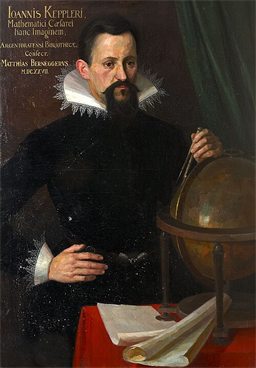
Portrait of Marie-Louise von Franz
CC BY 3.0

Marie-Louise von Franz

Depth Psychologists

Supporting8 mentions

Marie-Louise von Franz was a Swiss Jungian analyst and a close collaborator of Jung.

We cite her Number and Time: Reflections Leading toward a Unification of Depth Psychology and Physics on number as the bridge between psyche and matter, and an interview of 2002 quoted from Zeng and Fraikin on astrology and synchronicity. She appears briefly in the Central Doctrine and the Sacred History as part of Jung's circle.

Markham J. Geller

Historians of the Ancient Near East

Supporting8 mentions

Markham J. Geller is an Assyriologist and scholar of Jewish studies, Jewish Chronicle Professor of Jewish Studies at University College London. His work centers on Babylonian medicine and magic, with Ancient Babylonian Medicine (2010).

He appears in the Sacred History, in the chapter on the priests of the calendar, for the Qumran text 4Q186. Our work takes his description of its left-to-right hand with old Hebrew and Greek letters, his translation of 2023 of its reading of a person by the zodiac, and his view that its source was a Babylonian omen text written out in Greek letters to bring technical Akkadian into wider use.

Thorkild Jacobsen

Historians of the Ancient Near East

Supporting8 mentions

Thorkild Jacobsen was a Danish Assyriologist and historian of Mesopotamian religion (1904 to 1993), of the Oriental Institute of Chicago and later Harvard University. His books include The Treasures of Darkness: A History of Mesopotamian Religion (1976).
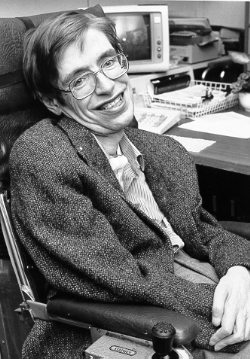
The Sacred History quotes him on Anu, whose name "was the everyday word for 'sky'", on the insignia of kingship resting "in heaven before Anu", and on Anu as "the overpowering personality of the sky". The Central Doctrine cites The Treasures of Darkness for the physical world as shaped by the actions of the gods, and as background to the likeness between Ezekiel's throne and the Mesopotamian sky.

Portrait of Alexander Gurwitsch
Public domain

Alexander Gurwitsch

Consciousness, Light and Life Sciences

Supporting7 mentions

Alexander Gurwitsch was a Russian biologist who in 1923 reported that dividing cells in onion roots stimulate division in neighboring roots through a radiation he called "mitogenic".

His report is the first claim that living tissue emits light, which the photomultiplier measurements of the mid-twentieth century confirmed. The Central Doctrine gives it as the beginning of the science of the cell's light (§31.7.2 and the table of §31.7.8), and the Layman (Part III) and the Biography (Ch. 11) name him at the same point.

Roger Beck

Historians of Religion, Art and Esotericism

Supporting7 mentions

Roger Beck (1937 to 2023) was a classicist and historian of the cult of Mithras, professor emeritus of classics at the University of Toronto. His books include Beck on Mithraism (2004) and The Religion of the Mithras Cult in the Roman Empire (2006).

The Sacred History uses him in the chapter on the Sun King and the Mysteries. We quote Beck on Mithraism for the finding that Cumont's narrative of a transfer from Persia to Rome is unsustainable, and we take his reading of the zodiac benches of a mithraeum as the sky of a spring equinox of the 170s CE. Through Alejandro Gangui we report his judgment that the turning of such fine astronomy into a religion is a great anachronism.

Portrait of Sri Aurobindo

Sri Aurobindo

Modern Spiritual Teachers

Supporting7 mentions

Sri Aurobindo (1872–1950) was an Indian philosopher, yogi and poet who founded the ashram at Pondicherry and wrote The Life Divine and Savitri. He taught that the divine hid itself in matter so that it could rise back through evolution.

The Central Doctrine names him among the modern saints who continue the living lineage (Appendix A) and among the witnesses to the Indian synthesis (Sources). The Central Doctrine (§1.8.1) gives his teaching that evolution is possible only because involution has already taken place, as the Indian voice beside Summum's use of the word involution.

Wayne Horowitz

Historians of the Ancient Near East

Supporting7 mentions

Wayne Horowitz is an American-Israeli Assyriologist, Professor of Assyriology at the Institute of Archaeology of the Hebrew University of Jerusalem. His books include Mesopotamian Cosmic Geography (1998).

Our works cite Mesopotamian Cosmic Geography for the tablet KAR 307 and its three heavens of precious stone, the highest belonging to Anu. The Central Doctrine uses him for the gods' actions in the heavens shaping the material world. The Sacred History, in the chapter on Ezekiel, follows him on saggilmud as a stone of the color of lapis, on Exodus 24:10 and Ezekiel's sapphire throne beside these floors, and on Ezekiel 1:26 to 27 as the Hebrew parallel to the lamp of Ištar.

Alexis Sanderson

Historians of Religion, Art and Esotericism

Supporting6 mentions

Alexis Sanderson (born 1948) is an Indologist and historian of Śaivism and Tantra, Spalding Professor of Eastern Religions and Ethics at Oxford from 1992 to 2015.

The Sacred History quotes him in the chapter from Alexandria to the Ganges. From "Śaivism and the Tantric Traditions" (1988) we take his dating of the Buddhist Tantras to about 400 to 750 CE, the canon of 85 Tantras of the Sun and his finding that "the Saura tradition is silent". From "The Śaiva Age" we take the solar cult surviving only in Śaivized forms and the Mantramārga holding aloof from calendrical religion, and we take from him the forms of Kālī as Destroyer of Time in the Jayadrathayāmala.

Alon Retter and Shlomo Heller

Physicists

Supporting6 mentions

Alon Retter is an astronomer who wrote, with Shlomo Heller, the paper "The Meaning of the Singularity: 1. A Single Particle Universe" (arXiv, 2010).

Their paper argues that a physical quantity has meaning only between at least two particles, so that no particle exists apart from the others, and that every division tends toward a point with no properties at all, the singularity. The Central Doctrine reads it as a parallel from physics to our teaching of the one center (§24.5.1), and the Layman carries it in Part III (§III.1).

Portrait of E. A. Wallis Budge
Public domain

E. A. Wallis Budge

Historians of the Ancient Near East

Supporting6 mentions

E. A. Wallis Budge was an English Egyptologist and Assyriologist (1857 to 1934), Keeper of Egyptian and Assyrian Antiquities at the British Museum from 1894 to 1924. He translated and edited a great number of Egyptian texts, among them the Amduat (1905) and the Opening of the Mouth (1909).
The Sacred History cites him in its chapter on the barque and the decans, for the Amduat as a work of the priests of Amen and its oldest copies in the tombs of Thutmose III, Amenhotep II and Amenhotep III, and for the Opening of the Mouth, in which the heart-soul and the ka take up their dwelling in the statue. The Central Doctrine notes that the Egyptology of Crowley's day followed him on the khu.

Portrait of Edward Granville Browne
Public domain

Edward Granville Browne

Historians of Astrology and the Sciences

Supporting6 mentions

Edward Granville Browne (1862 to 1926) was an English orientalist and Sir Thomas Adams's Professor of Arabic at Cambridge from 1902. His Arabian Medicine (1921) prints his FitzPatrick Lectures of 1919 and 1920.

The Sacred History calls him our witness for the library of the caliphs, who gathered "countless precious manuscripts" by purchase, conquest or exchange. In the chapter on Ḥarrān he gives the title of the true Sabians to the Mandaeans, the founding of Thābit ibn Qurra's Sabian community in Baghdad, and the report that the city "remained pagan down to the thirteenth century".

Portrait of Hermann Gunkel
Public domain

Hermann Gunkel

Historians of Judaism and Jewish Mysticism

Supporting6 mentions

Hermann Gunkel (1862 to 1932) was a German Protestant scholar of the Old Testament, professor at Giessen, Berlin and Halle, and a founder of the history of religions school and of form criticism. His Schöpfung und Chaos in Urzeit und Endzeit (1895) reads Genesis 1 and Revelation 12 against Babylonian myth.

The Sacred History stands with his finding of 1895 that Genesis reworks the Babylonian creation poem, and gives as its reason that verse 16 leaves the Sun and Moon unnamed. It also reports that he accepted the four creatures of Ezekiel as the four chief constellations of the zodiac, and that he and his followers read the twenty-four elders of Revelation as the twenty-four Babylonian star gods, as R. H. Charles reports in 1920.

Philip S. Alexander

Historians of Judaism and Jewish Mysticism

Supporting6 mentions

Philip S. Alexander (born 1947) is a British scholar of Judaism, Emeritus Professor of Postbiblical Jewish Literature at the University of Manchester and a founder of its Centre for Jewish Studies. He is a Fellow of the British Academy.

The Sacred History cites him in its chapters on Qumran and the palaces. It quotes, through Peter Schäfer, his finding from the Songs of the Sabbath Sacrifice that this mysticism arose "in priestly circles in Jerusalem" and was carried to Qumran, notes his 1996 reading of the physiognomic lists as a matter of initiation and rank in the community, and follows him in placing the final form of 3 Enoch in the fifth or sixth century.

Portrait of Robert Anton Wilson
CC BY 2.0

Robert Anton Wilson

Thelema

Supporting6 mentions

Robert Anton Wilson (1932–2007) was an American writer on consciousness, Thelema and the counterculture.

The Central Doctrine and the Layman record that the author first met the verse of The Book of the Law, "The Khabs is in the Khu, not the Khu in the Khabs," in Wilson's writings. Our works treat that verse as a lesson in the theurgic vehicle, the boundary where the gods are met.

The Biography states that in his early twenties the author read all of Wilson's work, book after book.

Theodore Otto Wedel

Historians of Astrology and the Sciences

Supporting6 mentions

Theodore Otto Wedel (1892 to 1970) was an American scholar whose Yale thesis became The Mediaeval Attitude Toward Astrology, Particularly in England (1920).

The Sacred History uses him for the Church's line drawn inside the sky. He reads the age as "a combat" between the hostility of the ancient Church and the demands of Arabian science, and he gives the reason in Aristotle, that the Church "accepted astrology as a science" while it kept its hostility to magic. We quote his reading of Dante, who condemns the diabolic art in the Inferno and restores astrology in the Purgatorio and Paradiso, his statement of the art's universal reign in the Renaissance and his sentence that "The final disproof of astrology was never written."

Portrait of Wouter J. Hanegraaff
CC BY-SA 3.0

Wouter J. Hanegraaff

Historians of Religion, Art and Esotericism

Supporting6 mentions

Dutch historian of Western esotericism (born 1961), who has held the chair of History of Hermetic Philosophy and Related Currents at the University of Amsterdam since 1999.

The Sacred History quotes his articles in the journal Correspondences at three points in its history. He finds that Renaissance readers of the Hermetica cared most for the prisca theologia and astral magic, and that the nineteenth-century occultists named their "occult science" a force for progress above church and positivist science. He reads Jung's Liber Novus as "the return of the repressed" and gives Jung's own history of rejected knowledge as a stream reaching back to the mystery religions.

Portrait of Abraham Harold Maslow
Public domain

Abraham Harold Maslow

Humanistic Psychologists

Supporting5 mentions

American psychologist (1908 to 1970), a founder of humanistic psychology. He set out his hierarchy of needs in "A Theory of Human Motivation" (Psychological Review 50, 1943).

The Sacred History quotes that paper for "What a man can be, he must be" and for self-actualization, a word he took from Kurt Goldstein, as "the desire to become more and more what one is". We set him beside William James as one who restored human potential to serious study, and our School answers his question with the nativity, which shows which function of a life is to be strengthened, in what order and on what days.

Portrait of Albert Pike
Public domain

Albert Pike

Modern Occultists: the Golden Dawn, Hermeticism and Theosophy

Supporting5 mentions

American Freemason and writer (1809 to 1891), born at Boston, Sovereign Grand Commander of the Scottish Rite, Southern Jurisdiction, from 1859 to his death. His Morals and Dogma (1871) gives the lectures of the degrees of the Rite.

The Sacred History (Chapter 18) cites Morals and Dogma for the lesser lights of the lodge as "the Sun, the Moon, and the Master of the Lodge" and for the Sun as "the ancient symbol of the life-giving and generative power of the Deity". It reports his lecture of the twenty-fifth degree, which sends the soul down through the Milky Way and the zodiac into birth, and his remark on the Sun and Moon of the York Rite lodges, "Of what they are the symbols the Mason in that Rite is not told."

Portrait of Alexander Altmann
CC BY-SA 4.0

Alexander Altmann

Historians of Judaism and Jewish Mysticism

Supporting5 mentions

Alexander Altmann (1906 to 1987) was a rabbi and historian of medieval Jewish philosophy and mysticism, communal rabbi of Manchester and from 1959 Lown Professor of Jewish Philosophy and History of Ideas at Brandeis University. His books include Essays in Jewish Intellectual History (1981).

The Sacred History quotes his Encyclopaedia Judaica article "Astrology" in its chapter on the palaces for the position of the sages as a body, that "the majority of the talmudic sages believed in the decisive role played by celestial bodies in determining human affairs in the sublunar world". From him it also takes the Tosefta's reading of Abraham's blessing as "the gift of astrology" and the astrological material in the commentaries of Saadiah Gaon and Shabbetai Donnolo on the Sefer Yetzirah.

Bernard Capp

Historians of Astrology and the Sciences

Supporting5 mentions

Bernard Capp is an English historian of early modern England, Emeritus Professor of History at the University of Warwick and a Fellow of the British Academy. He wrote English Almanacs 1500 to 1800: Astrology and the Popular Press (1979).

The Sacred History takes from him the size of the English almanac trade in its chapter on how many people kept the art. In the 1660s sales averaged about 400,000 copies a year, from which he infers an almanac in about one English family in three, and we read this as a people keeping the year by the sky. He also gives Moore's Vox Stellarum 107,000 copies in 1768 and 560,000 in 1839.

Portrait of Carlos Castaneda

Carlos Castaneda

Modern Occultists: the Golden Dawn, Hermeticism and Theosophy

Supporting5 mentions

Carlos Castaneda (1925–1998) was an author whose books tell of an apprenticeship to a man of knowledge.

He appears only in the Biography, which records that the author read him "book after book" in the Summum years in Salt Lake City and that he awakened a strong connection to animism, shamanism and the spirit lore of the Native American traditions. From Castaneda the author went on to anthropological texts on indigenous practice in the Americas.

Portrait of Charles Homer Haskins
Public domain

Charles Homer Haskins

Historians of Astrology and the Sciences

Supporting5 mentions

Charles Homer Haskins (1870 to 1937) was an American medievalist who taught at Harvard from 1902 to 1931. His Studies in the History of Mediaeval Science appeared in 1924.

The Sacred History quotes him in the chapter on the Cathedral Sky for the translators of Spain. He tells us that Gerard of Cremona went to Toledo for the Almagest and found "a multitude of Arabic books in every field", that Spain was "the land of mystery" for the Latin scholars, and that Daniel of Morley left Paris for Toledo. We take him at his word that astrology came over the Pyrenees with astronomy as one science, "in an age which regarded astrology as merely applied astronomy".

Ivan Starr

Historians of the Ancient Near East

Supporting5 mentions

Ivan Starr was an American Assyriologist of Wayne State University in Detroit. He edited Queries to the Sungod: Divination and Politics in Sargonid Assyria (State Archives of Assyria 4, 1990), the 353 queries put to Šamaš by the Assyrian kings.

He appears in the first chapter of the Sacred History as the editor of the queries. Our work cites his finding that only the asked kind of divination could work at will, his reading of the queries as free of the editing of the royal annals, his account of the "disregard" clauses as a guard against any impurity, and his note that the older prayers went to Šamaš and Adad together while the queries went to Šamaš alone, "lord of the (oracular) verdict".

Maggie Hyde

Modern Astrologers

Supporting5 mentions

British consultant astrologer and writer, co-founder and director of the Company of Astrologers, and author of Jung and Astrology (1992).

The Sacred History cites Jung and Astrology as a book-length study of Jung's relation to the art, drawing on Gret Baumann-Jung's reading of her father's chart. It gives her reading of Jung's marriage experiment as a failure to establish an objective correspondence and a success in showing the observer's part, and quotes her statement that astrology has almost entirely failed to establish itself by statistical proof. We read her two kinds of synchronicity as the counselor's room stated as a theory.

Martha Himmelfarb

Historians of Judaism and Jewish Mysticism

Supporting5 mentions

Martha Himmelfarb is an American historian of ancient Judaism, William H. Danforth Professor of Religion, emerita, at Princeton University. Her books include Ascent to Heaven in Jewish and Christian Apocalypses (1993).

The Sacred History cites her three times in its chapters on Qumran and the palaces. It records that she and Peter Schäfer rejected in 2006 Rachel Elior's line from the priests of the scrolls to the Merkavah mystics, quotes Ascent to Heaven on the Book of the Watchers' picture of heaven as a temple, and reports, after Michael Swartz, her question whether the Hekhalot ascents are stories to be recited.

Peter Adamson

Historians of Astrology and the Sciences

Supporting5 mentions

American historian of philosophy (born 1972), professor at LMU Munich and King's College London, author of Al-Kindī (2007) and host of the podcast History of Philosophy Without Any Gaps.

The Sacred History quotes his article "al-Kindi" in the Stanford Encyclopedia of Philosophy (§5.2) for al-Kindī's reading of the stars' prostration before God as their motion, for the treatise On Rays, where stars and planets act in the sublunary world by rays, and for the judgment that al-Kindī and Abū Maʿshar "saw astrology as a rational science, undergirded by a well-worked out theory of physical causes".

Portrait of Ramana Maharshi
Public domain

Ramana Maharshi

Modern Spiritual Teachers

Supporting5 mentions

Ramana Maharshi (1879–1950) was a South Indian sage of Arunachala, known for the path of self-inquiry.

The Central Doctrine and the Layman cite him once each as a witness that the Self is pure consciousness, the witness of the play of Māyā and untouched by it, and the Central Doctrine lists him among the modern witnesses to the Indian synthesis.

Portrait of Ana Mariella Bacigalupo

Ana Mariella Bacigalupo

Scholars and Translators

Supporting4 mentions

Ana Mariella Bacigalupo is an anthropologist who has worked for many years with the Mapuche machi of Chile.

We cite Thunder Shaman: Making History with Mapuche Spirits in Chile and Patagonia (2016) in Dream Theurgy for how machi reshape the events of history through dreams, possession, narrative and powerful objects. In the Biography the author names the book as part of his long study of the history of witchcraft.

Corinne Mandel

Historians of Religion, Art and Esotericism

Supporting4 mentions

Canadian art historian of the University of Western Ontario, author of "'Starry Leo,' the Sun, and the Astrological Foundations of Sixtine Rome" (1990) on the papacy of Sixtus V.

The Sacred History draws on her for the two faces of the papacy toward astrology. She shows that Sixtus V, who forbade judicial astrology by the bull Coeli et terrae in 1586, formed the mythology of his pontificate from his natal and electoral charts and was hailed as a Sun-pope, another Moses and another Hermes Trismegistus. Our works also cite her for the practice continuing through the 1590s among the clergy, and for Urban VIII as "a véritable convert to the occult arts".

Portrait of Émile Durkheim
Public domain

Émile Durkheim

Historians of Religion, Art and Esotericism

Supporting4 mentions

Émile Durkheim (1858 to 1917) was a French sociologist and a founder of the sociology of religion. He published The Elementary Forms of the Religious Life in 1912.

The Sacred History quotes him in the chapter on how many keep the art. His sentences "There is no Church of magic" and "The magician has a clientele and not a Church" describe how the people of astrology stand to one another, and with Stark and Bainbridge's class of astrology as a species of magic they show that the art has no central body over it.

Portrait of Ethel Stefana Drower
Public domain

Ethel Stefana Drower (Lady Drower)

Historians of Religion, Art and Esotericism

Supporting4 mentions

Ethel Stefana Drower (1879 to 1972) was an English scholar of the Mandaeans and a novelist under the name E. S. Stevens. She published The Mandaeans of Iraq and Iran in 1937.

The Sacred History calls her our witness for the Mandaeans, who lived among them, in the chapter on the Church and the Wheel. We quote her statement that the Mandaeans hold the stars and planets to contain animating principles, her account of the priests consulting the Sfar Malwasha, the Book of the Zodiac, for the days of marriage, schooling and travel, "Habshaba, the personified Sunday", and her report that the Seven and the Twelve may be treated as allies.

D. P. Walker

Historians of Religion, Art and Esotericism

Supporting3 mentions

Daniel Pickering Walker (1914 to 1985) was an English historian of Renaissance magic at the Warburg Institute in London. His books include Spiritual and Demonic Magic from Ficino to Campanella (1958) and The Ancient Theology (1972).

The Sacred History cites him in its account of Ficino's planetary rites. It reports his finding that Ficino's Orphic singing derived from Plethon's, quotes The Ancient Theology (as quoted by Angela Voss) on the Hermetic writings as "a Hellenistic amalgam of Platonism, Stoicism, Judaism and Christianity, set in a gnostic and magical framework", and credits him with placing the eclipse rite of Campanella and Pope Urban VIII in the history of Ficino's magic in 1958.

Portrait of Francis King

Francis King (Francis X. King)

Scholars and Translators

Supporting3 mentions

Francis King was an English writer and historian of ritual magic and the occult.

He appears only in the Biography. At seventeen the author found his first foothold in practice in Techniques of High Magic, the manual King wrote with Stephen Skinner (1976), and took from it the habit of the written magical record that he has kept since.

Portrait of J. Daniel Gunther

J. Daniel Gunther

Thelema

Supporting2 mentions

J. Daniel Gunther is a Thelemic writer on initiation in the current of The Book of the Law.

The Layman quotes him on the solar image of the "I": "From the perspective of the Sun, there are only distant points of light from other stars. The Sun is perpetually in darkness." The Biography names him among the later Thelemic writers the author read.

Portrait of Marcus Katz

Marcus Katz

Thelema

Supporting1 mention

Marcus Katz is a writer and teacher on the Tarot, the author of Secrets of the Thoth Tarot.

He appears once, in the Biography, which names the three volumes of Secrets of the Thoth Tarot, on the trumps, the small cards and the court cards, as the deepest work on the Thoth deck the author has read after Crowley's own Book of Thoth.

Portrait of Phyllis Seckler

Phyllis Seckler (Soror Meral)

Thelema

Supporting1 mention

Phyllis Seckler (1917–2004) was an American Thelemite who carried the A∴A∴ lineage from Jane Wolfe.

The Biography names her among the Thelemic writers after Crowley whom the author read, and One Architecture notes that one A∴A∴ body traces its lineage through Jane Wolfe and Seckler.

Robert Wang

Modern Occultists: the Golden Dawn, Hermeticism and Theosophy

Supporting1 mention

Robert Wang is the author of The Qabalistic Tarot (1983), which joins the Tarot to the Tree of Life.

He appears in the Biography, which names The Qabalistic Tarot as "the book that turned me": read just before the author's two years of Lurianic Kabbalah, it showed him he was seeking a more authentic foundation and sent him to the Hebrew sources.

Portrait credits

The portraits listed here come from Wikimedia Commons and are in the public domain or under a Creative Commons license. Each is given with its author and license, and links to its source page.

  1. Iamblichus of Chalcis: Pierre Mussard · Public domain, source
  2. Porphyry of Tyre: Public domain, source
  3. Emperor Julian: Classical Numismatic Group · CC BY-SA 2.5 (license), source
  4. Plotinus: Public domain, source
  5. Synesius of Cyrene: Stpiev · CC BY-SA 4.0 (license), source
  6. Plato: Marie-Lan Nguyen · Public domain, source
  7. Pythagoras of Samos: Public domain, source
  8. Philo of Alexandria: André Thévet · Public domain, source
  9. Aristotle: After Lysippos · Public domain, source
  10. Heraclitus of Ephesus: RoyFokker · CC BY-SA 4.0 (license), source
  11. Marcus Aurelius: Daniel Martin · CC BY-SA 4.0 (license), source
  12. Epictetus: William Sonmans / Michael Burghers · Public domain, source
  13. Parmenides of Elea: Sergio Spolti · CC BY-SA 4.0 (license), source
  14. Lucius Annaeus Seneca: Calidius · CC BY-SA 3.0 (license), source
  15. Empedocles of Akragas: Public domain, source
  16. Heinrich Cornelius Agrippa von Nettesheim: Wellcome Collection · CC BY 4.0 (license), source
  17. Marsilio Ficino: Attributed to Cristofano dell'Altissimo · Public domain, source
  18. Francis Barrett: Public domain, source
  19. Paracelsus: Wellcome Collection · CC BY 4.0 (license), source
  20. Robert Fludd: Public domain, source
  21. Alfred North Whitehead: Public domain, source
  22. Stephen C. Meyer: Discovery Institute press photo · CC0 (license), source
  23. Georg Wilhelm Friedrich Hegel: Jakob Schlesinger · Public domain, source
  24. Aldous Leonard Huxley: sinaloaarchivohistorico · No known copyright restrictions (license), source
  25. Bernardo Kastrup: Rebel Wisdom · CC BY 3.0 (license), source
  26. Arthur Schopenhauer: Johann Schäfer · Public domain, source
  27. Ādi Śaṅkarācārya: Raja Ravi Varma · Public domain, source
  28. Patañjali: en:Rpba · CC BY-SA 3.0 (license), source
  29. Abhinavagupta: Narayan Dikshit · CC0 (license), source
  30. Laozi: Public domain, source
  31. Jesus of Nazareth: Public domain, source
  32. Siddhārtha Gautama, the Buddha: พระมหาเทวประภาส วชิรญาณเมธี · CC BY-SA 3.0 (license), source
  33. Sri Ramakrishna Paramahamsa: Abinash Chandra Dna · Public domain, source
  34. A. C. Bhaktivedanta Swami Prabhupāda: Christian Jansen · CC BY 3.0 (license), source
  35. Swami Vivekananda: Dziewa (English Wikipedia) · Public domain, source
  36. Osho: Sjakkelien Vollebregt · CC0 (license), source
  37. Ramana Maharshi: G. G. Welling · Public domain, source
  38. Aryeh Kaplan: Ayil676 · CC BY-SA 4.0 (license), source
  39. Samuel Liddell MacGregor Mathers: Ihcoyc (English Wikipedia) · Public domain, source
  40. Arthur Edward Waite: J. Russell and Sons · Public domain, source
  41. Éliphas Lévi: Public domain, source
  42. Paul Foster Case: Joetuite · CC BY-SA 3.0 (license), source
  43. William Walker Atkinson: Public domain, source
  44. Helena Petrovna Blavatsky: Public domain, source
  45. Aleister Crowley: Aleister Crowley · Public domain, source
  46. Robert Anton Wilson: frankenstoen · CC BY 2.0 (license), source
  47. Carl Gustav Jung: Public domain, source
  48. Roberto Assagioli: Maspez · CC0 (license), source
  49. William James: Notman Studios (photographer) · Public domain, source
  50. James Hillman: George Quasha · CC BY 3.0 (license), source
  51. Sigmund Freud: Max Halberstadt · Public domain, source
  52. Marie-Louise von Franz: VisceralGravitas · CC BY 3.0 (license), source
  53. Wolfgang Ernst Pauli: Nobel foundation · Public domain, source
  54. Leonard Susskind: Acmedogs · CC BY-SA 3.0 (license), source
  55. Albert Einstein: Oren Jack Turner · Public domain, source
  56. Stephen William Hawking: NASA · Public domain, source
  57. Max Karl Ernst Ludwig Planck: Hugo Erfurth · Public domain, source
  58. Niels Henrik David Bohr: AB Lagrelius & Westphal (via American Institute of Physics) · Public domain, source
  59. John von Neumann: LANL · Attribution, source
  60. Werner Karl Heisenberg: German Federal Archive (Bundesarchiv) · CC BY-SA 3.0 de (license), source
  61. Erwin Rudolf Josef Alexander Schrödinger: Public domain, source
  62. Juan Martín Maldacena: Lumidek at English Wikipedia · CC BY 3.0 (license), source
  63. Sir Roger Penrose: Cirone-Musi, Festival della Scienza · CC BY-SA 2.0 (license), source
  64. Paul Adrien Maurice Dirac: Nobel Foundation · Public domain, source
  65. Gerard 't Hooft: Wammes Waggel · CC BY-SA 3.0 (license), source
  66. Jacob David Bekenstein: Bekenstein · Public domain, source
  67. John Archibald Wheeler: AIP Emilio Segrè Visual Archives, Wheeler Collection · Attribution, source
  68. David Joseph Bohm: Attribution, source
  69. Eugene Paul Wigner: Nobel foundation · Public domain, source
  70. Brian Cox: Duncan.Hull · CC BY-SA 4.0 (license), source
  71. Johannes Kepler: August Köhler · Public domain, source
  72. Sir Isaac Newton: Godfrey Kneller · Public domain, source
  73. Galileo Galilei: Justus Sustermans · Public domain, source
  74. Donald David Hoffman: photography: Themindoftheuniverse / retouching: AurélienPierre · CC BY-SA 4.0 (license), source
  75. Giulio Tononi: NIH · Public domain, source
  76. Stuart Hameroff: Zereshk · CC BY 3.0 (license), source
  77. John O'Keefe, May-Britt Moser and Edvard I. Moser: Per Henning/NTNU · CC BY 2.0 (license), source
  78. Alexander Gurwitsch: Public domain, source
  79. Claudius Ptolemy: Justus van Gent / Pedro Berruguete · Public domain, source
  80. William Lilly: Public domain, source
  81. Marcus Manilius: PGS 1984 · CC BY 4.0 (license), source
  82. Guido Bonatti: Perkele · Public domain, source
  83. Richard Tarnas: Ginaloganphotography · CC BY-SA 4.0 (license), source
  84. Liz Greene: Alois Treindl, Switzerland · CC BY-SA 3.0 (license), source
  85. Dane Rudhyar: The Library of Congress · Public domain, source
  86. Thomas Taylor: Thomas Lawrence · Public domain, source
  87. George Robert Stow Mead: Public domain, source
  88. Algis Uždavinys: Vytautas Tamoliūnas · Attribution, source
  89. Sir John George Woodroffe: The Calcutta Review · Public domain, source
  90. Sarah Iles Johnston: Sarahilesjohnston · CC BY-SA 4.0 (license), source
  91. Michael Psellus: Public domain, source
  92. Marcus Tullius Cicero: José Luiz · CC BY-SA 4.0 (license), source
  93. Plutarch of Chaeronea: Zde · CC BY-SA 4.0 (license), source
  94. Posidonius of Apamea: Sailko · CC BY 3.0 (license), source
  95. Giovanni Pico della Mirandola: Cristofano dell'Altissimo · Public domain, source
  96. John Dee: Unidentified painter · Public domain, source
  97. Tommaso Campanella: Francesco Cozza · Public domain, source
  98. Giordano Bruno: CC BY 4.0 (license), source
  99. William Wynn Westcott: Public domain, source
  100. Albert Gallatin Mackey: Public domain, source
  101. Albert Pike: Mathew Benjamin Brady / Levin Corbin Handy · Public domain, source
  102. Nicolaus Copernicus: Public domain, source
  103. Abū Rayḥān al-Bīrūnī: The original uploader was Romanm at Slovenian Wikipedia. · Public domain, source
  104. Varāhamihira: Pur 0 0 · CC0 (license), source
  105. Abū Yūsuf Yaʿqūb al-Kindī: Iraqi Post · Public domain, source
  106. Raphael Bousso: Atylcab · CC0 (license), source
  107. Wojciech Hubert Zurek: The original uploader was Fercook at English Wikipedia. · Attribution, source
  108. Louis de Broglie: Public domain, source
  109. Abraham Harold Maslow: William Carter · Public domain, source
  110. Eduard Sachau: Public domain, source
  111. Francesca Rochberg: UC Berkeley Events · CC BY 3.0 (license), source
  112. Henri Frankfort: op unknown · Public domain, source
  113. Simo Parpola: Kuvasiskot · CC BY 4.0 (license), source
  114. E. A. Wallis Budge: The Illustrated London News (Life time: NA) · Public domain, source
  115. Gershom Scholem: Public domain, source
  116. Peter Schäfer: Mozamaniac · CC BY-SA 4.0 (license), source
  117. Geza Vermes: Kaiser Ottó · CC BY 4.0 (license), source
  118. Rachel Elior: Sasson Tiram, Hebrew University of Jerusalem. · Attribution, source
  119. Hugo Odeberg: Public domain, source
  120. Andrei A. Orlov: Extrabiblical · CC BY-SA 4.0 (license), source
  121. Alexander Altmann: Mendelitkin · CC BY-SA 4.0 (license), source
  122. Hermann Gunkel: Public domain, source
  123. Franz Cumont: Public domain, source
  124. Franz Boll: Public domain, source
  125. Nicholas Campion: Nicholas Campion · CC BY-SA 3.0 (license), source
  126. Lynn Thorndike: CC BY 4.0 (license), source
  127. Edward Granville Browne: Charles Haslewood Shannon · Public domain, source
  128. Charles Homer Haskins: Bain · Public domain, source
  129. Gilbert Murray: Public domain, source
  130. Ethel Stefana Drower: Public domain, source
  131. Émile Durkheim: Public domain, source
  132. Jacob Burckhardt: Unbekannt · Public domain, source
  133. Frances A. Yates: Public domain, source
  134. Wouter J. Hanegraaff: Douglas A. Lockard · CC BY-SA 3.0 (license), source
  135. Émile Mâle: Agence Rol · Public domain, source
  136. Aby Warburg: Public domain, source

Photo credits

The photographs of people on this site are used under the Pexels License or the Unsplash License (unsplash.com/license).

  1. Two young women going over a notebook together at an outdoor table: photo by Zen Chung on Pexels, Pexels License
  2. Friends laughing around a campfire in the woods: photo by Vitaly Gariev on Unsplash, Unsplash License
  3. A family gathered around a table preparing food together: photo by Kwami Fattah Al Sissi on Unsplash, Unsplash License
  4. An astrologer at work with a client: photo by Pavel Danilyuk on Pexels, Pexels License
  5. A young woman meditating on the floor at home: photo by Vitaly Gariev on Unsplash, Unsplash License
  6. A hand writing in a journal beside a lit candle: photo by Daria Glakteeva on Unsplash, Unsplash License
  7. A woman standing in a meadow in the morning sun: photo by Julia Caesar on Unsplash, Unsplash License
  8. A young woman with her eyes closed in warm sunlight: photo by Monika Schlarman on Unsplash, Unsplash License
  9. Two women in conversation at a table: photo by Brooke Cagle on Unsplash, Unsplash License
  10. A teacher guiding three students at a table: photo by Charlotte Harrington on Unsplash, Unsplash License
  11. A woman with her hands crossed at her heart: photo by Fa Barboza on Unsplash, Unsplash License
  12. Four friends standing together under the Milky Way at night: photo by Kendall Hoopes on Pexels, Pexels License
  13. Two friends smiling over a phone together: photo by cottonbro studio on Pexels, Pexels License
  14. A young woman reading a book by a sunlit window: photo by Yaroslav Shuraev on Pexels, Pexels License

The teaching

Read the teaching they stand behind

The Central Doctrine draws these sources into one argument, and The Sacred History follows the line from Babylon to our day.