The Academy for Diviners · Part II of the curriculum

Western astrology with the WaveForm reading

The full Western system, taught training by training beside the WaveForm reading of the same chart.

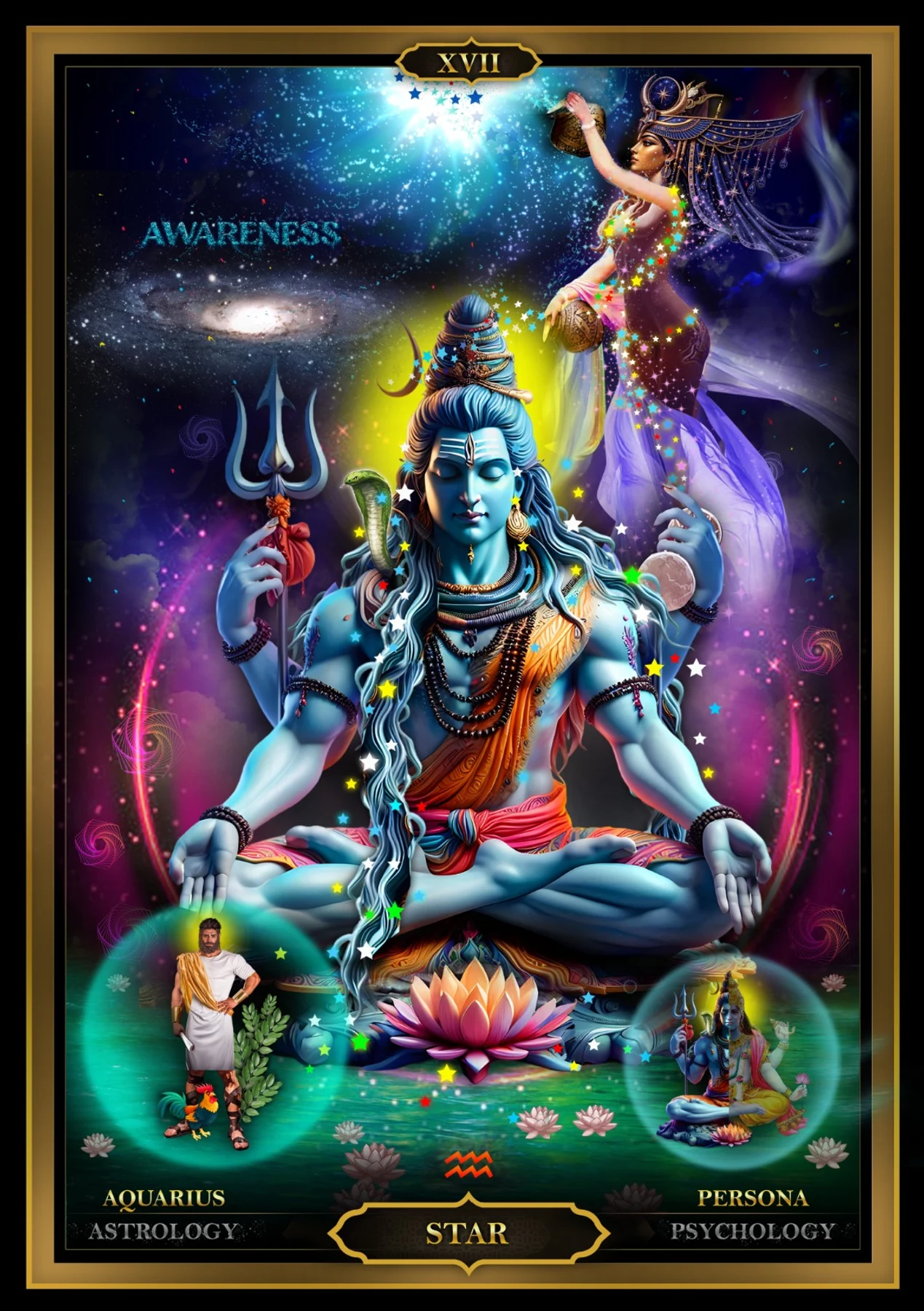
The Star, a card of the Divine Arcana Tarot
The Star
26trainings in Part II, about 45 hours
100%every segment test, passed before you go on
1book: WaveForm Astrology
Spring Equinox 2027the Academy opens

Part II of the curriculum

What Part II teaches

Part II teaches the full Western system and layers WaveForm astrology into it. Each placement keeps its Western meaning and is also read as the work of an operator, a function in the person with a task, a felt sign that it is working and a recognizable way of failing, with what the person can do about it. The student learns both readings, training by training, on the same charts.

Our astrology is tropical and solar. The signs are the Sun’s year. The houses are the regions of a life. The aspects are the phase relationships between the operators. Each planet has its own training, with a slide for the planet in every sign, in every house and in aspect to every other planet, the Western reading first and the WaveForm reading beside it. The reading trainings follow: the whole chart at a glance, the nativity, reading by topic, karma and dharma, relationships, transits, returns, horary and election, and the consultation with a client. By the end of Part II the student gives one reading in two languages.

Each training is set out in segments of a few slides, and each segment ends with a test of three to five questions: multiple choice, yes or no, or select all that apply. Every answer must be correct. When an answer is wrong, the student watches the segment again and is then tested only on the questions missed, until every question of the segment is answered correctly, at 100%. Then the next segment opens. A question guide to print holds every question of the training.

  1. Watch the segment
  2. Take its test
  3. 100%Go on to the next segment
A wrong answer: watch the segment again, then retest what was missed

Part II: the trainings

What is learned, training by training

Each training sets the Western system on the left and the WaveForm reading of the same material on the right.

Training A05 · about 60 minutes

Elements, Modalities, Polarity and the Tropical Year

The frame of the signs, the four elements, the three modalities, the six oppositions and the balance of a chart.

The Western system

  • The ecliptic, the four turning points of the year, Ptolemy, precession, and tropical and sidereal
  • The four elements, the triplicities and the modern reading of the elements
  • Cardinal, fixed and mutable signs in the Western reading
  • Polarity, the six oppositions and polarity in the aspects
  • Counting the balance of a chart, the missing element and the singleton

The WaveForm reading

  • The signs as the Sun's modulation of the year, and the twelfth harmonic
  • The elements as media: Fire the medium of excitation, Earth of mass, Air of phase and relation, Water of coherence
  • The modalities as phases of the season: set, hold and release
  • Each opposition read as a dialogue, with its two outcomes
  • The balance of a chart read as a terrain of media
Taught from
WF Ch 18WF Sections 19.6, 20.2, 20.4.2WF Appendix D.1 and D.2
Tested by
13 segment tests, 55 questions in all, each test passed at 100%

Training A06 · about 125 minutes

The Twelve Signs

The twelve modes of the Sun's year, each read in Western astrology and in WaveForm, with worked placements for every sign.

The Western system

  • Each sign in its place in the year, with its element, modality, polarity, ruler and part of the body
  • Rulership and dignity, and the planets in each sign in the Western reading
  • Four worked placements for every sign: the Sun, the Moon, the rising sign and one more planet
  • The three sign-level observations at the start of every reading
  • The dispositor chain and mutual reception
  • A chart read by sign alone, the signs in transit and the words to use

The WaveForm reading

  • A sign as a mode of the Sun, with its governing rule and three questions
  • Each sign named by its phase of the solar year, from the ignition of Aries to the dissolution of Pisces that prepares return
  • Dignity read as cost, with the cost of each operator in each sign
  • The eight steps for reading any planet in any sign
  • The diagnosis and the order of work from a chart read by sign
Taught from
WF Ch 18WF Sections 10.6, 11.7, 19.4WF Appendix D.1, D.2, D.9, D.10
Tested by
28 segment tests, 109 questions in all, each test passed at 100%

Training A07 · about 115 minutes

The Sun

Identity, vitality and the solar reference every operator in the chart answers to.

The Western system

  • The Sun in the sky and in myth: Shamash, Ra, Helios, Apollo and Savitar
  • Traditional and modern significations, the Sun and the body, and the limits of the Sun sign
  • Rulership, dignity, the minor dignities, sect and accidental condition
  • The Sun in the twelve signs and the twelve houses, and on the angles
  • Solar aspects to every planet, under the beams, combust and cazimi, and aspect patterns
  • Transits by and to the Sun, the progressed Sun and the solar return
  • Three worked charts, the client's questions and the words to use

The WaveForm reading

  • The Sun as the solar center, the rest frequency against which every operator is measured
  • The solar center set apart from the ego, and the Sun first in the process sequence
  • The signature: quiet knowing, the absence of scanning, and calm ownership of the deeper will
  • The failure markers: scanning, reactive surface desire, pursuit in place of ownership, and excitement in place of knowing
  • Dignity and sect read as cost, and the Solar Logos and the Divine Double behind the Sun
Taught from
WF Ch 10WF Sections 18.2 to 18.11, 19.2 to 19.8, 20.1 to 20.9, 22.3 to 22.6, 27.2, 27.8WF Appendix AWF Appendix D
Tested by
21 segment tests, 103 questions in all, each test passed at 100%

Training A08 · about 115 minutes

The Moon

Feeling, habit and memory, and the Moon as the reflective medium that carries the solar light through the chart.

The Western system

  • The Moon in the sky and in the tradition, its traditional and modern views, dignity and sect
  • The Moon's condition, the body, and a Western judgment of the Moon
  • The Moon through the twelve signs and the twelve houses, and on the angles
  • Lunar aspects to every planet, the nodes, and the lunar phase at birth
  • The lunation, the void-of-course Moon, eclipses, the progressed Moon and the lunar return
  • Three worked charts, the client's questions and the words to use

The WaveForm reading

  • The Moon as the reflective medium, outside the sequence of operators, tended and never restored as an operator
  • The noise floor, the hidden face, the kept record and the fidelity of the reflection
  • The Moon as the body of the medium and the personal texture of the Field of Consciousness
  • The lunar reflex at the threshold of the unintegrated, and inherited patterning
  • Dignity as the cost of clear reflection, and the Moon as step 2 of the operator audit
Taught from
WF Ch 11WF Sections 9.8, 18.7, 18.8, 19.3 to 19.8, 20.1 to 20.10, 21.4, 28.3.3WF Appendix D
Tested by
18 segment tests, 88 questions in all, each test passed at 100%

Training A09 · about 110 minutes

Mercury

Mind, speech and the operator of phase protection that keeps an aim steady.

The Western system

  • Mercury in the sky and in myth, its significations, dignities and minor dignities
  • Sect, accidental condition and Mercury as a ruler
  • Mercury in the twelve signs and the twelve houses, on the angles and in rulership
  • Mercury in aspect to every planet, patterns and the unaspected Mercury
  • Natal Mercury retrograde, the retrograde in the sky, transits by Mercury and the Mercury return
  • Three worked charts, the client's questions and the words to use

The WaveForm reading

  • Mercury as the operator of phase protection, second in the sequence after the Sun
  • The signatures: clear intention without clinging, sustained but relaxed attention, and non-identification with current conditions
  • The willingness to accept unexpected vehicles: content held sharp, vehicle left broad
  • The failures: scattered hope, compulsive checking and revision by present facts
  • Dignity as cost, oriental and occidental, combust and cazimi, and the retrograde as phase review
Taught from
WF Ch 12WF Sections 18.3 to 18.11, 19.2 to 19.13, 20.1 to 20.9, 21.7, 22.4, 22.6WF Appendix D
Tested by
19 segment tests, 83 questions in all, each test passed at 100%

Training A10 · about 110 minutes

Venus

Love, value and the operator of binding that gives an aim weight and worth.

The Western system

  • Venus in the sky, its phases as morning and evening star, and its first records
  • The myth and meanings of Venus, dignity, sect and condition
  • Venus and the body, and Venus as a ruler
  • Venus in the twelve signs and the twelve houses, on the angles and in rulership
  • Venus in aspect to every planet, Venus retrograde, transits, and the Venus return and eight-year cycle
  • Three worked charts, one of them between two charts, and the words for a client

The WaveForm reading

  • Venus as the operator of binding, which turns protected information into geometric mass
  • Consent before exertion: Venus gives consent and Mars the act
  • The signatures: emotional congruence, gratitude, value-creation alignment and imagination treated as real
  • Beauty read as the perception of coherence
  • The failures: arbitrary value, mass that never forms, counterfeit Venus and indulgence, with the Sun and Mercury checked first
Taught from
WF Ch 13WF Sections 18.3 to 18.11, 19.2 to 19.8, 20.1 to 20.9, 22.4WF Appendix D
Tested by
19 segment tests, 89 questions in all, each test passed at 100%

Training A11 · about 110 minutes

Mars

Drive, desire and the operator of kinetic excitation that sets bound value in motion.

The Western system

  • Mars in the sky and in myth, its significations, traditional and modern views, and dignity
  • Sect, accidental condition, Mars and the body, and Mars as a ruler
  • Mars in the twelve signs and the twelve houses, the angles, the axes and the dispositor
  • Mars in aspect to every planet, and how to work a hard Mars aspect
  • Mars retrograde, transiting Mars, slow planets to natal Mars and the Mars return
  • Four worked charts, the six diagnostic questions and the words for a client

The WaveForm reading

  • Mars as the operator of kinetic excitation, the motion term added to the solar rest energy
  • Consent and exertion, and Mars as the executive of the sequence
  • The signatures: readiness with a next step, response, decisiveness, follow-through and the capacity not to act
  • Failure as a sequence violation, burnout, the under-functioning Mars, and the rule to restore upstream before asking for more drive
  • Dignity and sect as cost, and costly as the reader's word for a function worked deliberately
Taught from
WF Ch 14WF Sections 18.3 to 18.11, 19.2 to 19.9, 20.1 to 20.9, 22.3, 22.5WF Appendix DSoA Ch 21
Tested by
21 segment tests, 94 questions in all, each test passed at 100%

Training A12 · about 115 minutes

Jupiter

Growth, faith and the operator that enlarges the ochēma.

The Western system

  • Jupiter in the sky and in myth, its significations, tradition and dignity
  • Sect, accidental condition and Jupiter as a ruler
  • Jupiter in the twelve signs and the twelve houses, the angles and the dispositor
  • Jupiter in aspect to every planet, and the unaspected Jupiter
  • Jupiter retrograde, Jupiter transits, the Jupiter return and the Great Conjunctions with Saturn
  • Five worked readings, the client's questions and the words to use

The WaveForm reading

  • Jupiter as the operator that enlarges the ochēma and changes the scale at which content can operate
  • Jupiter as the most dependent operator, enlarging whatever Saturn has densified
  • The signatures: expansion as continuation and detachment from any single path, with the test of the radius
  • The failures: the confined boundary, the inflated boundary and attachment to the vehicle
  • Dignity, sect and retrograde as cost, and the density-radius ratio with Saturn
Taught from
WF Ch 16WF Sections 9.2 to 9.6, 18.3 to 18.11, 19.2 to 19.12, 20.1 to 20.9, 21.7.3WF Appendix D
Tested by
20 segment tests, 90 questions in all, each test passed at 100%

Training A13 · about 120 minutes

Saturn

Structure, time and the operator of densification and receiving capacity.

The Western system

  • Saturn in the sky, its glyph, Kronos, the Golden Age and Father Time
  • Saturn's significations in the tradition, in Ficino and in the modern view
  • Dignity, sect, accidental condition, Saturn in the body and Saturn as a ruler
  • Saturn in the twelve signs and the twelve houses
  • Saturn in aspect to every planet, patterns and the unaspected Saturn
  • Saturn transits and the three passes, the Saturn cycle and the Saturn return
  • Three worked charts, the diagnostic markers and the words for a client

The WaveForm reading

  • Saturn as the operator of densification, which makes what has been gathered dense, stable and habitable
  • Densification in the body, and the held template that outcompetes an old contractile reflex
  • Saturn and Jupiter as the conjugate pair
  • The signatures: peace and settledness, regulation that prevents fixation, receiving capacity and expansion without strain
  • The failures: contraction at arrival, guilt and suspicion, dispersal, leakage and the counterfeit of strength, with dignity, sect and retrograde as cost
Taught from
WF Ch 15WF Sections 18.3 to 18.11, 19.2 to 19.8, 20.4 to 20.9, 21.7.3, 22.3, 22.6, 26.4, 26.8, 26.10, 27.5, 27.6, 31.6.6WF Appendix D.9 and D.10
Tested by
24 segment tests, 111 questions in all, each test passed at 100%

Training A14a · about 100 minutes

Uranus

Freedom, sudden change and the field operator that redefines the rules of a life.

The Western system

  • Uranus in the sky, its discovery and its myths
  • Western meanings, the traditional and modern views, and dignity
  • Uranus as generational or personal, and how to weigh it in a chart
  • Uranus through the twelve signs by generation, and through the twelve houses and the angles
  • Uranus in aspect to every planet, patterns and orb
  • Retrograde and stations, the passes of a transit, the cycle of Uranus and the midlife cluster
  • Four worked charts, the client's questions and the words for timing

The WaveForm reading

  • Uranus as the first of the ambient field with Neptune and Pluto, the context in which the other operators work
  • The operator that redefines the boundary conditions, the rules of admission of a life
  • The signature: openness to unexpected pathways, felt as alert lightness
  • The two failures: the frozen Uranus and the unanchored Uranus
  • Cost measured by the relation to the Sun and the boundary pair, and the field operators as received more than performed
Taught from
WF Ch 17WF Sections 9.3 to 9.7, 18.5, 18.6, 18.8.3, 19.5, 19.8.2, 20.7.3, 22.4, 22.5WF Ch 21WF Appendix D.3
Tested by
20 segment tests, 89 questions in all, each test passed at 100%

Training A14b · about 100 minutes

Neptune

Dream, dissolution and the ambient operator of non-local consistency.

The Western system

  • Neptune in the sky, its discovery and its meanings
  • Rulership, weight in a chart, the glyph, the body and the generational rule
  • Neptune through the twelve signs and the twelve houses, and on the angles
  • Neptune in aspect to every planet, and aspect patterns
  • Retrograde and stations, Neptune transits, the Neptune square and the midlife passage, and Neptune in synastry
  • Four worked charts, the client's questions and the words to use

The WaveForm reading

  • Neptune in the ambient field: the continuous medium in which the sphere of the person floats
  • The dissolution of the hard wall between inner coherence and outer events, read through the holographic principle
  • The signatures: allowing and non-resistance, and connection to the larger
  • The two failures: the wall and the flood, with the center read before Neptune
  • Neptune's affinities with Water, the mutable modality, Pisces and the twelfth house, and its cost
Taught from
WF Ch 17WF Sections 9.5, 9.7, 18.5, 18.6, 18.8.3, 19.4, 19.5, 19.8, 20.4, 20.7.3, 27.7.3WF Appendix AWF Appendix D.3
Tested by
14 segment tests, 66 questions in all, each test passed at 100%

Training A14c · about 105 minutes

Pluto

Transformation, power and the regeneration of the substrate.

The Western system

  • Pluto in the sky, its orbit and Charon, Hades and Plouton, and the decade of its discovery
  • The Western meanings, rulership, the body, the two schools and the generational rule
  • Pluto through the twelve signs by generation, and through the twelve houses and the angles
  • Pluto in aspect to every planet, and patterns
  • Pluto retrograde, Pluto transits, the Pluto square and the midlife cluster, and Pluto in relationship
  • Three worked charts, listening for the shape, and the words for a client

The WaveForm reading

  • Pluto as the operator of the ambient field that regenerates the substrate of mass
  • Saturn densifies and Pluto regenerates: Pluto works at the foundation beneath the reflex
  • The signature as a missing event, the old reversal that does not return, and the interval held without panic
  • The two failures: the return of the old substrate and forced transformation, and the rule not to read every crisis as Pluto
  • Cost measured by Pluto's relation to the Sun and to Saturn
Taught from
WF Ch 17WF Sections 9.7, 11.6.4, 18.5.6, 18.8.3, 19.3.3, 19.5, 19.8, 20.7.3, 23.3.3, 23.5.3, 27.7.4WF Appendix D.3
Tested by
18 segment tests, 80 questions in all, each test passed at 100%

Training A15 · about 90 minutes

The Condition of a Planet: Dignity, Sect, Decans and Reception

How well a planet is placed, judged by the Western doctrines of condition and read in WaveForm as energetic cost.

The Western system

  • Essential dignity: domicile, exaltation, detriment, fall and the peregrine planet
  • The minor dignities: triplicity, the terms and the faces, with Lilly's table of points and the almuten
  • The decans in the Chaldean order, and finding the decan and face of any degree
  • Accidental dignity: angular, succedent and cadent houses, the joys, speed, stations, retrograde motion and nearness to the Sun
  • Sect: the day chart and the nocturnal chart, and the planets of the sect and contrary to it
  • The dispositor and reception, mutual reception and the chain of hosts

The WaveForm reading

  • Dignity as energetic cost, at three levels: low, moderate and high, with cost and never compulsion
  • Sect as a further cost modifier acting at the level of the whole chart
  • The host and mutual reception: two operators that exchange media and lower each other's cost when worked together
  • The eight-step procedure for any planet in any sign, worked on three placements
  • Condition said to the client as cost and practice
Taught from
WF Ch 18WF Sections 9.4, 19.5, 19.8 and 20.7WF Appendix A.8 to A.10WF Appendix D.9 and D.10
Tested by
18 segment tests, 88 questions in all, each test passed at 100%

Training A16 · about 125 minutes

The Houses and the Angles

The twelve regions of a life and the four angles, read in both languages and turned into a reading of one region for a client.

The Western system

  • The origins of the houses, the natural zodiac and how the houses are cast
  • The four angles: the Ascendant and the chart ruler, the Midheaven, the Imum Coeli and the Descendant
  • Angular, succedent and cadent houses, and planets on the angles
  • The six axes, the hemispheres and each of the twelve houses
  • The ruler of a house, any sign on any cusp, empty houses, intercepted signs and derived houses
  • Placidus and Whole Sign, the two house systems of the Academy, and the same chart in both

The WaveForm reading

  • The house as a region of the volume of influence: the sign gives how and at what cost, and the house gives where
  • The angles as the axes of the chart, with projection at the Descendant
  • Absence and distortion in a region
  • The Region Reading in eight steps, from the region named to the counsel
  • Houses under transit and in synastry and the composite
Taught from
WF Ch 19WF Sections 18.8, 18.9, 20.4 and 20.8WF Appendix D.4 to D.6, D.9, D.10
Tested by
20 segment tests, 93 questions in all, each test passed at 100%

Training A17 · about 125 minutes

The Aspects

Finding, weighing and speaking the angles between the planets, in Western astrology and as phase relationships in WaveForm.

The Western system

  • The major and minor aspects, found by sign and by degree, on the wheel and in the grid
  • Orbs, applying and separating, and the out-of-sign aspect
  • Each aspect in turn: conjunction, opposition, square, trine, sextile, quincunx and the minor aspects
  • Aspect patterns: the Grand Trine, the Kite, the T-square, the Grand Cross, the Yod, the stellium, the Mystic Rectangle and the Grand Sextile
  • Retrograde motion and stations, the lunar nodes, lunations and eclipses
  • Weighing the aspects of a chart and speaking an aspect to a client

The WaveForm reading

  • Aspects as phase relationships set by the harmonics of the circle: in-phase fusion, antiphase, quadrature and third-harmonic resonance
  • Orb as bandwidth, and how an aspect is lived: squeeze, release, settle
  • Patterns as closed loops and driven oscillation, and the unaspected planet and deliberate coupling
  • Retrograde as phase reversal
  • Weighing by the sequence, with the aspect network read as a circuit and the weak operator earliest in the sequence leading
Taught from
WF Ch 20WF Sections 9.3, 9.5, 11.6 and 11.7WF Appendix D.7, D.8, D.11, D.13, D.14WF Appendix E.1, E.2, E.4
Tested by
19 segment tests, 81 questions in all, each test passed at 100%

Training A27 · about 105 minutes

The Lunar Nodes, Eclipses and the Points

The nodal axis by sign and house, the eclipses, the Part of Fortune, Chiron and the royal stars, read in Western astrology and, where the book reads them, in WaveForm.

The Western system

  • The nodes: their glyphs, their backward motion, the mean node and the true node
  • The medieval, Hellenistic and modern readings of the nodal axis
  • The nodes through the six sign axes and the six house axes, and planets on and square the nodes
  • Eclipses: their kinds and seasons, the Saros, eclipses on natal points and through the houses, and the prenatal eclipse
  • The lots, the formula of Fortune by day and by night, Fortune in the houses and the Lot of Spirit
  • Chiron by myth, house and return, and the fixed stars with the four royal stars

The WaveForm reading

  • The nodal axis as the axis of the Sun, Moon and Earth interference
  • The past held and the thread of growth on the axis
  • Eclipses as major re-tunings of the reflective medium
  • The Part of Fortune, if used, as the angle of the solar reference and the reflective medium, and Chiron read for its return alone
Taught from
WF Sections 11.7, 18.7, 19.6 and 20.10WF Sections 21.14, 22.3 to 22.5 and 27.7.5WF Appendix D.3, D.11 to D.14, E.4
Tested by
20 segment tests, 96 questions in all, each test passed at 100%

Training A18 · about 60 minutes

Archetypal Astrology

The planets as archetypes, from Jung and the archetypal line to the School's account of one planet with three faces, used in a reading.

The Western system

  • A planet as a family of meanings, with the archetypal registers of each planet
  • The myth of each planet and the precision of the archetype
  • Jung: the archetype, the personal and the collective unconscious, projection and constellation
  • Rudhyar, Greene, Hillman, Tarnas and Le Grice, with Tarnas's rule of multivalence
  • Lower octave and higher octave, and hearing the planet in the client's account

The WaveForm reading

  • Dual-aspect monism, the Unus Mundus and the psychoid level, with Kepler and Pauli
  • Archetypes as Forms, and the principle of the single process
  • The three faces of one planet: body, archetype and operator
  • The three-face reading worked in natal, synastry and transit charts
Taught from
WF Sections 2.8 and 2.9WF Ch 3WF Sections 10.5, 11.3, 13.5 and 18.11WF Appendix A.1, A.11, D.3
Tested by
13 segment tests, 61 questions in all, each test passed at 100%

Training A29 · about 60 minutes

The Whole Chart at a Glance

The first look at a natal chart before any detail, written on one glance sheet in both languages.

The Western system

  • The glance sheet, and the day chart or the night chart
  • The hemispheres and the quadrants
  • The shapes of the chart: splash, bundle, locomotive, bowl, bucket, seesaw and splay
  • Elements, modalities and polarity counted, with missing elements and singletons
  • Angular planets, stelliums, the chart ruler, the dispositor chain and the final dispositor
  • Three worked charts read at a glance and compared

The WaveForm reading

  • The WaveForm first look in five findings
  • The solar reference first, then the cost map of the sequence
  • The lead operator and the weak operator suspected
  • Density against radius, and open bands
  • What the first look leaves to the full audit
Taught from
WF Sections 18.5, 18.6, 19.4, 19.8 and 20.9WF Sections 22.2 to 22.7WF Appendix A.7, D.2, D.14, E.2, E.3
Tested by
13 segment tests, 64 questions in all, each test passed at 100%

Training A19 · about 115 minutes

Reading the Nativity

The full natal reading, in the Western order and as the WaveForm operator audit, with one chart read end to end in both languages.

The Western system

  • Preparing a nativity: the data, sect, phase and houses
  • The overview of the chart and the three anchors: the Sun, the Moon and the Ascendant
  • The chart ruler, the Midheaven and its ruler, and each planet by sign, house and aspect
  • Condition, dispositors, the aspects and the lunar nodes
  • The central theme, the parts that cooperate and compete, and the client's language

The WaveForm reading

  • The chart as terrain and cost, never a verdict
  • The operator audit in seven steps, from the solar reference to the four findings, with the density-radius ratio
  • The lead operator, the weak operator, the five layered failure modes and the order of restoration
  • The threshold of the unintegrated and the Threshold Profile, and the resonant signature with its holding load and open bands
  • The attention plan, the actionable diagnostic, and the karmic and dharmic statements
Taught from
WF Ch 21 to 23WF Sections 29.11 and 31.6.6WF Appendix B.1, B.6, E.2
Consultation programs
Natal Chart
Tested by
22 segment tests, 108 questions in all, each test passed at 100%

Training A28 · about 105 minutes

Reading by Topic: Love, Work, Money, Health, Family and Purpose

Where to look for each question a client brings, in Western astrology and in WaveForm, with one worked chart per topic.

The Western system

  • The four witnesses of a topic: the house, the ruler of its cusp, its tenants and the natural significator, and how they are weighed
  • Love: Venus, Mars and the Moon, the fifth and the seventh houses, and timing a love question
  • Work: the Midheaven and its ruler, the tenth, sixth and second houses, and Saturn and the Sun
  • Money: the second and the eighth houses, the Part of Fortune, Venus, Jupiter and Saturn
  • Health: the limit of the reading first, the signs and the body, and medical astrology as history
  • Family and purpose: the parents, siblings and children through derived houses, and the nodes
  • Questions that cross topics and questions outside the reading, with referral

The WaveForm reading

  • The question names a region, and the Region Reading finds the responsible operator
  • Each house of a topic in WaveForm terms: the seventh as the coupling interface, the second as value held, the sixth as regulation, the fourth as substrate
  • Absence or distortion, with the chain of reading that begins with experience
  • One practice, one window and a review date for each topic
  • The chart's direction and the three tests of an intention
Taught from
WF Ch 19WF Sections 20.10, 21.7, 22.6 to 22.8 and 23.3WF Sections 25.11, 26.10, 29.11, 30.3 to 30.6 and 31.6.6WF Appendix D.12, E.4
Tested by
22 segment tests, 102 questions in all, each test passed at 100%

Training A20 · about 70 minutes

Karma and Dharma in the Chart

Saturn, the lunar nodes, the twelfth house and the purpose of a life, read in Western astrology and carried through the five WaveForm steps to two statements for the client.

The Western system

  • The two words, prārabdha karma and the nativity, and the two words in Jyotisha
  • How karma entered Western astrology, and the School's position
  • Saturn as the lord of karma: by sign, condition, house, aspect and return
  • The lunar nodes as the Dragon's Head and Tail and in modern karmic astrology, read by sign and house
  • The twelfth house as the karmic house
  • The indicators of dharma: the Sun, the tenth house and the Midheaven, the ninth house and the chart ruler

The WaveForm reading

  • The five steps: the karmic blueprint, the two octaves, holding the frame, dharma held on purpose and the indicators made actionable
  • Where pressure concentrates, weighed as cost and attention, with the weak operator named
  • The karmic and dharmic statements, with the book's model statement
  • Destined from the circumference, free from the center
  • Cost described, never fate, with one chart worked from start to finish
Taught from
WF Sections 1.10, 7.6, 19.5 and 20.10.1WF Sections 21.6, 21.7, 21.15, 21.16 and 22.2 to 22.9WF Sections 31.4.4 and 31.6.4 to 31.6.6WF Appendix A.12.5, B.6.4CD Section 32.11
Tested by
16 segment tests, 78 questions in all, each test passed at 100%

Training A21 · about 110 minutes

Relationship Astrology: Synastry and the Composite

Two charts read together, the chart of the bond, and the words for both partners, for love, friendship, business and family.

The Western system

  • Three charts for one bond, and consent for the second chart
  • Setting up a synastry and reading the contacts of each planet across two charts
  • House overlays, the seventh house and its ruler, and weighing the whole
  • The composite by midpoints and the Davison relationship chart
  • One method for romantic partners, friends, business partners and family

The WaveForm reading

  • Synastry as coupled waveforms, read by the Overlay Rule: who acts and who is worked
  • Constructive and destructive interference, and beats
  • Supplying the weak operator, the gift and the dependency, and projection and its withdrawal
  • The composite as the Shared Ochēma, with stewardship and the rule of the weaker steward
  • The joint operator audit, joint restoration, convergent and divergent timing, and the coupled signature check
Taught from
WF Ch 24 and 25WF Section 21.7WF Appendix B.2, E.4
Consultation programs
Romantic Relationships · Friendship Relationships · Business Relationships
Tested by
19 segment tests, 86 questions in all, each test passed at 100%

Training A22 · about 105 minutes

Transits

Reading the moving sky against the natal chart, from the fast planets to the slow, and turning it into a plan for the year, the month and the week.

The Western system

  • The ephemeris and the bi-wheel, the aspects and orbs used in transit work
  • The two houses of a transit, transits to the angles and the chart ruler, and the natal promise
  • Each planet in transit, from the Moon to Pluto
  • Stations, the three passes and a retrograde through a house
  • Several transits at once, lunations and eclipses on the natal chart, and the Western order of a transit reading
  • The monthly and weekly readings, worked on one teaching chart

The WaveForm reading

  • Transits as time-varying boundary conditions that raise or lower the cost of an operator
  • The Five Questions of a Transit: transiting operator, natal operator, phase, regions and thread
  • The three kinds of window, the transit matrix and what persists after the window
  • The three tempos, the station as a sustained phase angle and the triple pass
  • The planning protocol and the lunation clock
Taught from
WF Ch 26WF Sections 11.6, 27.3 and 28.3WF Appendix B.3, B.4.4
Consultation programs
Weekly Transits · Monthly Transit
Tested by
19 segment tests, 85 questions in all, each test passed at 100%

Training A23 · about 100 minutes

Returns, Progressions and the Great Cycles

The solar and lunar returns, the planetary returns, secondary progressions and the great cycles of a life, read in both languages.

The Western system

  • The periods of the returns and where the techniques come from
  • The solar return: casting it and its place, the return Ascendant, the return Sun by house, the return Moon and angular planets
  • The lunar return, the lunation through the natal houses, and the Mercury, Venus and Mars returns
  • The Jupiter return, the Saturn return and the Jupiter and Saturn cycle
  • The midlife passage: the Uranus opposition, the Neptune square, the Pluto square and the Chiron return
  • Secondary progressions: the progressed Sun, the progressed Moon, the progressed lunation and stations

The WaveForm reading

  • The solar return as the annual tuning of the solar reference, and the year's sentence
  • The lunar return as the monthly review, and the lunation clock
  • The Jupiter return as the renewal of the radius, the Saturn return as verification, and the boundary pair in time
  • The compounding radius: each enlargement matched by densification is retained
  • The progressed Moon as the evolving reflective medium, and the chapters of a life
Taught from
WF Ch 27WF Sections 11.6, 14.8.4, 26.6 and 26.10WF Appendix B.4.4, E.4
Consultation programs
Solar Return · Monthly Transit (with the Lunar Return)
Tested by
19 segment tests, 83 questions in all, each test passed at 100%

Training A24 · about 90 minutes

Horary and Election

The chart of a question and the choice of a time for an act, judged by the Western rules and delivered by the WaveForm method.

The Western system

  • The horary question, when and where the chart is cast, and the querent and the significators
  • The houses of horary, derived houses, the condition of a significator and the Moon
  • The considerations before judgment
  • Perfection, translation and collection of light, prohibition, refranation, frustration and reception
  • Timing in horary, and questions a reader declines or refers
  • The Western rules of election: the Ascendant, the Moon, benefics and malefics, eclipses, planetary days and hours

The WaveForm reading

  • The chart as an instrument of the moment, giving terrain and cost, never a verdict
  • The horary delivery: from the question to the thread and the operator the matter turns on
  • The four principles of WaveForm timing, with timing as assistance
  • Election in seven steps by thread, weakest operator and window, with sky windows and contact windows
  • The layers of timing from the year to the hour, and the four limits of election
Taught from
WF Sections 4.6 and 21.7WF Sections 28.1 to 28.4, 28.7, 28.8 and 28.10WF Appendix B.3.3
Consultation programs
Predictive Event (Horary)
Tested by
18 segment tests, 78 questions in all, each test passed at 100%

Training A26 · about 140 minutes

Reading for a Client: the Astrology Consultation

A whole consultation from intake to close, demonstrated for the natal, transit and relationship readings.

The Western system

  • The consultation, the eight astrology programs and the readings recorded for certification
  • The ethic in two traditions, with Ptolemy on foreknowledge, and what a diviner never says
  • The intake, the birth time and its reliability, and from the question to the chart and the program
  • Opening, orienting and refining questions, hard placements and hard questions
  • Other tools in an astrology session, and where to look for common client questions
  • The close, the record of the consultation and the review of a recording

The WaveForm reading

  • The diagnostic ethic and the diagnostic rule: terrain and cost, never a verdict
  • The seven primary symptoms and the five-part consultation of WaveForm
  • The diagnostic chain, with every finding confirmed in conversation
  • Natal, transit and relationship consultations demonstrated in both languages, from the audit to the attention plan
Taught from
WF Sections 1.9, 1.10, 7.6, 21.6 and 21.7WF Sections 22.2 to 22.9, 24.3, 24.8 and 25.11WF Sections 26.3, 26.4, 26.10, 29.11 and 29.12WF Ch 30WF Appendix B
Tested by
27 segment tests, 123 questions in all, each test passed at 100%