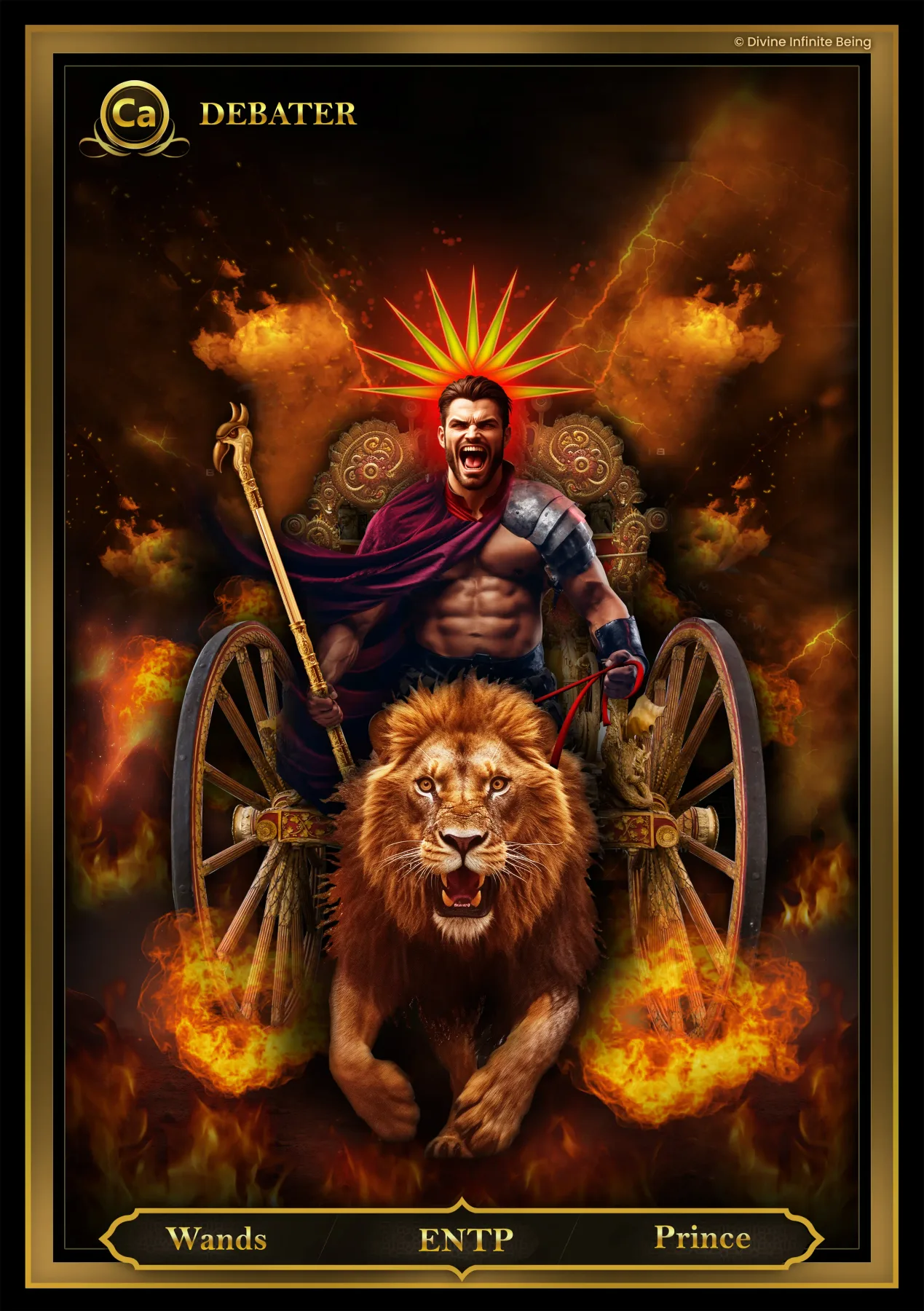
"Every man and every woman is a star."
Liber AL vel Legis I:3
The dare
I was first exposed to magick at the age of sixteen, in a friend's home in Saint Anthony. Outside the scriptures of my church, its Sunday lessons and the stories told in my own family I had rarely been exposed to anything beyond its doctrinal walls.
On a shelf in my friend's home stood a thick book with a strange name on its spine, The Confessions of Aleister Crowley. My friend was half terrified and half amused by it, handled it as if it were some cursed tablet, a forbidden artifact too dangerous to touch, and then dared me to read it. A boy raised as I was had been warned about books of that kind all his life, and the warning only made my curiosity burn hotter. I took the dare, and I took the book with it.
A month with the Confessions
Once I opened its pages I could not put it down. Over the course of a single month I devoured all 984 pages, more than thirty pages a day, pulled along by the sheer size of what they opened up in front of me.
The Confessions is Crowley's own account of his life, a book he called his "autohagiography". He was born in Leamington, England, on 12 October 1875, and he was raised among the Plymouth Brethren, a strict Christian sect whose members read the Bible as the plain word of God and kept themselves apart from the world. His father preached for the Brethren, and the boy grew up in a house where every day was measured against the scriptures. He tells how he broke away from all of it after his father's death, and how he carried into his new life the conviction his upbringing had given him, that the unseen world is real and that a person's whole life should be given to it.
From there the book moves through his years at Trinity College, Cambridge, where he wrote poetry and read everything he could find on mysticism and the occult, and through his years as a mountaineer in the Alps, on K2 and on Kangchenjunga. In November 1898 he was initiated into the Hermetic Order of the Golden Dawn in London, and he describes its grades, its rites and its quarrels, above all his dealings with its chief, Samuel Liddell MacGregor Mathers. He bought a house at Boleskine on the shore of Loch Ness to perform the long operation of Abramelin, and then he set out on journeys that took him to Mexico, Ceylon, India, China and Egypt.
The Golden Dawn chapters held me longest. The order had been founded in London in 1888 by three Freemasons, William Wynn Westcott, Samuel Liddell MacGregor Mathers and William Robert Woodman, and by the time Crowley joined it its members included the poet W. B. Yeats and the actress Florence Farr. Crowley tells how the order led its members up through a ladder of grades, from Neophyte through Zelator, Theoricus, Practicus and Philosophus, each grade joined to a sphere of the Tree of Life and to one of the elements, each with its own ceremony of admission and its own lectures to be learned and examined. Above the Outer Order stood the Second Order of the adepts, where the real practical work began. A member climbed the Tree one rung at a time, and Crowley climbed it fast, much faster than the older members liked.
The operation of Abramelin came from a fifteenth-century grimoire that Mathers had translated, The Sacred Magic of Abramelin the Mage. It asked the magician to withdraw from ordinary life for six months of growing prayer and purification, at the end of which he would attain the knowledge and conversation of his Holy Guardian Angel. Crowley gave that attainment the first place in his own system for the rest of his life. At sixteen I had never heard of a guardian angel that a person could seek out by discipline.
In Cairo in April 1904, over three days, he wrote down the Book of the Law, the short book he received from a voice he named Aiwass and on which he founded Thelema. In 1907 he founded his own order, the A∴A∴, and later he became head of the Ordo Templi Orientis. The last part of the book tells of the Abbey of Thelema at Cefalù in Sicily, where he lived with his students from 1920. Through every part of it Crowley treats the inner life as a country to be explored with method, with maps, instruments and a written record of every step.
He wrote with wit, with learning and with very little modesty. For a sixteen-year-old in a small Mormon town the book was a window onto a whole world of Victorian schools, Himalayan glaciers, Cairo apartments and secret lodges in London, and at the center of that world stood a man who had decided to find out for himself whether the gods could be known.
The Confessions introduced me to the mysteries of theurgy under Crowley's own name for them, "High Magick". I did not have the word theurgy then. What I had was the picture he painted of a discipline, with invocation, meditation, the training of the will and of the imagination, and a magical diary in which the magician wrote the date, the hour, the work performed and what came of it. In the world I was raised in, spiritual experience was given through the church and its priesthood. Crowley described a person taking up the work himself, testing it on his own body and mind, and writing down the results the way a scientist keeps a laboratory notebook.
The memories that came back
As I read, long-forgotten memories from my childhood came back to me, one after another and with great clarity. They were memories of PSI experiences, moments of uncanny intuition, strange visions and synchronicities I had never been able to explain, experiences that had stayed with me through my boyhood without any words around them.
Some of these I had tucked away as a boy because they did not fit anything I was taught at church. Others had simply faded. Reading Crowley, I found them still there, intact, and each one surfaced as I read his accounts of his own visions and of the visions of the people around him.
The Confessions gave me my first language and framework for explaining these experiences. Crowley wrote about such things as events that happen to people, that can be cultivated and tested, and that belong to a long tradition of practice with its own literature and its own methods. For the first time I could set an experience from my own childhood beside a written account and say, that is what that was. It was as though a hidden door had swung open and I had been invited to step through it.
Francis King at seventeen
After the Confessions I went looking for the practice itself. By the following summer, when I turned seventeen, I had sought out my next initiation through Francis King's Techniques of High Magic, the manual he wrote with Stephen Skinner and published in 1976 under the subtitle A Manual of Self-Initiation.
Francis King was a historian of the modern magical orders. He had written Ritual Magic in England on the Golden Dawn and the groups that grew out of it, and he had edited the Golden Dawn's private papers known as the Flying Rolls. His co-author, Stephen Skinner, went on to become one of the best-known editors of the old grimoires. In Techniques of High Magic the two of them turned that history into practice. The book told a reader what to do, step by step, and it gave me my first foothold in the practical applications of the art.
The manual set out the work of the ceremonial magician as a sequence of skills to be learned and performed. It explained the Tree of Life and the system of correspondences that ties a planet to a color, a metal, a divine Name and a sphere of the Tree. It gave the preparation of the place and of the person, the ritual forms, the use of symbols and talismans, and the training of the imagination until an image could be built and held in the mind. It also taught the keeping of the magical record, as Crowley had, with the date, the hour, the rite performed, what was felt and what followed.
After a year of reading about the work in Crowley's own story, I now had the work itself in plain instructions, and a program of exercises I could begin the same week I opened the book.
My first ritual experiments
My ritual practice began here, in my late teens. In those earliest years I came to the work through the Kabbalistic path and through the ceremonial magic of the Golden Dawn and of Thelema.
My first experiments were eager and scattered. I learned the Hebrew letters and the paths that join the spheres of the Tree, I practiced sounding the divine Names in the vibrating voice the manuals describe, and I built images in the imagination and tried to hold them steady for longer each time. I tried the rites the manual gave me, one after another, and when a rite produced an effect in me I tried it again to see whether the effect would come back.
From the start my practice was built on what I now call the paradigm of transcendence, and every rite I tried in those years was a step on a ladder leading up and out of the world.
Every rite I found in a book I tried in practice, and whenever the practice gave me an experience I did not understand I went back to the books to find who had described it before me.
The Thoth deck at eighteen
From there my studies moved quickly. At eighteen I purchased my very first Tarot deck, the Thoth Tarot, and plunged headlong into the world of divination and the symbolic language of the cards.
The Thoth deck was the natural choice for someone who had come in through Crowley. He designed it, and the artist Lady Frieda Harris painted its seventy-eight cards under his direction over five years, from 1938 to 1943, while Europe was at war. His Book of Thoth, published in 1944 in an edition of only two hundred copies, was written to accompany it. Neither of them lived to see the cards printed as a deck. Crowley died in 1947 and Harris in 1962, and the full deck was first published in 1969, a little more than twenty years before I bought mine. The cards are dense with the symbolism of the Golden Dawn, the Kabbalah, astrology and alchemy, and on each trump the Hebrew letter, the planet or sign, the element and the path on the Tree of Life are painted into the image itself.
I learned the deck slowly, one card at a time. I would lay a single card on the table, study its image line by line, find its Hebrew letter and its planet or sign, and trace it back to its path on the Tree of Life that I had learned from King. Then I lived with that one card for a while, carrying its picture in my mind through the day, before I moved on to the next. In time Crowley's Book of Thoth came to stand beside the deck, and the cards and the book became one study for me.
The Magus, the first trump after the Fool, carries the letter Beth and the planet Mercury, on the path from Kether to Binah. The Empress carries Daleth and Venus, the Emperor Tzaddi and Aries, and so on through all twenty-two trumps. Crowley had renamed several of them, Strength as Lust, Temperance as Art and Justice as Adjustment, and he had set the Aeon in the place of the old Judgement and the Universe in the place of the World. Those changes sent me back to the older decks, to see what he had changed and to learn his reasons.
The Fool stands before all of them as the zero, the card of the letter Aleph and of the element of Air, the breath before anything is spoken. Learning where each trump sat meant learning the Tree of Life itself, the ten spheres from Kether at the crown to Malkuth at the foot, joined by the twenty-two paths, one path for each letter of the Hebrew alphabet and one for each trump. I could lay the trumps out on the floor in the shape of the Tree and walk the paths with my eyes, from the Universe at the bottom, the path of Saturn joining Malkuth to Yesod, up to the Fool at the very top.
The rest of the deck taught me just as much. Beside the twenty-two trumps stand the sixteen court cards, the Knight, Queen, Prince and Princess of each of the four suits of Wands, Cups, Swords and Disks, and the forty small cards from Ace to Ten. On the Thoth deck every small card from Two to Ten carries a title, such as Dominion, Love, Peace and Change for the four Twos, and each one stands at its decan, a ten-degree portion of a sign of the zodiac, with the planet that rules it.
The four suits are the four elements, Wands for Fire, Cups for Water, Swords for Air and Disks for Earth, and each Ace stands at the root of its element. The court cards subdivide each element again, so that the Knight of Cups is the fiery part of Water and the Princess of Swords the earthy part of Air. Crowley's descriptions of the courts read like portraits of people, with their virtues and their faults, and I began to see the people I knew in them, my family, my friends and myself.
In those years the cards became the first place where the many systems I was reading about sat together in one image, Hebrew, Egyptian, Greek, astrological and alchemical. That moment marked a point of no return for me. I consumed everything I could find on spiritual practice and occult science: Tarot first, then ceremonial magic and esoteric philosophy, then shamanism and astrology. Astrology I met in those years at the edges, through the correspondences of the cards and of the magical texts. My hunger to understand was very great, and I pursued it with a devotion that bordered on religious fervor.
Readings at the Saturday market
By eighteen I was reading the Tarot not only for myself but for others. I set up a booth at local Saturday markets and offered readings to curious passersby.
I had a small table, a chair on each side and the deck, and people walked past through the morning, some stopping out of curiosity and some with something in their lives pressing on them. Others sat down across from me and asked their question.
A reading at that table went the way a reading goes everywhere. The person told me as much or as little of the question as they wished, I shuffled with the question held in mind, and I laid the cards out in a spread, each place in it standing for one part of the matter, the past behind it, the forces around it, the hopes and fears in the person and the likely outcome. I read each card in its place and then read them together, as one picture, looking for the suit that dominated, the trumps that had come up and the court cards that might be people in the questioner's life.
Reading for strangers taught me what reading for myself could not. With my own questions I always knew too much, and my hopes and fears were already in the room before the first card was turned. With a stranger I had only the cards and the person in front of me. I had to learn to say what I saw, clearly and with care, to watch the person's face as I spoke, and then to listen to what they told me in return.
I learned at that table the responsibility of sitting across from someone who has brought you a real question about their marriage, their work, their health or their grief, and of answering in a way that leaves them stronger. I also learned that some mornings the cards spoke clearly and some mornings they did not, and that the difference had a great deal to do with how still and attentive I was when I sat down.
Over the decades since, I have read the Tarot for myself thousands of times, and I have given professional readings to others on more than five hundred occasions. Each reading, for a stranger or for my own guidance, deepened my understanding of the archetypal forces that shape a human life.
Crowley as doorway
I personally owe much to Crowley. He was one of the earliest doorways into my exploration of occult science, and after the Confessions I went on reading him for many years. His life had its controversies, and his work does not always reflect his own originality, as he combined inspiration with a clever and often hidden synthesis of other writings. The Book of the Law is imbued with revelatory genius in several passages.
In time I came to see that his last ten years mark his deepest contributions, particularly Magick Without Tears, Little Essays Toward Truth and his writings on the Thoth Tarot. The Book of the Law itself is a short text of three chapters, spoken in turn by Nuit, the goddess of infinite space and the starry sky, by Hadit, the point at the center of every being, and by Ra-Hoor-Khuit, the crowned and conquering child. Its law is given in a few words, "Do what thou wilt shall be the whole of the Law" and "Love is the law, love under will." Crowley read the will in that law as the True Will, the course each person's deepest nature is set to follow, as each star follows its own orbit, and he taught that the whole of magick serves the discovery of that course.
In those later works we see a mature Crowley grappling with complex philosophical and mystical ideas, refining his system of thought and offering insights into the nature of reality and the path of spiritual development. Magick Without Tears is a collection of letters he wrote in the 1940s to students who asked him plain questions about practice, and his answers are some of the clearest pages he ever wrote. Little Essays Toward Truth, published in 1938, is a set of short essays on man, on love, on silence, on trance, on mysticism and on the other great words of the spiritual life, each one treated as an experience a student can come to understand in practice. In both books the provocateur of the early years has mostly fallen silent, and a teacher is speaking to students he wants to help.
Crowley framed history as a procession of Aeons, each ruled by a distinct formula of relation between the divine and the human. The Aeon of Isis belonged to prehistory, when the Goddess reigned and the rhythms of nature guided the shamanic tribes of earth. The Aeon of Osiris followed, from the beginning of civilization and structure, with its doctrines of suffering, sacrifice and resurrection. In this present age, as he taught, the Aeon of Horus has dawned, an epoch of sovereignty and of direct awakening to one's own eternal divinity, and the Aeon card of his deck pictures that dawn.
It was Crowley's writings that opened my eyes to the sacred nature of the physical world. In his pages I met a man who treated the stars, the body, the will and the world itself as holy ground, and who wrote that every man and every woman is a star. My upbringing had taught me that this world was a place of testing on the way to another one. Crowley taught that the divine was to be found here, in the body and in the senses as much as in the heavens.
In our School we leave aside Crowley's status as a singular chosen prophet, and I still read him today.
East and West in Crowley
Crowley also showed me, at sixteen, that the disciplines of East and West could sit in one practice. In the Confessions he tells how he traveled to Ceylon in 1901 to join his friend from the Golden Dawn, Allan Bennett, who later became one of the first Englishmen to be ordained a Buddhist monk, and how under Bennett's guidance he took up the practices of yoga. Bennett took the monastic name Ananda Metteyya in Burma, and in 1908 he returned to England to lead the first Buddhist mission to that country.
He describes the work in detail. There are the hours of sitting in one posture until the body no longer complains, the control of the breath by counted inhalations, holdings and exhalations, and the watching of the mind to count how many times in an hour it breaks away from its object. He kept a record of every break, as he kept a record of everything, and he set out the exercises later in short instructions for his students, with āsana, prāṇāyāma and dhāraṇā given as the first steps. In the exercises of concentration the mind is held on a single object until every other thought has fallen away. He writes of reaching the state the yogis call dhyāna, in which the one who meditates and the object of the meditation become one, and he treats it as an experience to be recorded and examined like any other result of the work.
He then traveled on through India, studying with teachers there, and he wrote often and admiringly of Hindu and Buddhist practice for the rest of his life. When he came to set out his own system he gave it in two halves, yoga, or mysticism, and magick, as two methods of one training. The yogi turns inward and quiets the mind until it is still, and the magician works outward with ceremony, invocation and the will. In Crowley's training a student was expected to practice both, and his order set exercises of both kinds side by side in its grades.
For a sixteen-year-old in Saint Anthony this was entirely new. I had known only one religion, and here was a Western magician, trained in the lodges of London, sitting cross-legged in Ceylon and writing about his breath. At the time I took it in as part of his adventure, and it gave me the first picture I ever had of a practitioner who drew on the whole world's traditions.